AI's real-world impact will accelerate in 2026, particularly in "conservative" professional services and fundamental sciences, despite market volatility.
Builders should focus on truly novel consumer agent experiences and niche robotics applications, while investors should eye AI IPOs with caution and consider energy efficiency plays.
The next 6-12 months will clarify the geopolitical AI race and expose the true infrastructure bottlenecks, shaping the industry's long-term trajectory.
Strategic Shift: The fintech market is moving from "digitizing everything" to "optimizing everything with AI." This means a focus on efficiency, personalization, and solving deep-seated financial problems.
Builder/Investor Note: Opportunities abound in B2B AI software for financial institutions and in consumer fintechs that prioritize "excellence" over mere access. However, the escalating AI fraud threat demands significant investment in defensive technologies.
The "So What?": Over the next 6-12 months, expect a surge in AI-powered financial products and services, but also a corresponding increase in the sophistication and volume of financial fraud. The battle for trust and security will define the winners.
Strategic Shift: The market will increasingly demand AI models evaluated on human-centric metrics, not just technical benchmarks. Companies prioritizing user experience and safety will gain a competitive edge.
Builder/Investor Note: Investigate companies developing or utilizing advanced, demographically representative human evaluation frameworks. These are crucial for building defensible, user-aligned AI products.
The "So What?": Over the next 6-12 months, expect a growing focus on AI safety, ethical alignment, and nuanced human preference data. The "Wild West" of AI evaluation is ending, paving the way for more robust, trustworthy systems.
Strategic Implication: The next frontier in AI is agentic, and progress hinges on fundamental pre-training innovation, not just post-training optimizations.
Builder/Investor Note: Focus on teams with deep experience in scaling and debugging large models, as this is a high-capital, high-risk endeavor. Builders should prioritize developing new benchmarks for agentic capabilities.
The "So What?": The industry needs to move beyond next-token prediction and static benchmarks to unlock truly capable, self-correcting AI agents in the next 6-12 months.
Shift in AI Development: The focus moves from syntax-aware code generation to execution-aware reasoning, enabling more robust and intelligent code agents.
Builder/Investor Note: Prioritize tools and platforms that support explicit execution modeling and highly asynchronous, high-throughput RL training for agentic systems.
The "So What?": AI that can simulate complex systems internally will drastically reduce development and testing costs, accelerating innovation in software and distributed systems over the next 6-12 months.
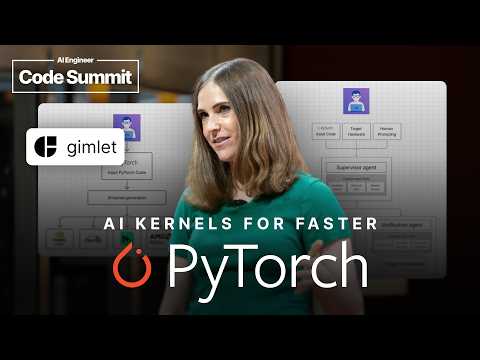
Strategic Shift: AI-driven kernel generation is not replacing human genius but augmenting it, allowing experts to focus on novel breakthroughs while AI automates the application of known optimizations across a complex hardware landscape.
Builder/Investor Note: Focus on robust validation and hardware-in-the-loop systems. Claims of "AI inventing new algorithms" in this domain are premature. The real value is in automating the "bag of tricks" for heterogeneous compute.
The "So What?": This technology is critical for scaling agentic AI workloads. Expect significant investment in tools that abstract hardware complexity and enable efficient, automated optimization, driving down the cost of AI inference in the next 6-12 months.
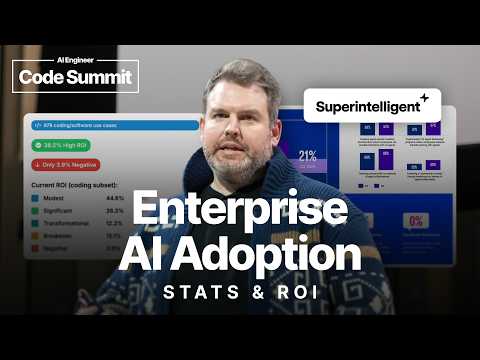
The Agent Economy is Here: Enterprises are moving past pilots with AI agents. Builders should focus on orchestration layers and human-agent interaction design.
ROI Measurement is the Next Frontier: Investors should look for solutions that help organizations accurately track and attribute AI value beyond traditional metrics.
Strategic AI, Not Spot Solutions: The biggest wins come from systematic, cross-organizational AI strategies that target new capabilities and revenue growth, not just incremental time savings.
The 100% AI adoption threshold is a step-function change, not incremental. Companies that commit fully will outpace those with partial integration.
Builders should prioritize "compounding engineering" by codifying knowledge into reusable prompts. This builds an organizational memory that accelerates future development exponentially.
Re-evaluate team structures and roles. Single engineers can own complex products, and even technical managers can contribute code, shifting how organizations operate.
Effective crime reduction requires a shift from reactive punishment to proactive, intelligence-driven deterrence, making it highly probable for criminals to be caught.
The market for AI-powered public safety technology, particularly solutions that integrate data for precision and accountability, presents a significant opportunity. Public-private partnerships are a key funding mechanism.
Over the next 6-12 months, expect to see more cities adopt advanced surveillance and AI tools, driven by private funding, as they seek to improve safety and address staffing shortages without resorting to ineffective, broad-stroke policies.
Rotation Imminent: Data suggests Bitcoin's strength is setting the stage for capital to flow into altcoins, particularly Ether, which is seen as "hated" and due for a rebound against Bitcoin.
Macro is Bullish (For Now): Continued fiscal spending and an anticipated stablecoin bill are significant tailwinds, though summer may bring some turbulence.
Strategic Allocation is Key: Focus on assets with strong fundamentals or high attention. Consider beta plays like "blue-chip" meme coins (Pepe for ETH, Bonk for SOL) for higher-risk, higher-reward exposure, but plan exits for speculative positions.
Dynamic Tao is High-Risk: Approach investments with extreme caution; the market is volatile, and significant capital loss is a tangible risk.
Embrace Unpredictable Innovation: Bittensor's core value lies in its capacity to generate unforeseen, groundbreaking solutions from a global, permissionless, and competitive talent pool.
Substrate Chain Decentralization is Critical: The successful decentralization of Bittensor's foundational layer is a paramount upcoming milestone for its long-term viability, security, and censorship resistance.
Global Takeover: Bitcoin treasury strategies are rapidly globalizing, creating new Bitcoin-proxy investment vehicles in numerous capital markets.
Investor Vigilance: While "Bitcoin plus" returns are alluring, investors must critically assess MNAV multiples and beware of highly leveraged companies lacking strong, transparent leadership.
Reverse Tokenization is Real: Crypto assets are increasingly entering traditional finance via these public companies, fundamentally changing institutional access and perception.
**L1s are Money, Not Stocks:** Stop trying to fit square pegs (L1s) into round holes (DCF models for companies). Their value accrues like money, through network effects and demand for their monetary properties.
**RSOV is Your New Lens:** Use RSOV to gauge the "stickiness" of capital in an L1 ecosystem. A growing RSOV suggests a strengthening monetary base and potentially a rising valuation floor.
**ETH's RSOV Story:** ETH, when viewed through the RSOV lens, appears undervalued relative to assets like Bitcoin, especially considering catalysts like EIP-4844 ("proto-danksharding") and the growth of its L2 ecosystem, which drives ETH's use as a store of value.
Aggressive Execution: The Ethereum Foundation is adopting a "winning" mindset, prioritizing product delivery, engineering excellence, and rapid scaling (e.g., 3x annual gas limit increases).
Deepening Capital Markets: Ethereum is solidifying its position as the primary settlement layer for RWAs and the burgeoning on-chain finance sector, attracting significant institutional interest.
Innovation Frontier: Expect new waves of innovation in NFTs (tied to RWAs and AI) and enhanced L2 interoperability, driven by advancements like real-time ZK proofs.