AI's real-world impact will accelerate in 2026, particularly in "conservative" professional services and fundamental sciences, despite market volatility.
Builders should focus on truly novel consumer agent experiences and niche robotics applications, while investors should eye AI IPOs with caution and consider energy efficiency plays.
The next 6-12 months will clarify the geopolitical AI race and expose the true infrastructure bottlenecks, shaping the industry's long-term trajectory.
Strategic Shift: The fintech market is moving from "digitizing everything" to "optimizing everything with AI." This means a focus on efficiency, personalization, and solving deep-seated financial problems.
Builder/Investor Note: Opportunities abound in B2B AI software for financial institutions and in consumer fintechs that prioritize "excellence" over mere access. However, the escalating AI fraud threat demands significant investment in defensive technologies.
The "So What?": Over the next 6-12 months, expect a surge in AI-powered financial products and services, but also a corresponding increase in the sophistication and volume of financial fraud. The battle for trust and security will define the winners.
Strategic Shift: The market will increasingly demand AI models evaluated on human-centric metrics, not just technical benchmarks. Companies prioritizing user experience and safety will gain a competitive edge.
Builder/Investor Note: Investigate companies developing or utilizing advanced, demographically representative human evaluation frameworks. These are crucial for building defensible, user-aligned AI products.
The "So What?": Over the next 6-12 months, expect a growing focus on AI safety, ethical alignment, and nuanced human preference data. The "Wild West" of AI evaluation is ending, paving the way for more robust, trustworthy systems.
Strategic Implication: The next frontier in AI is agentic, and progress hinges on fundamental pre-training innovation, not just post-training optimizations.
Builder/Investor Note: Focus on teams with deep experience in scaling and debugging large models, as this is a high-capital, high-risk endeavor. Builders should prioritize developing new benchmarks for agentic capabilities.
The "So What?": The industry needs to move beyond next-token prediction and static benchmarks to unlock truly capable, self-correcting AI agents in the next 6-12 months.
Shift in AI Development: The focus moves from syntax-aware code generation to execution-aware reasoning, enabling more robust and intelligent code agents.
Builder/Investor Note: Prioritize tools and platforms that support explicit execution modeling and highly asynchronous, high-throughput RL training for agentic systems.
The "So What?": AI that can simulate complex systems internally will drastically reduce development and testing costs, accelerating innovation in software and distributed systems over the next 6-12 months.
Strategic Shift: AI-driven kernel generation is not replacing human genius but augmenting it, allowing experts to focus on novel breakthroughs while AI automates the application of known optimizations across a complex hardware landscape.
Builder/Investor Note: Focus on robust validation and hardware-in-the-loop systems. Claims of "AI inventing new algorithms" in this domain are premature. The real value is in automating the "bag of tricks" for heterogeneous compute.
The "So What?": This technology is critical for scaling agentic AI workloads. Expect significant investment in tools that abstract hardware complexity and enable efficient, automated optimization, driving down the cost of AI inference in the next 6-12 months.
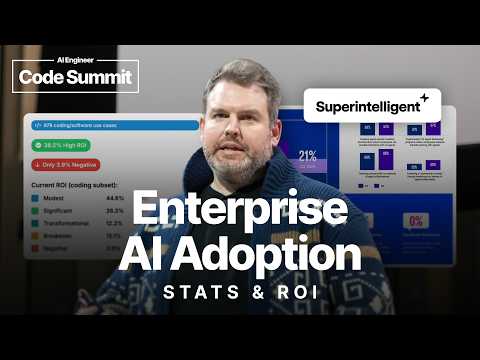
The Agent Economy is Here: Enterprises are moving past pilots with AI agents. Builders should focus on orchestration layers and human-agent interaction design.
ROI Measurement is the Next Frontier: Investors should look for solutions that help organizations accurately track and attribute AI value beyond traditional metrics.
Strategic AI, Not Spot Solutions: The biggest wins come from systematic, cross-organizational AI strategies that target new capabilities and revenue growth, not just incremental time savings.
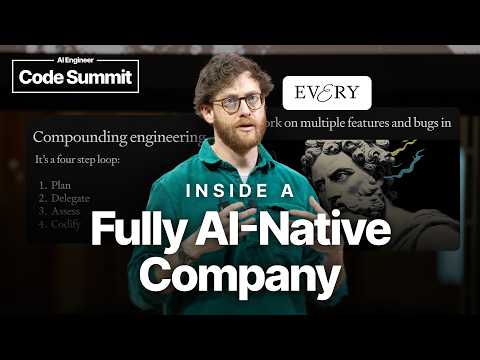
The 100% AI adoption threshold is a step-function change, not incremental. Companies that commit fully will outpace those with partial integration.
Builders should prioritize "compounding engineering" by codifying knowledge into reusable prompts. This builds an organizational memory that accelerates future development exponentially.
Re-evaluate team structures and roles. Single engineers can own complex products, and even technical managers can contribute code, shifting how organizations operate.
Effective crime reduction requires a shift from reactive punishment to proactive, intelligence-driven deterrence, making it highly probable for criminals to be caught.
The market for AI-powered public safety technology, particularly solutions that integrate data for precision and accountability, presents a significant opportunity. Public-private partnerships are a key funding mechanism.
Over the next 6-12 months, expect to see more cities adopt advanced surveillance and AI tools, driven by private funding, as they seek to improve safety and address staffing shortages without resorting to ineffective, broad-stroke policies.
**Value is a Function of Time:** Bitcoin's greatest asset is its 15-year track record. Lasting value isn't about technology alone; it's about a powerful story that withstands the test of time, creating an insulated brand.
**Self-Custody is the Premise:** The entire value proposition of crypto hinges on eliminating counterparty risk. Compromising on self-custody and security for the sake of convenience is a recurring mistake that "always blows up."
**Adoption Will Be Abstracted:** The future of crypto for the masses is one where the complexity is hidden. Centralized user experiences will run on decentralized rails, delivering the benefits of crypto (lower fees, faster settlement) without the unforgiving user experience.
**Stop Gambling, Start Engineering.** The biggest edge isn’t in predicting price but in finding and exploiting structural market inefficiencies. Focus on trades where you can control or heavily influence the outcome, like RFV plays or creating self-fulfilling prophecies in prediction markets.
**Become the Casino.** The crypto market is filled with speculation. By providing liquidity, farming yields, and taking the other side of gamblers (e.g., selling Pendle PTs), you can generate consistent, lower-risk returns. Farmers, on average, outperform directional traders over the long term.
**Alpha Lives in the Weeds.** The most significant opportunities aren’t on the front page of Twitter. They’re buried in obscure Discord servers, complex protocol mechanics (like Aerodrome’s bribes), and emerging platforms with low capital efficiency like Polymarket.
Private Markets Are the New Public: The real unlock for tokenization isn't just 24/7 stock trading—it's bringing high-growth private companies to retail investors, with or without the company's blessing.
The Great Convergence Is Here: The line between a crypto exchange and a stock brokerage is disappearing. Robinhood and its competitors are converging on a single "financial super app" model where all assets live in one place.
Regulation Has Created a Paradox: The current system allows unlimited speculation on assets with zero fundamental value (memecoins) but blocks access to premier private equity. Robinhood is betting this logic won't hold.
Embrace the Friction: The current difficulty of investing in Bittensor subnets is a feature, not a bug. It’s the moat that has suppressed valuations, creating an opportunity akin to buying Bitcoin on Mt. Gox before Coinbase existed.
A 3-6 Month Catalyst Window: The development of bridges and institutional infrastructure is the primary catalyst. This window represents the final moments to gain exposure before capital can flow in easily, likely re-rating the entire ecosystem.
Think Startups, Not Just Tokens: Evaluate subnets like early-stage companies. Use resources like the *Revenue Search* podcast to analyze financials and projects like Shush (AI inference), Score (AI vision), and Quantum (public quantum computing) as real, venture-style bets.
**Don't Panic Sell.** The current market dip is a sign of a healthy "wall of worry," not a cycle top. Historical on-chain indicators show there is significant room to run.
**Follow the Smart Money.** Institutions are aggressively buying this dip. The real capital from pensions and sovereign wealth funds is still on the sidelines, waiting to enter.
**The Fed is Turning Bullish.** A key Federal Reserve official is now openly advocating for crypto adoption within the regulatory apparatus, signaling a major long-term shift in the US.
**The Dollar Isn't Being Debased; It's Deflationary.** The market is not pricing in inflation or debasement. Instead, key indicators like the interest rate swap market are emphatically signaling a future of much lower interest rates for much longer, which is characteristic of deflationary pressure and a strong dollar.
**Asset Booms Are a Symptom, Not a Solution.** Rising stock and crypto prices are not evidence of a healthy economy or money printing. They reflect a K-shaped recovery where capital flees into financial assets as a hedge against systemic fragility, while the real economy for labor remains stagnant.
**The Contrarian Play Is Long Bonds.** If the global system is starved for safe, liquid collateral and headed toward a deflationary recession, the best-performing assets will be long-duration U.S. Treasuries. Snyder’s advice is the polar opposite of the typical crypto portfolio: be long bonds.