Semantic Shift: The future of AI in code moves from text generation to deep semantic understanding and execution simulation.
Builder Opportunity: Develop next-generation debugging tools and code agents that leverage internal simulation for faster, more efficient development cycles.
Investor Focus: Prioritize models and platforms that demonstrate explicit execution modeling, as this capability will redefine software development and create new market leaders.
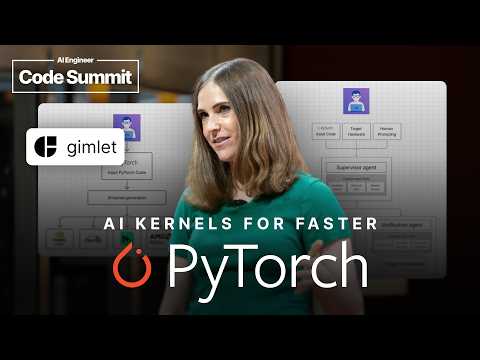
Infrastructure Shift: AI-driven kernel optimization addresses a critical bottleneck in scaling AI compute, enabling more efficient use of diverse hardware.
Builder/Investor Note: Focus on solutions with robust, hardware-verified performance metrics and a clear human-in-the-loop strategy. AI is a powerful tool for automating optimization, not a magic bullet for novel algorithmic breakthroughs.
The "So What?": This technology frees expert engineers from tedious optimization, allowing them to focus on higher-level research and truly innovative algorithmic design, accelerating the pace of AI development in the next 6-12 months.
Strategic Implication: The era of "free money" inflated the number of perceived compounders; a return to positive real rates demands a sharper focus on businesses demonstrating genuine financial discipline and competitive advantage.
Builder/Investor Note: Seek out "Act 2" entrepreneurs and companies that can leverage AI to transform existing physical or IP-based advantages, not just create new AI products. Be prepared to buy more when market sentiment turns negative on strong businesses.
The "So What?": The next 6-12 months will differentiate companies that merely adopt AI from those that strategically integrate it to build durable, uncatchable cost and distribution advantages.
The Future of Policing is Intelligent: Integrating AI, drones, and smart cameras creates a precise, accountable, and safer policing model for both officers and communities.
Invest in the "How": Builders and investors should focus on technologies that enhance certainty of capture, streamline judicial processes, and support public-private partnerships to modernize urban safety infrastructure.
Safety Fuels Mobility: Eliminating crime is not just about law enforcement; it's about restoring the fundamental safety required for economic mobility and a functional society.
Strategic Implication: The next decade's value will accrue to those building foundational AI infrastructure and the "invisible layers" that connect intelligent systems.
Builder/Investor Note: Focus capital and talent on core AI models, specialized domain intelligence, and the underlying computational fabric. Superficial applications risk rapid commoditization.
The So What?: This is the defining period for the architecture of global intelligence. Participation now determines future influence and relevance.
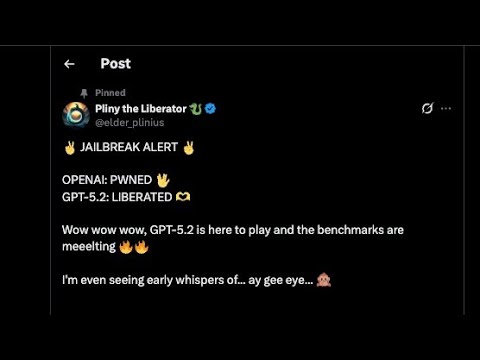
Strategic Shift: AI security must move beyond superficial guardrails to a full-stack, offensive red-teaming approach that accounts for the expanding attack surface of AI agents and their tool access.
Builder/Investor Note: Builders should prioritize integrating offensive security early in development. Investors should be wary of "security theater" and favor solutions that embrace open-source collaboration and address the entire AI application stack.
The "So What?": The accelerating pace of AI development means static security solutions will quickly become obsolete. Proactive, community-driven, and full-stack security research is essential for navigating the next 6-12 months of AI evolution.
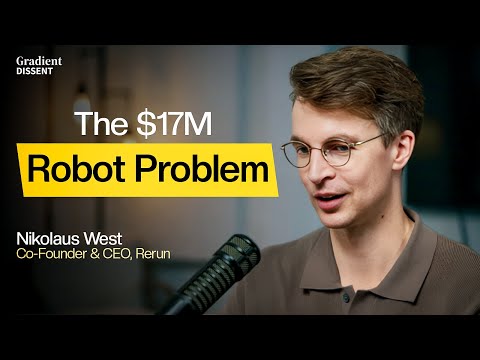
Data Infrastructure is the Next Bottleneck: The physical AI sector's growth hinges on specialized data tooling that can handle multimodal, multi-rate, episodic data, moving beyond traditional tabular models.
Builders, Prioritize Robustness: Focus on building systems that handle real-world variability and simplify data pipelines. Leverage open-source tools and consider combining imitation and reinforcement learning.
The "So What?": The next 6-12 months will see significant improvements in robot robustness and the ability to perform longer, more complex tasks. This progress will be driven by better data management, making the gap between lab demos and deployable products narrower.
The democratization of RL for LLMs will accelerate the deployment of more reliable and sophisticated AI agents across industries.
Builders should move beyond basic prompt engineering and RAG. RL fine-tuning, now accessible via W&B Serverless RL, is a critical next step for high-stakes agentic applications.
For the next 6-12 months, expect a surge in production-grade AI agents, with open-source models increasingly closing the performance gap with proprietary alternatives through advanced fine-tuning.
Dynamic Evaluation is Non-Negotiable: Static benchmarks are dead. Future AI development demands continuously updated, contamination-resistant evaluation sets.
AI Needs AI to Judge AI: As models grow more sophisticated, LLM-driven "hack detectors" become essential for ensuring code quality and preventing adversarial exploitation of evaluation systems.
User Experience Drives Adoption: For interactive AI coding tools, prioritize low latency and human-centric design; technical prowess alone will not guarantee real-world usage.
Don't Mistake Sideways for Collapse. The market is in a period of accumulation. On-chain data shows long-term Bitcoin holders are at all-time highs, forming a powerful price floor.
Buy the Hate. Abysmal sentiment in altcoins is a strong contrarian signal. "Fair value" metrics like MVRV for ETH and SOL indicate a prime buying window is open now, ahead of a potential rally.
Watch the Fed. The ultimate catalyst is global liquidity. A cut in the Fed funds rate, which markets price with a ~75% chance for September, is the primary trigger for crypto's next major leg up.
Ignore the Noise: Founder success is judged by market cycles, not actual progress. The primary challenge is maintaining conviction in a long-term vision while resisting the pressure to chase short-term narratives.
Institutions Play the Long Game: The institutional floodgates are opening, but it's a slow trickle, not a tidal wave. The immediate future is stablecoins and basic yield products, not a full-scale DeFi revolution within banks. Patience is the ultimate competitive advantage.
The Future is a Tokenized IPO: The most aligned path to liquidity for a crypto company is to tokenize its own equity and list on-chain. This is the endgame, and projects are already experimenting with precursor products like liquid staking tokens to pave the way.
Private Markets Unleashed: Robinhood is weaponizing tokenization to give retail investors access to previously unobtainable private giants like OpenAI, tackling a core inequity of modern finance.
A Purpose-Built RWA Chain: The "Robinhood Chain" on Arbitrum is a strategic moat, designed specifically for real-world assets by prioritizing regulatory compliance and military-grade robustness over speculative hype.
The New Financial Stack: By combining its app (distribution), chain (settlement), and Bitstamp (24/7 liquidity), Robinhood is building a powerful, integrated machine to challenge both crypto exchanges and legacy stock markets.
Financials First, Consumer Later: Bet on financial primitives like stablecoins and DeFi today. They are most likely to gain traction first, paving the way for consumer apps once crypto's brand is repaired.
Solana's Mandate is Stablecoins: Solana’s technical achievements are a means to an end. Its success now hinges on aggressively capturing the stablecoin market to anchor its ecosystem and drive network effects.
Proof of Humanity is the AI Counterweight: In an internet flooded with AI, decentralized identity solutions like Worldcoin become critical infrastructure, representing a powerful synergy between crypto and AI.
The Super App War is On. Robinhood and Coinbase aren't just adding crypto; they're building all-in-one platforms to own the entire user financial journey. The winner will be whoever provides the most seamless, abstracted experience.
Perps Are Coming to TradFi. The purely financial, leverage-on-demand nature of perpetual futures is a killer product. While regulatory and mechanical hurdles remain, expect them to become a staple outside of crypto.
Staking is the Next ETF Battleground. The real game is integrating staking yield into ETFs. The winner will be determined not just by the SEC, but by the IRS, with Liquid Staking Tokens positioned as the most elegant technical solution.
Bitcoin Treasury Companies Are The New Altcoins. They offer BTC beta through traditional stock markets, tapping into massive distribution and bypassing crypto-native hurdles. This is not a fad; it’s a structural shift.
Stablecoins Are A Geopolitical Tool. Amidst soaring global debt, stablecoins provide a crucial, captive audience for US T-bills, making issuers like Circle exceptionally profitable as they absorb all the yield.
DeFi's UX Is Its Achilles' Heel. As firms like Robinhood enter the fray with superior user experience, DeFi protocols must prove their value beyond regulatory arbitrage or risk being consumed by the centralized players using their own open-source tech.