Strategic Implication: The next decade will be defined by who builds the core infrastructure for intelligence. This is where the most significant value and influence will accrue.
Builder/Investor Note: Direct capital and talent towards foundational AI components—chips, models, and interoperable systems. Avoid the temptation to only build at the application layer.
The So What?: The window for shaping the future of intelligence is now. Engage in the deepest, most complex challenges to secure a footprint in this new era.
Strategic Implication: The global AI race is a zero-sum game for foundational models. Europe's best strategy is a "smart second mover" approach, focusing on the implementation layer by ensuring interoperability and data portability.
Builder/Investor Note: Invest in AI that achieves true autonomy and enhances expert productivity. Be wary of markets stifled by over-regulation, which can impede AI adoption and growth.
The "So What?": Europe faces a critical juncture. Without embracing AI-driven growth, its demographic and debt problems will worsen, leading to higher interest rates without the corresponding economic expansion.
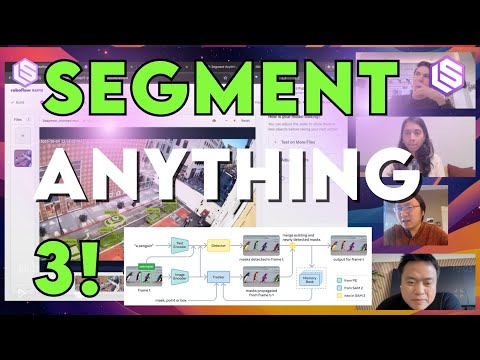
Vision AI Democratization: SAM 3 lowers the barrier for sophisticated vision tasks, making advanced segmentation and tracking accessible for a wider range of applications.
Builder/Investor Note: Focus on domain-specific adaptations and tooling that enhance human-AI interaction for ambiguous visual concepts. The "last mile" of user intent is a key differentiator.
The "So What?": SAM 3 accelerates the development of multimodal AI, particularly in robotics and video analysis, by providing a robust, scalable visual foundation for the next generation of intelligent systems.
Strategic Shift: The next frontier in robotics is less about pure algorithmic breakthroughs and more about building robust, scalable data infrastructure and full-stack product systems that can handle the messy physical world.
Builder/Investor Note: Prioritize companies solving the "boring" but critical data and systems problems. Look for practical, "scrappy" companies deploying robots in specific industrial niches, rather than just those with flashy, general-purpose demos.
The "So What?": The gap between impressive demos and deployable products will narrow over the next 6-12 months as data pipelines mature and product-focused companies gain traction. Expect to see more robust, self-correcting robots performing longer, more complex tasks in controlled environments.
Ecosystem Dominance: NVIDIA's strategy extends beyond hardware; they are building an end-to-end ecosystem of software, open-source models, and direct support, making them indispensable for national AI initiatives.
Builder Opportunity: Leverage NVIDIA's open-source Blueprints for agentic AI and Nemotron models for high-performance, customizable solutions. Prioritize local context in model training and data.
Strategic Imperative: Sovereign AI is a growing global trend. Nations and companies that can build and control AI tailored to their specific cultural, linguistic, and regulatory environments will gain a significant advantage in the coming years.
The democratization of RL fine-tuning will accelerate the development and deployment of more reliable and sophisticated AI agents across industries.
Builders should explore open-source LLMs combined with RL fine-tuning as a cost-effective strategy to achieve specific performance benchmarks, especially where latency and cost are critical.
Platforms abstracting infrastructure complexity and providing integrated tooling for the entire AI development lifecycle are crucial for the next phase of AI agent deployment.
Pre-Training is the New Frontier: The next leap in AI capabilities, particularly for agentic systems, will come from fundamental advancements in pre-training, not just post-training tweaks.
Builders & Investors: Focus on teams rethinking loss objectives, curating high-quality reasoning data, and developing dynamic benchmarks for agentic capabilities. Be wary of "agentic" claims that lack foundational pre-training innovation.
The "So What?": Over the next 6-12 months, expect a push for new benchmarks and data strategies that explicitly train models for multi-step planning, long-form reasoning, and error recovery, moving beyond simple next-token prediction.
Strategic Implication: AI fundamentally changes the economics of software development. Organizations must re-evaluate what constitutes "high-quality" engineering and adapt their processes.
Builder/Investor Note: Prioritize platforms that provide guardrails and guidance for AI tool usage, focusing on deterministic verification and robust testing. Uncontrolled AI deployment risks technical debt.
The "So What?": The next 6-12 months will see a bifurcation: companies that strategically integrate AI into their engineering culture and platforms will gain significant efficiency, while those that don't will struggle with quality and adoption.
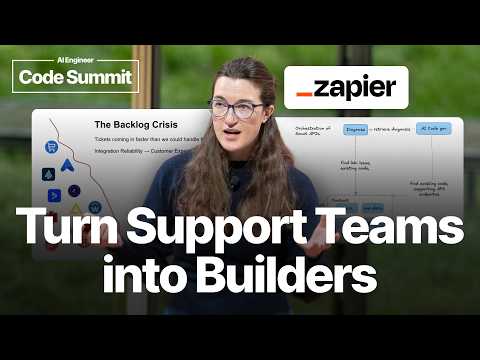
Workflow Automation is the New Frontier: The real value of AI in developer tools comes from orchestrating entire workflows, not just individual point solutions.
Embed for Adoption: Tools must integrate seamlessly into existing workflows and IDEs (like Cursor) to achieve high usage.
Support as a Code-Shipping Powerhouse: Empowering non-traditional roles with AI-driven code generation leverages their unique, real-time context, creating significant operational leverage.
Don't Mistake Sideways for Collapse. The market is in a period of accumulation. On-chain data shows long-term Bitcoin holders are at all-time highs, forming a powerful price floor.
Buy the Hate. Abysmal sentiment in altcoins is a strong contrarian signal. "Fair value" metrics like MVRV for ETH and SOL indicate a prime buying window is open now, ahead of a potential rally.
Watch the Fed. The ultimate catalyst is global liquidity. A cut in the Fed funds rate, which markets price with a ~75% chance for September, is the primary trigger for crypto's next major leg up.
Ignore the Noise: Founder success is judged by market cycles, not actual progress. The primary challenge is maintaining conviction in a long-term vision while resisting the pressure to chase short-term narratives.
Institutions Play the Long Game: The institutional floodgates are opening, but it's a slow trickle, not a tidal wave. The immediate future is stablecoins and basic yield products, not a full-scale DeFi revolution within banks. Patience is the ultimate competitive advantage.
The Future is a Tokenized IPO: The most aligned path to liquidity for a crypto company is to tokenize its own equity and list on-chain. This is the endgame, and projects are already experimenting with precursor products like liquid staking tokens to pave the way.
Private Markets Unleashed: Robinhood is weaponizing tokenization to give retail investors access to previously unobtainable private giants like OpenAI, tackling a core inequity of modern finance.
A Purpose-Built RWA Chain: The "Robinhood Chain" on Arbitrum is a strategic moat, designed specifically for real-world assets by prioritizing regulatory compliance and military-grade robustness over speculative hype.
The New Financial Stack: By combining its app (distribution), chain (settlement), and Bitstamp (24/7 liquidity), Robinhood is building a powerful, integrated machine to challenge both crypto exchanges and legacy stock markets.
Financials First, Consumer Later: Bet on financial primitives like stablecoins and DeFi today. They are most likely to gain traction first, paving the way for consumer apps once crypto's brand is repaired.
Solana's Mandate is Stablecoins: Solana’s technical achievements are a means to an end. Its success now hinges on aggressively capturing the stablecoin market to anchor its ecosystem and drive network effects.
Proof of Humanity is the AI Counterweight: In an internet flooded with AI, decentralized identity solutions like Worldcoin become critical infrastructure, representing a powerful synergy between crypto and AI.
The Super App War is On. Robinhood and Coinbase aren't just adding crypto; they're building all-in-one platforms to own the entire user financial journey. The winner will be whoever provides the most seamless, abstracted experience.
Perps Are Coming to TradFi. The purely financial, leverage-on-demand nature of perpetual futures is a killer product. While regulatory and mechanical hurdles remain, expect them to become a staple outside of crypto.
Staking is the Next ETF Battleground. The real game is integrating staking yield into ETFs. The winner will be determined not just by the SEC, but by the IRS, with Liquid Staking Tokens positioned as the most elegant technical solution.
Bitcoin Treasury Companies Are The New Altcoins. They offer BTC beta through traditional stock markets, tapping into massive distribution and bypassing crypto-native hurdles. This is not a fad; it’s a structural shift.
Stablecoins Are A Geopolitical Tool. Amidst soaring global debt, stablecoins provide a crucial, captive audience for US T-bills, making issuers like Circle exceptionally profitable as they absorb all the yield.
DeFi's UX Is Its Achilles' Heel. As firms like Robinhood enter the fray with superior user experience, DeFi protocols must prove their value beyond regulatory arbitrage or risk being consumed by the centralized players using their own open-source tech.