The AI infrastructure boom is transitioning from speculative buildouts to financially engineered, risk-managed investments, driven by the commodification of compute and memory.
Explore futures and residual value products to de-risk your AI compute procurement or data center investments, securing predictable costs and monetizing hardware lifecycles.
Quantifying future compute demand and hardware value is no longer a luxury, it's a necessity. Over the next 6-12 months, those who integrate financial hedging into their AI strategy will gain a significant competitive advantage in capital allocation and operational efficiency.
Implement compute futures and residual value products to cap future costs or floor future revenue, significantly reducing exposure to spot market volatility and hardware obsolescence.
Ornn's residual value product allows data centers to sell GPUs years in advance, translating to lower financing costs for massive hardware investments.
Ornn's index tracks dynamic marketplace GPU pricing, empowering smaller buyers to avoid overpaying.
Data center operators and large compute buyers should explore Ornn's futures and residual value products to lock in costs, secure future revenue, and access more favorable financing terms.
The Macro Shift: As market complexity and technological disruption accelerate, traditional diversified investing faces increasing headwinds. 3G Capital's micro-level focus on deeply understanding and operating a single, well-moated business, combined with a long-term, owner-operator mindset, provides a robust counter-strategy to extract value where others see only risk.
The Tactical Edge: Cultivate an "owner's mindset" in your team, decentralizing "how" decisions while centralizing "what" goals. Prioritize hiring and promoting individuals who demonstrate exceptional drive and potential, even if they lack traditional tenure, and align their incentives directly with long-term business success.
The Bottom Line: In the next 6-12 months, focus on identifying businesses with strong, direct customer relationships and defensible physical assets. These "boring" businesses, when infused with an owner-operator culture and strategic tech adoption, offer a compelling path to outsized, enduring value, regardless of broader market volatility.
Integrate compute futures and residual value products into your financial planning. This will allow you to hedge against price volatility, secure better financing, and optimize hardware refresh cycles.
The AI compute market is transitioning from an opaque, ad-hoc system to a financially engineered commodity market. This shift will introduce unprecedented transparency and risk management tools, fundamentally altering investment and operational strategies for AI infrastructure.
The ability to quantify future compute demand and hardware value is no longer a luxury; it is a necessity. Over the next 6-12 months, those who adopt these financial instruments will gain a significant competitive advantage, building more resilient and profitable AI operations.
The Macro Shift: As digital disintermediation accelerates, businesses with strong direct-to-consumer relationships and physical moats become increasingly valuable. This counters the "software eats the world" narrative by highlighting the enduring power of tangible assets and customer loyalty.
The Tactical Edge: Cultivate an owner-operator mindset throughout your organization, aligning incentives deeply with long-term value creation. Prioritize hiring and empowering young talent, giving them significant responsibility early, and providing mentorship to maximize their success.
The Bottom Line: In a market where valuations are stretched and capital is abundant, 3G's disciplined, long-term approach to identifying and operating truly great businesses offers a powerful counter-narrative. Focus on enduring business quality and people-driven execution will be the ultimate differentiator for compounding capital over the next decade.
Singular Focus: 3G's model is one investment per fund, backed by significant house capital. This forces extreme patience and a rigorous downside analysis, ensuring capital preservation is paramount before seeking outsized returns.
Operator-Led: 3G partners are seasoned operators, having run large businesses themselves. This hands-on experience allows them to identify and implement operational improvements that pure financial investors might miss, directly impacting value creation.
Disruption Defense: In a tech-driven world, 3G prioritizes businesses that own the customer relationship and are less susceptible to disintermediation. This focus on "atoms" businesses with strong brands and physical components provides a moat against digital upheaval.
The Macro Shift: As digital disruption accelerates, the market increasingly undervalues "boring" businesses with strong physical moats and direct customer relationships. 3G Capital demonstrates that these enduring assets, when paired with intense operational rigor and long-term capital, can generate outsized returns.
The Tactical Edge: Identify businesses where the brand is significantly "bigger than the business" – meaning widespread recognition exists but operational inefficiencies or poor franchising have suppressed its true value. Then, apply an owner-operator model to fix core issues and expand globally.
The Bottom Line: In a world pursuing the next big tech wave, the real alpha might lie in patiently acquiring and meticulously operating established, non-disruptable businesses. Your roadmap should include a focused study of industries with strong customer ties and a focus on building an ownership-driven culture, rather than just seeking growth at all costs.
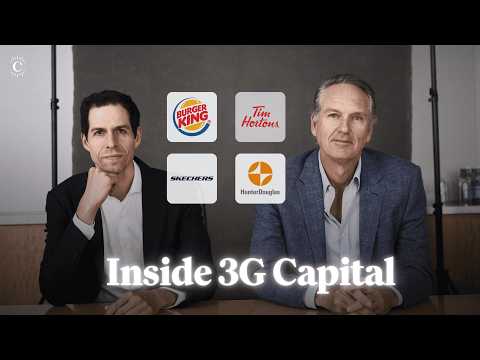
3G Capital commits to a single investment per fund, deploying significant internal capital alongside partners. This intense focus acknowledges the rarity of truly exceptional businesses and leaders, driving rigorous due diligence and a deep commitment to each asset.
3G instills an ownership culture where leaders act as shareholders, aligning incentives directly with the business's long-term success. This contrasts with traditional management structures, driving decisions that prioritize the company's best interests.
3G prioritizes businesses that own the direct relationship with their end customers, like Burger King or Hunter Douglas. This direct connection reduces disintermediation risk, making the business more resilient to technological shifts or retail power plays.
Narrative is King: The market is consolidating around two core narratives: Bitcoin as a store of value and Ethereum as a productive, tokenization platform. Ethereum's yield gives it a clear valuation edge for institutional capital.
Politics is the New Catalyst: Crypto is no longer just a tech story; it’s a political one. Trump's 401k executive order represents a landmark shift, potentially unlocking trillions in retirement funds and mainstreaming digital assets.
DeFi's Second Act is Here: The next wave of growth will be driven by institutional-grade DeFi. Yield-bearing assets are bridging TradFi capital on-chain, and digital asset treasuries are becoming the "osmosis" cells for this massive capital transfer.
**Play Offense or Get Diluted.** The dollar is devaluing faster than official numbers suggest. Sitting in cash or even diversified index funds may not be enough to preserve wealth. An offensive strategy, focused on assets like Bitcoin that can outpace this devaluation, is essential.
**This Isn't 2021.** Don’t mistake short-term liquidity pumps for a sustained bull market. The market structure favors quick rotations and profit-taking, not long-term holds on unproven altcoins.
**Attention is the New Scarcity.** The memecoin and launchpad meta is saturated. Most projects are ephemeral, designed for a quick flip. Long-term value will likely come from projects that can solve the attention decay problem or create sustainable revenue models.
Hardware is the Trojan Horse: The Seeker phone isn't the endgame; it's the proof-of-concept. The real vision is TPIN, a network that allows any hardware manufacturer to integrate Solana's secure, crypto-native mobile stack.
A Breakout App is Non-Negotiable: The platform's success depends on developers building a "viral" app that is only possible in this open, crypto-friendly environment. Watch for "Seeker Season" and hackathon results as key indicators of traction.
The SKR Token is Pure Utility: SKR is designed to be the economic glue for the TPIN ecosystem. For investors, its value is tied not to a speculative cash grab but to the growth and security of a new, decentralized mobile platform.
Guilty by Definition. The verdict was a product of a legal trap; the judge’s instructions forced the jury to view Roman as a money transmitter, a premise that directly contradicts FinCEN's own guidance and is the central issue for appeal.
A Threat to All of DeFi. The DOJ’s legal theory is boundless. It weaponizes a low "knowledge" standard that could hold any developer liable for the actions of their users, putting the entire non-custodial ecosystem at risk.
Three Paths to Victory. The crypto industry has three shots on goal to fix this: Roman’s direct appeal, a preemptive legal challenge in a separate case, and passing the Blockchain Regulatory Certainty Act (BRCA) to create hardcoded legal protections for developers.
Accountability Unlocks Adoption: The biggest barrier isn't tech, but inertia. Until executives are held accountable for incinerating billions in mispriced IPOs, the broken system will persist. The path to onchain IPOs is paved by firing the people who get it wrong in TradFi.
Onchain Auctions Are IPO 2.0: Blockchains replace the "guy with a spreadsheet" with transparent, permissionless auctions. This ensures fair price discovery and prevents the insider discounts that lock out the public.
The First Domino Starts a Cascade: Regulatory winds are shifting (e.g., the SEC's "Project Crypto"). The moment one major company successfully IPOs onchain, the perceived career risk will flip, opening the floodgates for others to follow.
ETH Treasuries are Infrastructure, Not ETFs: These companies are active players, using staking yield, MNAV premiums, and balance sheet velocity to accumulate ETH. Bitmine’s goal to own 5% of all ETH positions it as a key, US-compliant entity for Wall Street’s on-chain future.
This is ETH's "2017 Bitcoin Moment": Wall Street is beginning to recognize Ethereum as the settlement layer for tokenization and AI. This institutional awakening creates the potential for a massive step-function price increase as capital flows in.
The Upside Case for ETH > Bitcoin: Tom Lee argues Ethereum has a greater asymmetric upside, with a potential 100x return and a "significant probability" of flipping Bitcoin in network value. The investment thesis is based on this expansive vision, not myopic spreadsheet models.