Mining is a software problem. The biggest gains aren't just in new drilling tech, but in using AI to optimize complex, thousand-variable refining processes and automate construction, slashing project timelines from years to months.
Vertical integration is non-negotiable. Selling point solutions to "calcified" incumbents is a dead end. To capture efficiency gains, a company must own the entire process from mine to metal, internalizing risk and innovation.
Government’s biggest lever is buying. To unlock trillions in private capital for this critical sector, the government must act as a reliable customer, providing offtake agreements and price floors that de-risk projects in a volatile commodity market.
Comet is the agent, Dia is the assistant. Comet acts on your behalf across your digital life (scheduling, buying, emailing), while Dia excels as a hyper-competent assistant for automating complex research and content creation.
The killer app is integration, not just chat. The browser that wins will be the one that most seamlessly orchestrates a user's entire digital ecosystem. Comet’s ability to connect and push tasks to core apps gives it the current edge.
The sleeping giants are waking up. With vast user data and powerful proprietary models, Google and OpenAI’s eventual entry into the agentic browser market will be the next major catalyst, likely redefining the competitive landscape.
Hardware is the New Frontier. The scaling race isn't about building more data centers for the same old chips. The next 1000x improvement will come from a fundamental paradigm shift that works with physics, not against it.
Noise is a Feature, Not a Bug. The future of efficient computing lies in harnessing stochasticity. The "noise" we spend billions to suppress in classical chips is the very resource that can power probabilistic AI models with unparalleled efficiency.
Prepare for an Algorithmic Renaissance. The dominance of Transformers is a temporary state dictated by current hardware. As thermodynamic computers become available, developers and researchers should dust off their probabilistic ML textbooks—the algorithms of tomorrow will look very different.
Invest in AI's Tailwinds: The essential question for any AI investment is: "Does this business get better as foundation models improve?" Companies fighting against the current of AI's scaling laws are on the wrong side of a powerful trade.
The "Mag 7" Will Expand, Not Just Turn Over: AI is not a zero-sum game for incumbents. The total addressable market is set to 10x as AI drives labor costs toward zero, creating room for a "Mag 25" and turning today's $500B companies into tomorrow's $5T behemoths.
Private Market Alpha Exists, But Edge is Paramount: The private AI market cap is a mere ~$700B, signaling massive growth potential. However, like in crypto, investors must be paranoid about their "edge," as the best deals require deep ecosystem access to avoid negative selection.
**AI Isn't a Feature; It's a New Infrastructure Primitive.** For the first time, developers are outsourcing logic, not just resources. This fundamentally changes how software is built, valued, and sold.
**Abandon Zero-Sum Thinking.** The AI market is in a massive expansion phase, not a consolidation battle. Value is accruing at every layer of the stack simultaneously; assuming one layer's gain is another's loss is a flawed thesis.
**The Future is More Developers, Not Fewer.** AI tools augment productivity and lower the barrier to entry. This elevates the developer's role to focus on product design and workflow definition—the *real* hard problem in software.
**A Killer Value Prop:** Chutes makes deploying powerful AI models 85% cheaper and as easy as building a website on Squarespace.
**The Investor's Dilemma:** While all revenue is used to buy back the Chutes alpha token, this currently covers only 10% of the daily token emissions. The token's price stability is heavily dependent on external market demand outstripping this inflation.
**Watch for Catalysts:** Two key events could dramatically increase buy pressure: the imminent launch of BitTensor subnet tokens on Solana and an anticipated wave of institutional capital from newly formed crypto hedge funds.
**Specialization Unlocks Performance.** ZEUS proves that a decentralized network of specialized AI agents can outperform monolithic, state-of-the-art models, achieving a nearly 40% lower error rate in weather forecasting.
**Revenue Sharing is the Next Evolution.** The plan to distribute API revenue directly to network participants in stablecoins represents a major step toward sustainable subnet economies, moving beyond token buybacks and emission-based rewards.
**The Valuation Gap is the Opportunity.** Despite massive potential, subnets have extremely low market caps compared to their Web2 equivalents. For long-term believers, this asymmetry presents a compelling, albeit early, investment thesis.
Human Intelligence is the Ultimate Moat: In an era of synthetic data, Dojo is creating a defensible moat by generating proprietary, high-quality human preference data. This is the raw material for the next generation of fine-tuned, specialized models.
A New Paradigm for Validation: Dojo’s mechanism of using subtle "perturbations" to test labelers is a breakthrough. It solves the cold start problem of validating subjective human feedback in a decentralized network.
The Future is Human-Agentic Collaboration: Dojo is evolving from a data-generation subnet to a platform for human-agentic workflows, with applications in robotics, video analytics, and 3D generation. In the long term, it aims to be a crucial tool for aligning AI with human values.
Your Pricing Model Is Now a Dynamic Weapon. The five-year pricing plan is dead. You must build the infrastructure and culture for constant experimentation and rapid iteration. If you’re not re-evaluating your model quarterly, you're falling behind.
This Is a CEO-Level Mandate. Shifting to usage-based pricing is a full-company transformation that requires top-down vision. The CEO must act as the "pricing dictator" to align sales, product, and finance around a unified strategy of value creation and capture.
Your Product Team Now Owns Revenue. In a usage-based world, the core value metric *is* your revenue. Product and engineering teams must become obsessed with driving the specific usage that customers pay for, making their impact on the bottom line completely objective.
Strategic Implication: The shift in regulatory tone and corporate demand for privacy signals a maturation of the crypto industry. Solutions that balance privacy with accountability will capture significant market share.
Builder/Investor Note: Focus on projects building privacy-preserving compliance tools and "programmable risk management" frameworks. These are the infrastructure plays for mainstream adoption. Avoid projects that offer absolute privacy without any recourse mechanisms, as they face significant regulatory risk.
The "So What?": Over the next 6-12 months, expect increased innovation and investment in ZK-based privacy solutions that enable selective disclosure and verifiable compliance. This will be crucial for onboarding institutional capital and protecting individual users in a data-exposed world.
Integrated Finance is the Future: Robinhood's super app strategy, combining traditional and crypto assets, points to a future where financial services are consolidated and cross-pollinated.
Builders: Simplify, Simplify, Simplify: The path to mainstream crypto adoption requires abstracting away technical details. Focus on product utility, not underlying blockchain mechanics.
Tokenization's Long Game: Expect tokenization to redefine access to private markets and real-world assets, potentially disrupting traditional capital raising and ownership structures over the next 2-5 years.
Strategic Implication: The crypto industry is moving beyond speculative cycles, driven by the integration of real-world assets and the pursuit of tangible efficiencies by both startups and traditional financial giants.
Builder/Investor Note: Builders should prioritize utility and cost reduction for mainstream users, while investors must scrutinize projects for sustainable business models and genuine decentralization, rather than relying on hype or incentive schemes.
The "So What?": Regulatory clarity, particularly around DeFi and asset classification, will shape the next 6-12 months, determining which projects thrive by truly delivering value and which struggle under increased scrutiny.
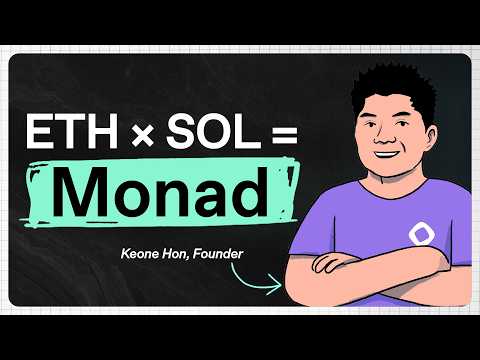
Strategic Implication: Monad represents a significant bet on vertical scaling of Layer 1s, aiming to unlock a new class of high-performance DeFi applications by directly addressing core execution bottlenecks.
Builder/Investor Note: Full EVM bytecode compatibility means existing Ethereum dApps can migrate with minimal changes, immediately benefiting from 10,000+ TPS and 1-second finality. This opens doors for high-frequency DeFi, on-chain order books, and complex AI/ML applications.
The "So What?": If Monad delivers on its promises, it could validate a powerful alternative scaling path for crypto, shifting focus back to base-layer innovation and enabling decentralized finance to truly compete with centralized exchanges in performance and cost within the next 6-12 months.
Strategic Implication: The industry's future lies in seamless integration with the broader economy, making blockchain an invisible, value-adding layer for everyday products.
Builder/Investor Note: Focus on projects solving real problems, demonstrating product-market fit in proven sectors (stablecoins, perps, token issuance), and prioritizing user experience over maximalist decentralization.
The "So What?": The next 6-12 months will reward deep research and conviction in quality assets, as the market shifts from speculative narratives to tangible utility and real-world adoption.
Strategic Implication: The lines between traditional finance, crypto, and cultural markets will blur. "Internet markets" will encompass everything, driven by attention and mimetics.
Builder/Investor Note: Focus on platforms that facilitate permissionless market creation and enhance the "spectacle" of trading. User experience that feels as native as social media will capture Gen Z's capital.
The "So What?": Crypto's open, liquid, and attention-driven nature makes it the ultimate infrastructure for this new financial paradigm. The next decade will see an explosion of internet asset trading, with crypto at its core.