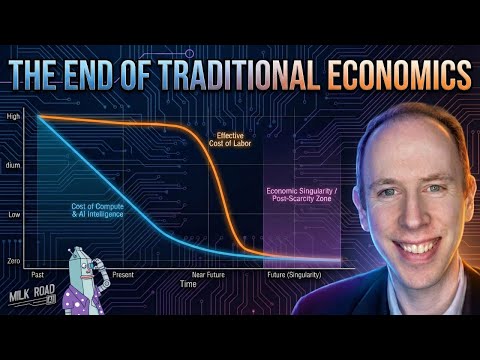
The Macro Shift: AI-driven hyperdeflation is colliding with the technical reality of autonomous AI agents creating their own crypto-backed economies, threatening a decoupling from human fiat systems.
The Tactical Edge: Investigate and build infrastructure that bridges human and AI economies, focusing on fiat-to-crypto rails that can accommodate agent-driven transactions to prevent a complete split.
The Bottom Line: The next 5-10 years will see an unprecedented economic transformation. Understanding AI's deflationary power and the emerging AI agent economy is critical for navigating a world where traditional economic models may no longer apply.
The time of practical AI agents is here, moving compute demand beyond pure GPU inference to a significant reliance on CPUs for coordination, data handling, and security.
Evaluate your agent deployment strategy now, prioritizing sandboxed environments (VPS, dedicated local servers) and exploring cost-optimized model routing to manage API expenses.
Prepare for a future where AI agents become integral to workflows, but recognize the hidden infrastructure costs and security implications, particularly the growing importance of CPU capacity and robust access controls.
The shift from "how" to "why" in AI agent capabilities creates a new, multi-trillion-dollar market for companies that can capture institutional decision logic.
Invest in or build agentic systems that are in the "right path" of business processes, actively capturing decision traces from unstructured data.
Hundreds of context graphs will be in production at scale within a year, defining a new "context graph stack." The winning companies will be those that master this flywheel, extracting value to accelerate automation and build deep, defensible moats.
The shift from linear, bottleneck-driven technological progress to a multi-layered, interconnected advancement model in AI has rendered traditional forecasting obsolete, forcing a re-evaluation of what "singularity" truly represents.
Prioritize adaptability: Invest in modular, composable AI infrastructure and tools that thrive in multi-layered, unpredictable environments, rather than betting on single-bottleneck solutions.
The inability to narrate AI's future means traditional roadmaps are obsolete; success hinges on navigating simultaneous, interconnected advancements and embracing the emergent.
The era of infrastructure-heavy tech deployment is over; AI's internet-native nature means immediate, widespread application. This shifts the competitive advantage from capital-intensive builds to rapid iteration and data leverage.
Invest in companies that are not just using AI, but are fundamentally rethinking their business models around AI's ability to collapse traditional cost structures and accelerate product development.
AI is a force multiplier for both individual opportunity and national power. Understanding its immediate deployability and the new rules of company building is crucial for investors and builders aiming to lead in the next wave of innovation over the next 12-24 months.
Unprecedented fiscal and monetary stimulus, coupled with a deregulatory environment, creates a powerful tailwind for financial assets and tech, driving a capital investment super cycle.
Investors should prioritize companies with proprietary data and GPU access, as these are the new moats in an AI-driven world where traditional software leads are eroding.
The convergence of a stimulative macro environment and AI's disruptive force means capital will flow to those who can scale, innovate, and navigate complex policy landscapes, making strategic positioning now critical for future relevance.
The macro trend of autonomous AI agents is shifting compute demand beyond GPUs, creating an unexpected CPU crunch and forcing a re-evaluation of on-premise inference and cost-optimized model routing for security and efficiency.
Investigate hybrid compute strategies, combining secure local environments (Mac Minis, home servers) with cloud-based LLMs, and explore multi-model API gateways like OpenRouter to optimize agent costs and performance.
AI agents are here, demanding a rethink of your compute stack and security protocols. Prepare for a future where CPU capacity, not just GPU, becomes a critical bottleneck, and strategic cost management for diverse AI models is non-negotiable for competitive advantage.
The move from general-purpose LLMs to specialized AI agents demands a new data architecture that captures the *why* of decisions, not just the *what*. This creates a new, defensible layer of institutional memory, moving value from raw model IP to proprietary decision intelligence.
Invest in or build agentic systems that are in the *orchestration path* of specific business processes. This allows for the organic capture of decision traces, forming a proprietary context graph that incumbents cannot easily replicate.
Over the next 12 months, the ability to build and extract value from context graphs will define the winners in the enterprise AI space, creating a new "context graph stack" that will be 10x more valuable than the modern data stack.
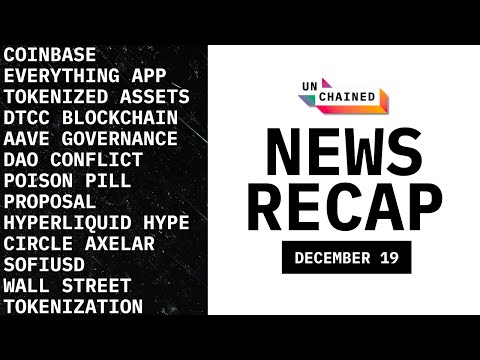
Tokenization is the Trojan Horse: TradFi isn't just observing; it's actively building on public blockchains. Tokenized real-world assets (RWAs) are the primary vector for institutional adoption.
Governance Matters: For builders, robust and transparent DAO governance is paramount. For investors, scrutinize projects for clear value accrual to token holders and potential conflicts between core teams and DAOs.
Regulatory Nuance: The Fed's policy shift suggests a move towards more nuanced regulation, potentially opening doors for regulated entities to engage with digital assets.
Strategic Patience Pays: Successful RWA tokenization requires a multi-year commitment to building infrastructure and liquidity, even if it means foregoing immediate profits.
Builders & Investors: Focus on Wallets & DApps: The future is self-custody wallets interacting with specialized, best-in-class DApps, not centralized "super apps." Build intuitive wallet experiences and highly efficient DApps.
The "So What?": Expect a significant migration of traditional financial assets and liabilities onto DeFi protocols over the next 6-12 months, driven by institutional adoption and regulatory clarity, leading to lower costs for consumers and new opportunities for capital.
Political Catalyst: A major political shift, likely driven by public anger over economic disparity, is the only force capable of breaking the current feudalistic cycle. This will be obvious when it happens, likely causing a sharp market correction.
Strategic Asset Allocation: Investors should prioritize stores of value (like gold) and seek out hard assets in overlooked emerging/frontier markets. Avoid the AI hardware bubble and identify companies that will leverage AI to cut white-collar costs, rather than those building the infrastructure.
The "So What?": The current economic structure is unsustainable. The growing divide and misallocation of capital will eventually force a re-evaluation of economic priorities. Positioning for this shift means embracing volatility and a long-term, contrarian view, looking beyond the overvalued "approved products" of the current system.
Convergence is Here: The lines between traditional finance and crypto are blurring. Expect more "everything apps" and institutional adoption of public blockchains for RWAs.
Token Alignment Matters: Builders must prioritize robust legal and governance structures that enshrine token holder rights. This will be a key differentiator for attracting capital in the next cycle.
Ethereum's Enduring Role: Despite new contenders, Ethereum continues to solidify its position as a foundational layer for institutional tokenization and decentralized finance.
Market Structure Overhaul: The current token distribution model is broken. Expect continued pressure on altcoins until tokenomics evolve to prioritize product-market fit over continuous investor unlocks.
Strategic Accumulation: This period of apathy is ideal for researching and accumulating Bitcoin and high-conviction RWAs. Cash is a strategic asset for deploying when opportunities arise.
TradFi on Chain: The next growth vector for crypto involves capturing traditional finance flows through tokenized equities, commodities, and FX. Builders should focus on robust, order-book based solutions with improved user experience.
Institutional Integration: Crypto is embedding itself into traditional finance, not replacing it. Expect more "everything apps" and verticalized services from major players.
Yield Evolution: As interest rates decline, the demand for diversified, transparent yield-bearing stablecoins will intensify. Protocols with robust risk management and RWA exposure will lead.
Creator Economy's Next Frontier: On-chain tools will redefine creator monetization, shifting from vanity metrics to direct value capture and deeper fan relationships.