The Macro Shift: In an era of rapid technological disruption and diversified portfolios, 3G Capital's success with "old economy" brands highlights the enduring power of deep operational expertise, long-term alignment, and a relentless focus on fundamental business quality, even in non-tech sectors.
The Tactical Edge: Cultivate Ownership: Implement incentive structures that align management with long-term shareholder value, treating company capital as personal capital. This means disproportionately rewarding top performers and fostering a culture of accountability.
The Bottom Line: In a market obsessed with rapid tech cycles, 3G's long-term, deep-operator model suggests that enduring value lies in fundamental business quality, direct customer relationships, and a culture that empowers talent, offering a counter-narrative for builders and investors seeking sustainable alpha.
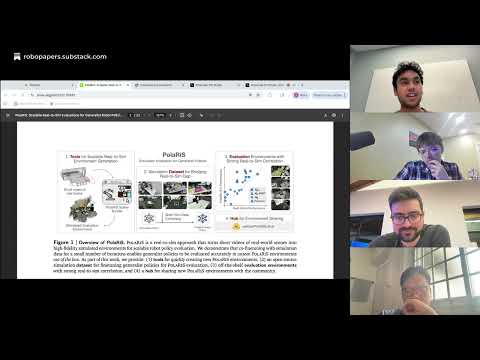
The robotics community is moving from bespoke, task-specific benchmarks to generalist policy evaluation platforms that prioritize real-world correlation and scalability. This mirrors LLM benchmark evolution, demanding tools that enable rapid, diverse testing.
Builders and researchers should prioritize evaluation frameworks that offer easy, real-to-sim environment generation (like PolaRiS's Gaussian splatting) and incorporate small, diverse sim data for distribution alignment. This accelerates policy iteration and ensures applicability.
Scalable, real-world-correlated simulation is the missing link for accelerating generalist robot policy development. Investing in or building on tools like PolaRiS, which democratize environment creation and robust evaluation, will be key to unlocking the next generation of capable robots over the next 6-12 months.
The rise of generalist robot policies demands a new generation of evaluation tools that are both scalable and highly correlated with real-world performance.
Adopt hybrid real-to-sim evaluation frameworks like PolaRiS to accelerate robot policy iteration and ensure real-world applicability.
Reliable, scalable simulation is no longer a pipe dream; it's a present reality for rigid body tasks. This means faster development cycles and more robust robot policies in the next 6-12 months.
The rise of generalist robot policies, trained on large real-world datasets, demands a new evaluation framework. PolaRiS provides a scalable, real-world correlated simulation, moving robotics towards an LLM-like benchmark ecosystem where models are tested for zero-shot generalization across diverse, easily created environments.
Adopt PolaRiS to rapidly iterate on robot policies. Leverage its real-to-sim environment generation and minimal sim-code training to achieve high correlation with real-world performance, significantly cutting development time and cost compared to physical testing.
For builders and investors, PolaRiS means faster, cheaper, and more reliable robot policy development. This tool accelerates the path to deployable, generalist robots, making advanced robotics more accessible and competitive in the next 6-12 months.
The push for generalist robot policies, akin to foundation models in other AI fields, necessitates a shift from bespoke, real-world-only evaluations to scalable, correlated simulation benchmarks.
Adopt PolaRiS for faster policy iteration. Integrate small, diverse sets of *unrelated* sim data into your co-training mix to significantly boost real-to-sim correlation.
Robotics is moving towards LLM-style benchmarking.
While the market obsesses over "bits" and rapid tech disruption, 3G Capital demonstrates that enduring value often resides in "atoms"—physical businesses with strong brands and direct customer relationships. This highlights a counter-cyclical opportunity in overlooked, tangible assets.
Cultivate an owner-operator mentality in your ventures. Focus on attracting and empowering top talent with significant equity, then decentralize execution while maintaining clear strategic alignment.
In the next 6-12 months, prioritize investments in businesses with defensible customer relationships and clear, long-term growth runways, even if they appear "boring." Your ability to instill a true ownership culture will be a differentiator, driving outsized returns where others chase fleeting trends.
In a world where capital is abundant but truly great businesses are rare and often overpriced, 3G's model highlights a strategic pivot: deep, operator-led concentration on defensible, customer-centric assets with long-term growth potential, rather than broad, passive diversification.
Cultivate an "owner operator" mindset within your organization, pushing decision-making closer to the problems and aligning incentives with long-term shareholder value, not just short-term metrics.
Over the next 6-12 months, focus on identifying businesses with strong, direct customer relationships and inherent resistance to technological disruption. These "forever businesses," often family-controlled, offer a more reliable path to compounding returns than pursuing fleeting trends or commoditized assets.
The Macro Shift: In an era of rapid technological change, businesses with strong, direct customer relationships and physical moats are increasingly resilient. Technology should improve, not replace, core offerings.
The Tactical Edge: Cultivate a "brand bigger than the business" mindset. Seek out established brands with global recognition but underperforming operations, then apply rigorous, owner-operator principles to create latent value and growth.
The Bottom Line: Long-term thinking and a relentless focus on people and business quality, even in a concentrated portfolio, remain the most powerful engines for compounding capital. This means patience, deep operational involvement, and a willingness to bet big on exceptional talent.
Don't Mistake Sideways for Collapse. The market is in a period of accumulation. On-chain data shows long-term Bitcoin holders are at all-time highs, forming a powerful price floor.
Buy the Hate. Abysmal sentiment in altcoins is a strong contrarian signal. "Fair value" metrics like MVRV for ETH and SOL indicate a prime buying window is open now, ahead of a potential rally.
Watch the Fed. The ultimate catalyst is global liquidity. A cut in the Fed funds rate, which markets price with a ~75% chance for September, is the primary trigger for crypto's next major leg up.
Ignore the Noise: Founder success is judged by market cycles, not actual progress. The primary challenge is maintaining conviction in a long-term vision while resisting the pressure to chase short-term narratives.
Institutions Play the Long Game: The institutional floodgates are opening, but it's a slow trickle, not a tidal wave. The immediate future is stablecoins and basic yield products, not a full-scale DeFi revolution within banks. Patience is the ultimate competitive advantage.
The Future is a Tokenized IPO: The most aligned path to liquidity for a crypto company is to tokenize its own equity and list on-chain. This is the endgame, and projects are already experimenting with precursor products like liquid staking tokens to pave the way.
Private Markets Unleashed: Robinhood is weaponizing tokenization to give retail investors access to previously unobtainable private giants like OpenAI, tackling a core inequity of modern finance.
A Purpose-Built RWA Chain: The "Robinhood Chain" on Arbitrum is a strategic moat, designed specifically for real-world assets by prioritizing regulatory compliance and military-grade robustness over speculative hype.
The New Financial Stack: By combining its app (distribution), chain (settlement), and Bitstamp (24/7 liquidity), Robinhood is building a powerful, integrated machine to challenge both crypto exchanges and legacy stock markets.
Financials First, Consumer Later: Bet on financial primitives like stablecoins and DeFi today. They are most likely to gain traction first, paving the way for consumer apps once crypto's brand is repaired.
Solana's Mandate is Stablecoins: Solana’s technical achievements are a means to an end. Its success now hinges on aggressively capturing the stablecoin market to anchor its ecosystem and drive network effects.
Proof of Humanity is the AI Counterweight: In an internet flooded with AI, decentralized identity solutions like Worldcoin become critical infrastructure, representing a powerful synergy between crypto and AI.
The Super App War is On. Robinhood and Coinbase aren't just adding crypto; they're building all-in-one platforms to own the entire user financial journey. The winner will be whoever provides the most seamless, abstracted experience.
Perps Are Coming to TradFi. The purely financial, leverage-on-demand nature of perpetual futures is a killer product. While regulatory and mechanical hurdles remain, expect them to become a staple outside of crypto.
Staking is the Next ETF Battleground. The real game is integrating staking yield into ETFs. The winner will be determined not just by the SEC, but by the IRS, with Liquid Staking Tokens positioned as the most elegant technical solution.
Bitcoin Treasury Companies Are The New Altcoins. They offer BTC beta through traditional stock markets, tapping into massive distribution and bypassing crypto-native hurdles. This is not a fad; it’s a structural shift.
Stablecoins Are A Geopolitical Tool. Amidst soaring global debt, stablecoins provide a crucial, captive audience for US T-bills, making issuers like Circle exceptionally profitable as they absorb all the yield.
DeFi's UX Is Its Achilles' Heel. As firms like Robinhood enter the fray with superior user experience, DeFi protocols must prove their value beyond regulatory arbitrage or risk being consumed by the centralized players using their own open-source tech.