The Macro Shift: Context management is the new compute. As models get smarter, the winning architecture will be the one that most efficiently partitions and feeds relevant data to sub-agents.
The Tactical Edge: Prioritize reviewability. When building or using agents, focus on tools that provide clear diffs and tours of changes rather than just raw code generation.
The Bottom Line: The developer's role is evolving from a writer to an orchestrator. Success in the next 12 months depends on mastering the skill of agentic review rather than manual syntax.
The Macro Shift: Engineering is moving from a headcount-driven Opex model to an infrastructure-driven autonomy model where validation is the primary capital asset.
The Tactical Edge: Audit your codebase against the eight pillars of automated validation. Start by asking agents to generate tests for existing logic to close the coverage gap.
The Bottom Line: Massive velocity gains are not found in the next model update. They are found in the rigorous internal standards that allow agents to operate without human hand-holding.
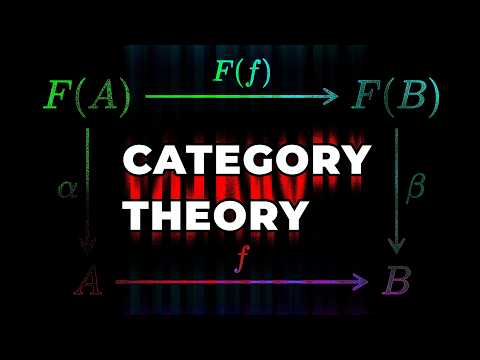
[Algorithmic Convergence]. The gap between symbolic logic and neural networks is closing through category theory. Expect architectures that are "correct by construction" rather than just "likely correct."
[Audit Architecture]. Evaluate new models based on their "algorithmic alignment" rather than just parameter count. Prioritize implementations that bake in non-invertible logic.
The next year will see a shift from scaling data to scaling structural priors. If you aren't thinking about how your model's architecture mirrors the problem's topology, you are just an alchemist in a world about to discover chemistry.
Strategic Implication: The future of software development isn't about *if* we use AI, but *how* we integrate human understanding and architectural discipline to prevent an "infinite software crisis.
Builder/Investor Note: Builders must prioritize deep system understanding and explicit planning over raw generation speed. Investors should favor companies that implement robust human-in-the-loop processes for AI-assisted development.
The "So What?": Over the next 6-12 months, the ability to "see the seams" and manage complexity will differentiate thriving engineering teams from those drowning in unmaintainable, AI-generated code.
Strategic Implication: The market for AI transformation services is expanding rapidly, driven by enterprises seeking to integrate AI for tangible business outcomes.
Builder/Investor Note: Focus on AI solutions with clear, practical applications for mid-market and enterprise clients. Technical talent capable of bridging research with deployment holds significant value.
The "So What?": The next 6-12 months will see increased demand for AI engineers who can implement and scale AI solutions, moving beyond proof-of-concept to widespread adoption.
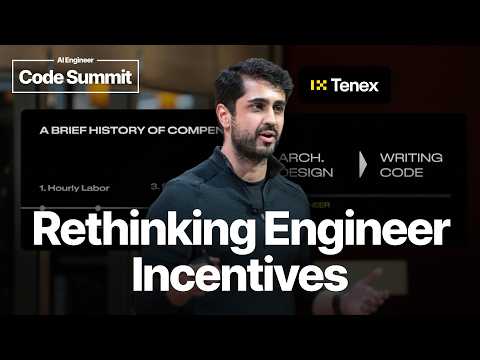
Compensation Innovation: The traditional compensation playbook for engineers is outdated. New models that directly reward AI-augmented output will attract top talent and drive efficiency.
Builder/Investor Note: Founders should re-evaluate their incentive structures. Investors should seek companies experimenting with these models, as they may achieve outsized productivity.
The "So What?": The productivity gap between AI-augmented and non-AI-augmented engineers will widen. Companies that adapt their incentives will capture disproportionate value in the next 6-12 months.
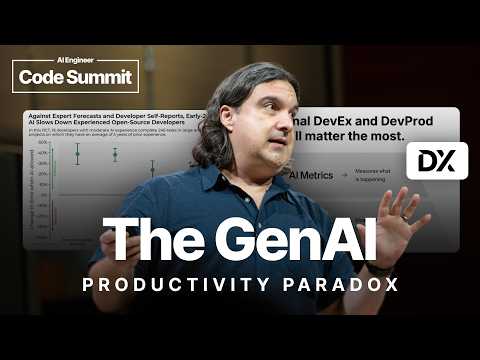
Strategic Shift: Successful AI integration means identifying and solving *your* organization's specific SDLC bottlenecks, not just boosting code completion.
Builder/Investor Note: Prioritize psychological safety and invest in AI skill development. For builders, this means dedicated learning time; for investors, look for companies that do this well.
The "So What?": The next 6-12 months will separate organizations that merely *adopt* AI from those that *master* its strategic application and measurement, driving real competitive advantage.
Strategic Implication: AI integration is a company-wide transformation, not a feature. Organizations must re-architect processes, tools, and culture to compete.
Builder/Investor Note: Prioritize internal tooling that democratizes AI experimentation. Look for companies establishing "model behavior" as a distinct, cross-functional discipline.
The "So What?": The next 6-12 months will reward builders who bake AI security and user control into product design from day one, recognizing that technical mitigations alone are insufficient.
All Roads Lead to Debasement: Both political parties are now committed to a policy of fiscal dominance and financial repression. The goal is to inflate away the debt, which makes holding cash and traditional bonds a losing proposition.
Get Out on the Risk Frontier: The only rational response is to move capital into assets that can benefit from currency debasement and a manufactured asset boom. This means frontier tech, crypto, and other high-growth, high-risk assets.
The Social Contract is Breaking: These policies will blatantly exacerbate wealth inequality, fueling populist anger. The system is no longer a free market but a manipulated game, and the backlash will define the political landscape for the next decade.
**The Great Bifurcation:** Capital is rotating out of altcoins and into two main buckets: Bitcoin (channeled through treasury companies) and crypto-adjacent equities (COIN, HOOD). Don't mistake isolated pumps for a broad "alt season."
**Synthetics are the New Speculation:** The next wave of on-chain gambling will be on synthetic versions of real-world assets, from private company shares to public stocks, providing exposure without the complexity of ownership.
**Apps Over Chains:** The most valuable real estate in crypto is no longer the base layer but the application layer. Companies that build sticky, revenue-generating products with great UX—even if they just clip fees—are winning.
**Bet on a Thesis:** Coinbase is a pure-play bet on the entire global economy moving on-chain, positioning itself as the essential B2B infrastructure provider.
**Follow the Money:** Robinhood is a bet on demographics, strategically positioning itself to capture the next generation's financial life and inherit trillions in the great wealth transfer.
**The Next Frontier is On-Chain:** The new battleground is Layer 2. Coinbase’s established Base ecosystem will face a formidable challenge from Robinhood Chain, with tokenized stocks as the initial prize.
**Invisible Rails are the Endgame:** The winner isn't the platform that forces users to understand blockchain, but the one that makes it invisible. Mainstream adoption will arrive when consumers use stablecoins without even knowing it, powered by seamless wallet and card integrations.
**Wallets Are the New Financial Hub:** Wallets are transcending simple storage to become full-fledged financial platforms. The next wave of innovation will focus on embedding neobank-like features (direct deposits, bill pay) into non-custodial wallets.
**AI Will Run on Stablecoins:** The rise of autonomous AI agents executing commercial tasks will create massive demand for a programmable, internet-native currency. Stablecoins are the clear frontrunner to become the default payment rail for this new automated economy.
Exporting US Monetary Policy. Stablecoins are extending the US financial system's reach by creating a global on-ramp to dollar assets. Demand from emerging markets now directly impacts US Treasury yields.
The Repo Market is the Epicenter. The crucial arena for stablecoin reserves is shifting from T-bills to the reverse repo market. This creates a massive, structural demand for overnight lending against Treasury collateral.
A Permanent Weight on the Yield Curve. This constant, inelastic demand from stablecoin issuers will act as a permanent force suppressing Treasury funding rates, creating a powerful and lasting influence on the entire US yield curve.
Robinhood is the Blueprint. Its plan to launch tokenized assets on its own future Layer-2 is the new model for financial institutions, creating a direct challenge to the supremacy of existing public blockchains.
Become a Trader, Not a "Crypto Trader". The most successful investors will be those who treat crypto as one of several asset classes, moving capital opportunistically based on macro trends, political shifts, and emerging frontiers like prediction markets.
Politics Will Drive Your Portfolio. While both US political parties are expected to debase the dollar through spending, they present different risks. The Republican party is seen as bullish for risk assets via deregulation, while a progressive Democratic shift could introduce bearish headwinds through redistributionist policies.