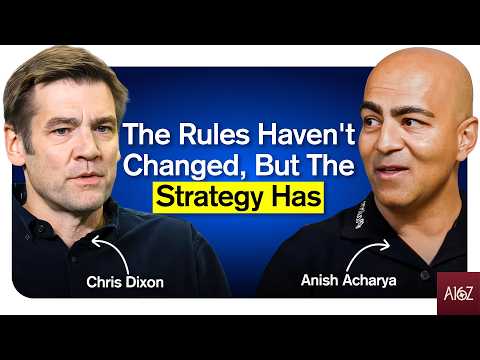
**Ride the Wave, Don't Fight It.** Exponential forces like Moore's Law and network effects will overwhelm any product tactic. Your first job is to identify the fundamental technological or social current you're riding.
**Build a Tool, Then a Network.** Defensibility in consumer tech often comes from network effects, but you can’t start there. Solve a user’s problem in single-player mode first to build the critical mass needed for an unbeatable network.
**Explore the Fringe.** The future is being prototyped in niche subreddits and hobbyist communities. To find the next big thing, look for small groups of hyper-enthusiastic people working on things that seem like toys today.
Find the "Death War." Cuban's biggest wins come from identifying industries where competitors are forced to spend billions to survive (like AI today or streaming media rights a decade ago). These moments create massive opportunities for suppliers and disruptors.
Sell a Better Life, Not an Ideology. Whether in politics or business, success comes from solving people’s immediate, tangible problems. Abstract goals and ideological purity don't sell.
The Real Moat is Domain Expertise + AI. The next generation of billion-dollar companies will be built by founders who can apply AI to specific, overlooked business processes, creating hyper-efficient, customized SaaS solutions.
Stop Regulating Ghosts. Policy should target concrete, illegal uses of AI under existing laws, not hypothetical future harms that require licensing regimes and kill startups before they can compete.
Compliance is a Competitive Moat. Regulations designed for trillion-dollar companies are a death sentence for startups. A 50-state patchwork of rules would be the final nail in the coffin for a competitive AI ecosystem.
Innovation Needs a Political War Chest. The pro-innovation camp has been outmaneuvered by well-organized "safetyism" advocates. Building political gravity through organized efforts like PACs is now essential to ensure America wins the AI race.
**The Agent is the Moat.** Ridges’ success with cheaper models demonstrates that the true differentiator in AI coding is the agent architecture, not just the underlying LLM. This focus on efficiency creates a sustainable business model where competitors burn cash.
**Alpha-to-Equity Creates a Capital Bridge.** This model directly ties the token's value to profit-sharing equity, creating an arbitrage loop for crypto and traditional funds. It offers a powerful alternative to typical tokenomics by capturing the value of the underlying business.
**The Future of Software is Supervisory.** The ultimate goal is not just a better coding autocomplete, but a tool that elevates developers and product managers to supervisors of AI engineering teams, fundamentally changing how software is created.
The Market is the Economy. The old wall between Wall Street and Main Street has crumbled. The high degree of financialization means they are now a single, symbiotic entity.
Your Portfolio is a Utility. The stock market is becoming a public utility for distributing national wealth, with ownership becoming nearly universal. This trend is set to accelerate.
Capital is the New Labor. This system provides the foundation for an AI economy by creating a mechanism to pay people from capital returns, solving the problem of mass unemployment before it begins.
**Stop Confusing Hardness with Reality.** Theoretical computer science focuses on worst-case scenarios. Real-world success hinges on exploiting messy, latent structure that we can’t even formally define yet.
**Intelligence is Tool-Making.** Humans aren't just powerful processors; we're tool-users who extend our cognitive workspace. AI will remain limited until it can recognize its own limitations and build the tools it needs to overcome them.
**Demand Transparency Over Explainability.** For high-stakes decisions like criminal justice or medical diagnoses, proprietary black boxes are unacceptable. The right to confront your accuser extends to the algorithms that judge you.
Decentralized Training is Unlocked. The SparseLoCo optimizer makes training massive (70B+ parameter) models over the internet practical. This is Bittensor’s direct answer to the centralized AI training monopoly.
The Future is Value-Added Compute. Raw decentralized compute is a commodity game. Covenant’s strategy with Basilica is to win by building unique, high-margin services on top, like verifiable inference and hardware efficiency amplification.
The Full Stack is the Moat. By integrating pre-training (Templar), intelligent compute (Basilica), and post-training (Grail), Covenant is building a flywheel. This synergy creates an end-to-end pipeline that is more than the sum of its parts.
**The Media War is Attention vs. Intention.** The future isn't about more content; it's a battle between algorithmically-generated "slop" designed to hijack your attention and curated culture that serves your long-term interests.
**True Platform Power is Granting Freedom.** Substack's most defensible moat is counterintuitive: giving creators the power to leave. This forces the platform to innovate and earn its keep, fostering genuine loyalty over lock-in.
**Creators Are the New Founders.** The unbundling of talent from media institutions mirrors VC's impact on tech. Independent creators are becoming "ambitious media founders," building new ventures on platforms that align value creation with value capture.
The Great Rotation is On. The post-summer period is signaling a major shift from over-extended large-cap tech into small caps (IWM) and hard assets. Improving market breadth and historical parallels suggest this rotation has legs.
Inflation is Structural. Political pressure on the Fed, coupled with labor gaining power over capital, is cementing a new, higher inflation regime. Do not expect a return to the disinflationary 2010s.
AI's Capex Boom Faces a Reality Check. The AI narrative is fueling a massive debt-driven capex cycle. If revenues don't keep pace, a bust is inevitable. Crypto, having already deleveraged, appears much earlier in its cycle.
The investment focus must shift from foundational layers to the services built on top.
Prioritize investments in public equities of companies that actively use crypto infrastructure or in private equity of crypto-native applications with strong, centralized teams capable of rapid decision-making and direct value reinvestment into their token.
The market is increasingly discerning between tokens that compound value and those that do not.
The quantum threat forces a re-evaluation of cryptographic foundations, pushing blockchains towards more robust, future-proof designs. This shift is not just about defense but about positioning for long-term institutional trust and capital.
Prioritize chains actively researching and implementing post-quantum solutions, especially those with clear migration roadmaps and a willingness to adapt core protocols.
The race to quantum-proof crypto is on. Chains that act decisively now will secure their future, attract significant capital, and potentially set new industry standards, while those that delay risk systemic failure.
AI's compute demand reshapes infrastructure, pulling Bitcoin miners into stable new business models while forcing crypto to confront an existential quantum threat.
Prioritize chains and protocols investing in post-quantum cryptography, focusing on clear migration roadmaps and robust hash- or lattice-based solutions.
The next 6-12 months will clarify miner AI contracts, Bitcoin's market correlation, and quantum upgrade urgency. Position your portfolio and research towards projects showing foresight and execution.
The fragmentation of crypto liquidity across chains demands a unified, programmable interface for complex user strategies. LI.FI's VM and transaction rail are building this composable layer, abstracting away the underlying complexity.
Investigate protocols building on LI.FI's infrastructure for streamlined multi-chain operations. For tokenized asset issuers, prioritize integration with platforms offering broad wallet distribution like LI.FI.
The future of crypto involves seamless multi-chain interactions and widespread tokenized asset adoption. LI.FI's innovations position them as a core enabler, making sophisticated DeFi accessible and driving liquidity to new assets over the next 6-12 months.
The era of easy, broad-market gains from passive investing is ending. Unprecedented AI capital expenditure is driving a wedge between tech and tangible assets, forcing a re-evaluation of traditional correlations and creating a bifurcated market where "real things" with fixed supply constraints are gaining favor over software-driven growth. This shift is also revealing a quiet reacceleration in Main Street economics, previously masked by top-tier spending.
Adopt a long-short, beta-neutral approach to capitalize on extreme market dispersion. Identify and invest in "bottleneck" assets (e.g., metals, energy, manufacturing inputs) that are essential for AI infrastructure and have inelastic supply, while selectively shorting or avoiding overvalued software companies facing existential threats from AI.
The market is undergoing a fundamental re-rating. Capital will increasingly flow from over-indexed, high-multiple digital assets to under-owned, supply-constrained physical assets. Ignoring this "flipping of the boat" means missing out on significant alpha and risking capital in sectors facing structural headwinds.
AI is driving a rapid, unprecedented capital concentration into a select group of companies and hard assets, creating a bifurcated economic reality where skilled labor gains leverage while low-skill labor faces immediate displacement.
Invest in the "picks and shovels" of the AI boom: the companies building data centers, providing energy, and offering specialized services to this infrastructure. For individuals, become an AI-fluent, indispensable contributor in your field.
The next 3-4 years are a critical window. Position your finances and career now to capitalize on the AI-driven wealth transfer and avoid being left behind as economic value consolidates at an accelerating pace.