Strategic Implication: The next decade will be defined by who builds the core infrastructure for intelligence. This is where the most significant value and influence will accrue.
Builder/Investor Note: Direct capital and talent towards foundational AI components—chips, models, and interoperable systems. Avoid the temptation to only build at the application layer.
The So What?: The window for shaping the future of intelligence is now. Engage in the deepest, most complex challenges to secure a footprint in this new era.
Strategic Implication: The global AI race is a zero-sum game for foundational models. Europe's best strategy is a "smart second mover" approach, focusing on the implementation layer by ensuring interoperability and data portability.
Builder/Investor Note: Invest in AI that achieves true autonomy and enhances expert productivity. Be wary of markets stifled by over-regulation, which can impede AI adoption and growth.
The "So What?": Europe faces a critical juncture. Without embracing AI-driven growth, its demographic and debt problems will worsen, leading to higher interest rates without the corresponding economic expansion.
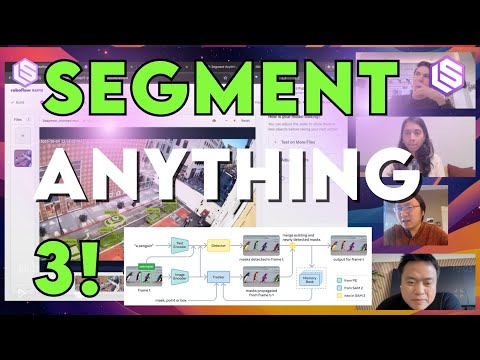
Vision AI Democratization: SAM 3 lowers the barrier for sophisticated vision tasks, making advanced segmentation and tracking accessible for a wider range of applications.
Builder/Investor Note: Focus on domain-specific adaptations and tooling that enhance human-AI interaction for ambiguous visual concepts. The "last mile" of user intent is a key differentiator.
The "So What?": SAM 3 accelerates the development of multimodal AI, particularly in robotics and video analysis, by providing a robust, scalable visual foundation for the next generation of intelligent systems.
Strategic Shift: The next frontier in robotics is less about pure algorithmic breakthroughs and more about building robust, scalable data infrastructure and full-stack product systems that can handle the messy physical world.
Builder/Investor Note: Prioritize companies solving the "boring" but critical data and systems problems. Look for practical, "scrappy" companies deploying robots in specific industrial niches, rather than just those with flashy, general-purpose demos.
The "So What?": The gap between impressive demos and deployable products will narrow over the next 6-12 months as data pipelines mature and product-focused companies gain traction. Expect to see more robust, self-correcting robots performing longer, more complex tasks in controlled environments.
Ecosystem Dominance: NVIDIA's strategy extends beyond hardware; they are building an end-to-end ecosystem of software, open-source models, and direct support, making them indispensable for national AI initiatives.
Builder Opportunity: Leverage NVIDIA's open-source Blueprints for agentic AI and Nemotron models for high-performance, customizable solutions. Prioritize local context in model training and data.
Strategic Imperative: Sovereign AI is a growing global trend. Nations and companies that can build and control AI tailored to their specific cultural, linguistic, and regulatory environments will gain a significant advantage in the coming years.
The democratization of RL fine-tuning will accelerate the development and deployment of more reliable and sophisticated AI agents across industries.
Builders should explore open-source LLMs combined with RL fine-tuning as a cost-effective strategy to achieve specific performance benchmarks, especially where latency and cost are critical.
Platforms abstracting infrastructure complexity and providing integrated tooling for the entire AI development lifecycle are crucial for the next phase of AI agent deployment.
Pre-Training is the New Frontier: The next leap in AI capabilities, particularly for agentic systems, will come from fundamental advancements in pre-training, not just post-training tweaks.
Builders & Investors: Focus on teams rethinking loss objectives, curating high-quality reasoning data, and developing dynamic benchmarks for agentic capabilities. Be wary of "agentic" claims that lack foundational pre-training innovation.
The "So What?": Over the next 6-12 months, expect a push for new benchmarks and data strategies that explicitly train models for multi-step planning, long-form reasoning, and error recovery, moving beyond simple next-token prediction.
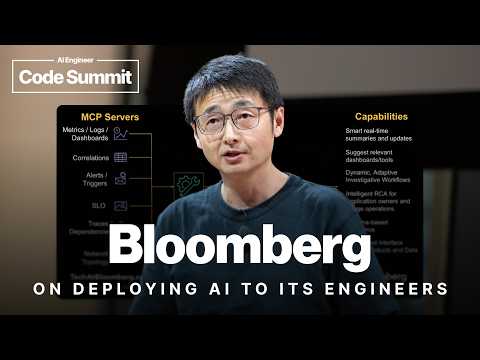
Strategic Implication: AI fundamentally changes the economics of software development. Organizations must re-evaluate what constitutes "high-quality" engineering and adapt their processes.
Builder/Investor Note: Prioritize platforms that provide guardrails and guidance for AI tool usage, focusing on deterministic verification and robust testing. Uncontrolled AI deployment risks technical debt.
The "So What?": The next 6-12 months will see a bifurcation: companies that strategically integrate AI into their engineering culture and platforms will gain significant efficiency, while those that don't will struggle with quality and adoption.
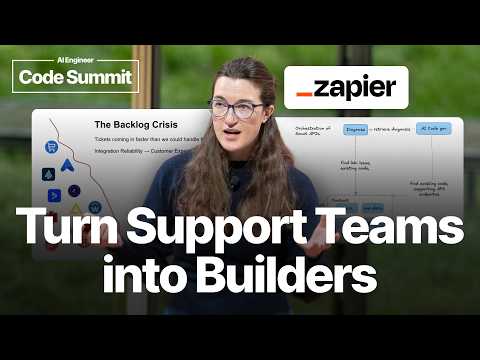
Workflow Automation is the New Frontier: The real value of AI in developer tools comes from orchestrating entire workflows, not just individual point solutions.
Embed for Adoption: Tools must integrate seamlessly into existing workflows and IDEs (like Cursor) to achieve high usage.
Support as a Code-Shipping Powerhouse: Empowering non-traditional roles with AI-driven code generation leverages their unique, real-time context, creating significant operational leverage.
The investment focus must shift from foundational layers to the services built on top.
Prioritize investments in public equities of companies that actively use crypto infrastructure or in private equity of crypto-native applications with strong, centralized teams capable of rapid decision-making and direct value reinvestment into their token.
The market is increasingly discerning between tokens that compound value and those that do not.
The quantum threat forces a re-evaluation of cryptographic foundations, pushing blockchains towards more robust, future-proof designs. This shift is not just about defense but about positioning for long-term institutional trust and capital.
Prioritize chains actively researching and implementing post-quantum solutions, especially those with clear migration roadmaps and a willingness to adapt core protocols.
The race to quantum-proof crypto is on. Chains that act decisively now will secure their future, attract significant capital, and potentially set new industry standards, while those that delay risk systemic failure.
AI's compute demand reshapes infrastructure, pulling Bitcoin miners into stable new business models while forcing crypto to confront an existential quantum threat.
Prioritize chains and protocols investing in post-quantum cryptography, focusing on clear migration roadmaps and robust hash- or lattice-based solutions.
The next 6-12 months will clarify miner AI contracts, Bitcoin's market correlation, and quantum upgrade urgency. Position your portfolio and research towards projects showing foresight and execution.
The fragmentation of crypto liquidity across chains demands a unified, programmable interface for complex user strategies. LI.FI's VM and transaction rail are building this composable layer, abstracting away the underlying complexity.
Investigate protocols building on LI.FI's infrastructure for streamlined multi-chain operations. For tokenized asset issuers, prioritize integration with platforms offering broad wallet distribution like LI.FI.
The future of crypto involves seamless multi-chain interactions and widespread tokenized asset adoption. LI.FI's innovations position them as a core enabler, making sophisticated DeFi accessible and driving liquidity to new assets over the next 6-12 months.
The era of easy, broad-market gains from passive investing is ending. Unprecedented AI capital expenditure is driving a wedge between tech and tangible assets, forcing a re-evaluation of traditional correlations and creating a bifurcated market where "real things" with fixed supply constraints are gaining favor over software-driven growth. This shift is also revealing a quiet reacceleration in Main Street economics, previously masked by top-tier spending.
Adopt a long-short, beta-neutral approach to capitalize on extreme market dispersion. Identify and invest in "bottleneck" assets (e.g., metals, energy, manufacturing inputs) that are essential for AI infrastructure and have inelastic supply, while selectively shorting or avoiding overvalued software companies facing existential threats from AI.
The market is undergoing a fundamental re-rating. Capital will increasingly flow from over-indexed, high-multiple digital assets to under-owned, supply-constrained physical assets. Ignoring this "flipping of the boat" means missing out on significant alpha and risking capital in sectors facing structural headwinds.
AI is driving a rapid, unprecedented capital concentration into a select group of companies and hard assets, creating a bifurcated economic reality where skilled labor gains leverage while low-skill labor faces immediate displacement.
Invest in the "picks and shovels" of the AI boom: the companies building data centers, providing energy, and offering specialized services to this infrastructure. For individuals, become an AI-fluent, indispensable contributor in your field.
The next 3-4 years are a critical window. Position your finances and career now to capitalize on the AI-driven wealth transfer and avoid being left behind as economic value consolidates at an accelerating pace.