The decoupling of parameter count from active compute via sparsity means intelligence is becoming a software optimization problem as much as a hardware one.
Audit your agentic workflows for turn efficiency rather than just cost per token.
In a world of infinite tokens, the winner is the one who can verify the truth the fastest.
The Macro Pivot: The transition from LLMs as chat interfaces to LLMs as logic engines. As models move from text prediction to logic execution, the value moves from the model itself to the verification systems surrounding it.
The Tactical Edge: Audit the stack. Prioritize the integration of agentic coding tools like Jules to shorten the feedback loop between ideation and deployment.
The Bottom Line: Code is the only medium where AI can self-correct and scale without human intervention. The next 12 months will be defined by who can turn raw model power into reliable, self-healing code.
The Macro Transition: We are moving from "fire-and-forget" prompts to durable execution environments where state is as important as the model itself.
The Tactical Edge: Wrap your existing tool calls in the `useStep` function to gain instant retry logic and execution history.
The Bottom Line: Reliability is the primary moat in the agent market. Builders who adopt durable workflows will move to production while others are still debugging local scripts.
The move from manual prompt engineering to automated prompt learning. As models become commodities, the proprietary loop that refines them becomes the moat.
Implement a Train-Test Split for your prompts. Use a subset of failure data to generate new rules and validate them against a separate holdout set to ensure the logic holds.
Reliability is the only metric that matters for agent adoption. If you are not using a feedback loop to update your system instructions, you are building on sand.
The move from industrial management to creative inspiration. As AI automates routine tasks, the only remaining value is high-variance human creativity.
Apply the Keeper Test today. Ask your leads which team members they would fight for and provide generous exits for the rest to reset your talent bar.
Scaling doesn't require more rules. It requires better people. If you can maintain talent density, you can run fast while your competitors choke on their own handbooks.
A New Economic Primitive: Bittensor is pioneering "Incentivism," a model that replaces traditional companies with a decentralized network of goals and globally competing workers, creating a system that is described as "capitalism squared.
TAO is an Index on Innovation: The network is designed so all value accrues back to the base TAO token through staking mechanisms. Investing in TAO is effectively an index bet on the entire ecosystem’s innovation.
An Unbeatable Cost Structure: The "Law of Subnet Stacking" enables exponential cost reductions, giving the Bittensor ecosystem a potentially insurmountable competitive advantage over centralized incumbents.
**The Market Is Cooked.** With momentum buyers exhausted and value buyers absent, the risk/reward on majors like BTC and ETH is heavily skewed to the downside. The party may not be over, but it's time to find the exit.
**DEXs Are Not CEXs.** Decentralized perpetual exchanges like Hyperliquid offer unparalleled access but lack the circuit breakers and centralized oversight of a Binance. In these venues, you are the risk manager, and there is no sheriff coming to save you.
**Beware OG Whales.** The market is still heavily influenced by a small number of early crypto holders operating with immense capital and unsophisticated "ape first, research later" strategies. Their unpredictable actions can and will create violent dislocations.
**The Fed's dovish turn is the primary market catalyst.** Powell's signals of impending rate cuts have injected massive optimism, driving ETH to a new all-time high and confirming that macro now dictates crypto's direction.
**Capital is aggressively rotating from Bitcoin to Ether.** This classic cycle rotation, amplified by whale activity and trader expectations, is a self-fulfilling prophecy, positioning ETH as the next dominant asset to watch.
**The Solana treasury narrative is the next frontier.** With the window closing for new Bitcoin and ETH treasury vehicles, a fierce competition is underway to establish the dominant, "Saylor-like" figurehead for Solana, creating a new focal point for institutional capital.
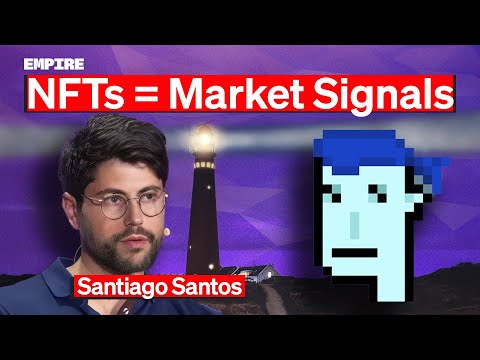
**Track NFT Blue-Chips as a Signal.** The price action of collections like CryptoPunks acts as a potent gauge for the "wealth effect" and overall risk appetite within the crypto ecosystem. Their peaks often correlate with broader market tops.
**Separate Collecting from Investing.** Frame high-end NFT acquisitions as an "expense" for art you genuinely love, not a financial investment. This strategy decouples your emotional well-being from market volatility.
**Embrace Your Top-Signal Buys.** An expensive purchase at a market peak isn't just a loss; it's a powerful lesson in humility. Use it as a constant reminder that no one is immune to market psychology.
Ditch the Rotator Playbook. This isn't 2021. Stop chasing every pump. Success this cycle requires picking a few narratives, believing in them, and holding with conviction.
Make On-Chain Money Real. Stablecoins encourage bad habits. Cash out profits to a real bank account to create a psychological barrier against recklessly aping your gains back into the market.
Plan for Post-Win Depression. The dopamine crash after a massive score is inevitable. Resist the urge to chase that high; prioritize building sustainable, real-world income instead of buying status symbols.
A Politicized Fed is the Baseline. Assume the Federal Reserve will be pressured to cut rates to neutral (~3%) by 2026, creating an unusually loose policy backdrop relative to strong nominal growth.
Mind the Fiscal Cliff, Then the Rocket Ship. Brace for a temporary growth slowdown as tariffs bite over the next few months, but prepare for a sharp re-acceleration in 2026 if and when new stimulus kicks in.
Ditch Old Hedges, Buy Protest Assets. Your portfolio's traditional diversifiers (long bonds, USD) are broken. Shift allocation toward assets that benefit from inflation risk and high nominal growth: commodities, crypto, and undervalued international equities.