The Macro Shift: Agentic Abstraction. We are moving from Model-as-a-Service to Agent-as-a-Service where the harness is as important as the weights.
The Tactical Edge: Standardize your CLI. Use tools like ripgrep (RG) that models already have "habits" for to see immediate performance gains.
The Bottom Line: The next 12 months will see the end of manual integration engineering as agents become capable of navigating UIs and legacy terminals autonomously.
The commoditization of syntax means architectural judgment is the only remaining moat. As the cost of code hits zero the value of intent skyrockets.
Replace your manual refactoring workflows with a burn and rebuild strategy. Use agents to generate entirely new modules instead of patching old ones.
Seniority is no longer a shield against obsolescence. You must spend the next six months building your agentic intuition or risk being replaced by a PhD student with a prompt.
The Macro Evolution: Standardized communication layers are replacing custom API integrations. This commoditizes the connector market and moves value to the models that best utilize these tools.
The Tactical Edge: Standardize your internal data tools using MCP servers today. This ensures your company is ready for autonomous agents that can discover and use your resources without manual API integration.
The Bottom Line: The agentic stack is consolidating around MCP. Interoperability is no longer a feature; it is the foundation for the next decade of AI utility.
The Macro Shift: From Model-Centric to Eval-Centric. The value is moving from the LLM itself to the proprietary evaluation loops that keep the LLM on the rails.
The Tactical Edge: Export production traces and build a "Golden Set" of 50 hard examples. Use these to run A/B tests on every prompt change before hitting production.
The Bottom Line: Reliability is the product. If you cannot measure how your agent fails, you haven't built a product; you've built a demo.
The transition from chatbots with tools to agents that build tools marks the end of the manual integration era.
Stop building custom model scaffolding and start building on top of opinionated agent layers like the Codex SDK.
In 12 months, the distinction between a coding agent and a general computer user will vanish as the terminal becomes the primary interface for all digital labor.
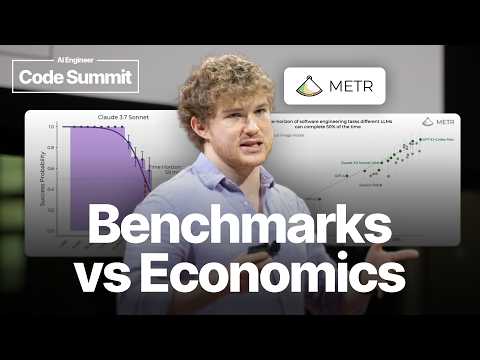
The Capability-Utility Gap is widening. We see a divergence where models get smarter but the friction of human-AI collaboration keeps productivity flat.
Deploy AI for mid-level engineers or low-context tasks. Avoid forcing AI workflows on your top seniors working in complex legacy systems.
The next year will focus on reliability over raw intelligence. The winners will have models that require the least amount of human babysitting.
The Macro Shift: AI's exponential growth creates unprecedented demand for high-throughput, low-cost blockchain infrastructure. TradFi's direct investment in specific altcoins signals crypto's maturation as a utility layer.
The Tactical Edge: Invest in protocols and tokens offering genuine utility for AI agent payments and high-volume transaction processing, or attracting long-term institutional capital.
The Bottom Line: Institutional crypto adoption and accelerating AI will reshape token value and blockchain necessity. Position your portfolio and building efforts towards infrastructure handling AI-scale demand and assets with clear utility.
The market is moving towards tokenized financial products that abstract complexity and offer diversified exposure, bypassing traditional financial friction for a broader, international user base.
Builders should focus on creating transparent, single-token yield products with diversified, underwritten strategies that offer enterprise-grade access to global users, rather than relying on unsustainable incentive models or monolithic yield sources.
Over the next 6-12 months, capital will consolidate around projects that prioritize transparency, diversification, and real-world utility, particularly those serving underserved global markets.
The global demand for accessible, risk-adjusted USD yield is colliding with crypto's need for sustainable economic models. This pushes the industry towards tokenized, diversified financial products that abstract complexity and offer enterprise-grade solutions to a worldwide audience.
Prioritize protocols building liquid yield tokens with transparent, diversified backing strategies and a single-token model. For builders, focus on abstracting away chain and contract complexity to deliver smooth user experiences that rival TradFi.
The next 6-12 months will see a flight to quality in crypto. Projects offering genuine utility, robust risk management, a clear path to sustainable yield will capture market share, especially those serving global users who lack traditional financial access.
The crypto industry is actively re-evaluating the balance between decentralized governance and centralized execution, recognizing that efficient value capture often requires streamlined decision-making and clear economic alignment between core contributors and token holders.
Investors should scrutinize protocols for clear revenue-sharing models that benefit token holders and identify platforms that effectively monetize "uninformed" retail flow, as these often hide significant, sustainable profit margins for market makers and the platforms themselves.
The next 6-12 months will test which protocols can successfully transition from pure technical innovation to sustainable economic models. Watch for Aave's fintech execution, Polymarket's continued retail monetization, and LayerZero's ability to establish its chain as a primary asset issuance layer.
The Macro Shift: DeFi's maturation is driving a consolidation of value capture, moving from diffuse governance tokens to integrated, revenue-generating token models that mirror traditional finance.
The Tactical Edge: Evaluate DeFi protocols based on their explicit revenue-sharing mechanisms and product-to-protocol alignment, prioritizing those with clear, token-centric economic models.
The Bottom Line: Aave's strategic shift creates a powerful flywheel where product innovation directly boosts AAVE token value, positioning it as a leading, investable DeFi asset for the next market cycle.
"The tokenization of RWAs is expected to be the primary driver of onchain asset growth over the next 10 years."
"The core underlying driver of I need stable coins and I now need yield on those stable coins is unstoppable in my opinion and is all weather doesn't matter the macro conditions."
"What's happening is you just you you're you're messing up one of the components and you hear all of the components end to end need to line up right the stars need to align so to speak and then you start to really unlock an economic engine that is just at a completely different level."