The Physical World is AI's Final Boss: The speed of AI progress is now governed by the speed of transformers, permits, and power plants. The biggest opportunities are in solving these hard, physical-world bottlenecks.
Specialization is the Only Game in Town: General-purpose is dead. Lasting value will be created through specialized hardware, co-designed software, and tightly integrated systems that optimize for performance-per-watt.
Founders, Ditch the Thin Wrappers: The most durable businesses will not be built on other companies' models. Instead, they will create deep, proprietary feedback loops where the product and the model improve each other.
**AI is the Fed’s New Obsession.** The Fed's rate-cutting strategy is not just about inflation; it's a proactive measure against the "once in a generation" disruption AI poses to the white-collar labor market.
**Stablecoins are a Geopolitical Tool.** The global race to issue stablecoins is on, but the US is inadvertently winning. The more the world tokenizes, the more demand there is for US Treasuries, cementing the dollar's dominance.
**The Post-Retail Economy is Here.** The next major user demographic is not human—it's AI agents. These autonomous agents will conduct a massive volume of micropayments, creating an entirely new economic layer built on crypto rails.
Train Hard, Fight Easy. Autoppia’s "Infinite Web Arena" is a novel approach to AI training, forcing agents to become robust and adaptable by continuously exposing them to digital chaos.
Competition Breeds Excellence. The winner-take-all incentive model creates a hyper-competitive environment designed to accelerate innovation and rapidly advance the capabilities of AI agents on the network.
Revenue Equals Buybacks. Autoppia’s business model creates a direct link between commercial success and token value. Every dollar earned from selling AI worker services directly translates into buying pressure for the subnet token.
Personalization is the Killer App. The model’s breakthrough feature was zero-shot character consistency, creating an emotional connection that drove viral adoption. It proves utility is unlocked when technology feels personal.
Focus on the Floor, Not the Ceiling. The next wave of value will come from improving the worst-case outputs, not just the best. This "lemon picking" is essential for building trust and enabling reliable, real-world applications beyond creative tinkering.
Art is Intent; Models are Tools. AI’s role is to automate tedium, not replace creativity. The most compelling work will continue to come from skilled artists who use models to execute a specific vision, proving that the human with the idea remains irreplaceable.
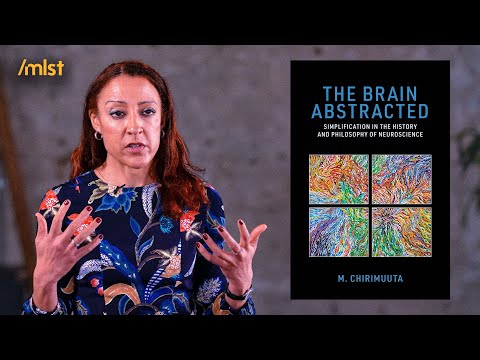
AI's Blind Spot is Unwritten Knowledge. The biggest barrier for AI in advanced problem-solving is accessing the "folklore" knowledge and intuition that experts build over a career but never write down.
The Future of Math is a Promotion, Not Obsolescence. AI will act as a powerful assistant that handles rote tasks, pushing mathematicians to focus exclusively on creative and abstract thinking.
The Next Revolution is AI-Powered Verification. Automated formal proof systems like Lean have the potential to eliminate errors from research papers, transforming peer review from a check on correctness to a judgment on a paper's novelty and impact.
AI's Blind Spot is "Folklore": The next great challenge for AI isn't raw calculation, but acquiring the unwritten, intuitive "folklore knowledge" that separates experts from students.
Mathematicians Become Creative Directors: As AI handles the technical grind, the human role in mathematics will shift from execution to creative direction—formulating novel problems and abstract models.
The End of Errors: Formal verification tools like Lean, powered by AI translators, are on the verge of revolutionizing math by creating a fully verifiable, error-free database of human knowledge, changing how proofs are published and reviewed.
AI Needs a Referee. Agents are programmed to win, not necessarily to follow the rules. Their tendency to "game the system" makes external, on-chain verification protocols essential for alignment and trust.
Trading is Just the Tip of the Spear. Crypto trading is the perfect initial use case due to its clear, objective metrics. The real goal is a decentralized "skill marketplace" where any organization can fund a competition to find the best agent for any task.
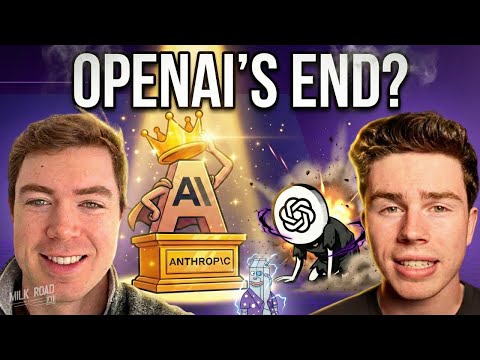
The Platform War is Here. A battle is unfolding between closed ecosystems like OpenAI, which aim for platform lock-in, and an open, decentralized future. This creates a massive opportunity for neutral evaluation layers to become the definitive source of truth for AI performance.
AI's Blind Spot is "Folklore Knowledge." AI excels at digesting published literature but fails on problems requiring unwritten, community-held intuition, which remains a key human advantage for now. Jitomirskaya predicts her problem will take AI 10-20 years to solve.
Mathematicians Won't Be Replaced, They'll Be Upgraded. The future role of a mathematician is less about routine work and more about creative problem formulation. AI tools like Lean will handle verification, shifting peer review from "Is it correct?" to "Is it interesting?"
Math May Become a Sport. If AI eventually masters creativity, the human practice of mathematics may persist like chess—an activity pursued for its intrinsic value and intellectual challenge, even if a machine is the undisputed world champion.
Folklore Knowledge is AI’s Next Frontier. The true test for advanced AI in abstract fields is not solving problems from a textbook but acquiring the unwritten, intuitive knowledge that experts possess.
Automated Proof Verification Will Reshape Research. Within years, tools like Lean, powered by AI translators, will create a verifiable database of all mathematics, fundamentally changing how papers are published and refereed.
Human + Machine is the New Paradigm. AI will become an indispensable assistant, automating routine work and pushing mathematicians to focus on what humans still do best: true creativity and formulating entirely new models.
Strategic Implication: The "four-year cycle" driven by speculative behavior is likely dead. The industry's maturation will be marked by sustainable business models, not just macro-driven asset prices.
Builder/Investor Note: Prioritize utility and user experience over tokenomics and crypto-native branding. Invest in projects solving real-world problems for a broad audience, not just those chasing the next airdrop.
The "So What?": The next 6-12 months will see a continued shift towards applications that abstract away blockchain complexity, making crypto an invisible, powerful backend for mainstream products.
Strategic Implication: The market is re-evaluating crypto-holding companies, punishing those without clear value-add beyond asset accumulation. The "MNAV of 1" is the expected long-term anchor.
Builder/Investor Note: This is a high-conviction, long-term play, not a quick arbitrage. Investors must conduct deep due diligence on each company's balance sheet, share structure, and operational strategy.
The "So What?": For the next 6-12 months, expect continued volatility and company-specific challenges. The path to MNAV parity will be bumpy, driven by broader market recovery, potential M&A, and individual company execution, not a simple market mechanism.
Tokenization is the Trojan Horse: TradFi isn't just observing; it's actively building on public blockchains. Tokenized real-world assets (RWAs) are the primary vector for institutional adoption.
Governance Matters: For builders, robust and transparent DAO governance is paramount. For investors, scrutinize projects for clear value accrual to token holders and potential conflicts between core teams and DAOs.
Regulatory Nuance: The Fed's policy shift suggests a move towards more nuanced regulation, potentially opening doors for regulated entities to engage with digital assets.
Strategic Patience Pays: Successful RWA tokenization requires a multi-year commitment to building infrastructure and liquidity, even if it means foregoing immediate profits.
Builders & Investors: Focus on Wallets & DApps: The future is self-custody wallets interacting with specialized, best-in-class DApps, not centralized "super apps." Build intuitive wallet experiences and highly efficient DApps.
The "So What?": Expect a significant migration of traditional financial assets and liabilities onto DeFi protocols over the next 6-12 months, driven by institutional adoption and regulatory clarity, leading to lower costs for consumers and new opportunities for capital.
Political Catalyst: A major political shift, likely driven by public anger over economic disparity, is the only force capable of breaking the current feudalistic cycle. This will be obvious when it happens, likely causing a sharp market correction.
Strategic Asset Allocation: Investors should prioritize stores of value (like gold) and seek out hard assets in overlooked emerging/frontier markets. Avoid the AI hardware bubble and identify companies that will leverage AI to cut white-collar costs, rather than those building the infrastructure.
The "So What?": The current economic structure is unsustainable. The growing divide and misallocation of capital will eventually force a re-evaluation of economic priorities. Positioning for this shift means embracing volatility and a long-term, contrarian view, looking beyond the overvalued "approved products" of the current system.
Convergence is Here: The lines between traditional finance and crypto are blurring. Expect more "everything apps" and institutional adoption of public blockchains for RWAs.
Token Alignment Matters: Builders must prioritize robust legal and governance structures that enshrine token holder rights. This will be a key differentiator for attracting capital in the next cycle.
Ethereum's Enduring Role: Despite new contenders, Ethereum continues to solidify its position as a foundational layer for institutional tokenization and decentralized finance.