The digital experience economy is moving from static content to dynamic, AI-driven co-experience platforms, where user interaction data becomes the core asset for training next-generation virtual intelligence.
Invest in platforms that offer robust, cloud-connected infrastructure and proprietary, vectorized user data for AI training, as these will be the engines for future immersive content and agentic AI development.
Roblox's long-term vision, powered by its unique data moat and AI investments, positions it to define the future of virtual co-experience, making it a critical player to watch for investors and builders in the AI and gaming space over the next 6-12 months.
The exponential reduction in the cost of intelligence, coupled with open-source proliferation, is pushing AI into every corner of society, creating a collective action problem where market incentives for "engaging" AI clash with the need for societal safety and control.
Get hands-on with AI now. "Vibe coding" and actively experimenting with AI tools builds "AI muscle," inoculating users against psychosis risks and building a deeper understanding of AI's capabilities and limitations.
AI is here to stay and will redefine work and interaction. Understanding its "hyperobject" nature, advocating for clear regulatory boundaries, and actively engaging with the technology are critical for navigating the near future without falling for its simulated charms.
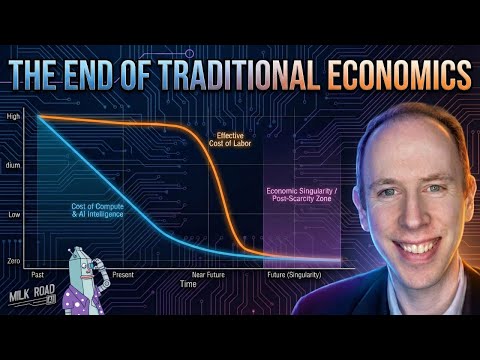
AI-driven hyperdeflation will fundamentally alter economic structures, leading to a post-scarcity future where the primary challenge shifts from production to distribution and the integration of human and machine economies.
Invest in infrastructure that bridges human and AI economies, or prepare for a future where AI agents become a significant, crypto-native economic force.
The next 6-12 months will see continued acceleration of AI capabilities, pushing us closer to a future where traditional labor and intelligence are nearly free. Understanding this change is crucial for navigating the emerging economic landscape and identifying new value creation opportunities.
The era of opaque, black-box AI is ending; the future demands intentionally designed models with human understanding and control. This shift is driven by reliability in high-stakes applications and extracting novel insights.
Investigate interpretability tools (like Goodfire's platform) to gain granular control over model behavior, moving beyond basic fine-tuning for critical applications.
Interpretability is not a niche; it's the missing piece for scaling AI safely into mission-critical domains. Mastering model understanding and intentional design will yield unprecedented capabilities and competitive advantage.
Robotics is moving from bespoke, data-hungry behavior cloning to generalized, human-informed learning via world models. This shift, mirroring the success of LLMs, means robots can use the vast, unstructured data of human experience to acquire new skills.
Invest in platforms and data pipelines that facilitate multi-modal, multi-stage training for humanoid robots. Prioritize systems that can generate synthetic data and use world models for high-throughput, targeted policy evaluation.
World models are the engine for scalable robot intelligence. They promise a future where robots learn faster, generalize wider, and self-improve through iterative simulation, making widespread humanoid deployment a near-term reality.
The Macro Shift: AI is collapsing the time horizon for technological deployment and market dominance, shifting the competitive advantage from pure innovation to a combination of innovation, capital, and rapid infrastructure deployment.
The Tactical Edge: Invest in companies that are not just building AI, but are fundamentally rethinking existing industries with AI-first principles, recognizing that traditional software moats are eroding.
The Bottom Line: The next 12-24 months will see AI's broad impact kick in, creating unprecedented opportunities for those who understand its new "laws of physics" and the critical role of policy in shaping its trajectory.
The healthcare system is moving from reactive, acute care to proactive, preventative interventions, driven by the unsustainable costs of chronic disease and a growing understanding of environmental health.
Build infrastructure that financially incentivizes lifestyle interventions, such as TrueMed's HSA/FSA payment rails for health-promoting products and services.
The next decade will see hundreds of billions of dollars redirected towards preventative health. Companies that bridge the gap between lifestyle choices and healthcare financing will capture significant market share.
The Macro Shift: Global energy demand, driven by AI, forces a strategic re-evaluation of nuclear power. This creates a window for nations to re-shore critical energy infrastructure, moving from reliance on adversaries to domestic, cost-competitive solutions.
The Tactical Edge: Investigate companies addressing foundational supply chain gaps in critical industries like energy. Look for teams with a "first principles" engineering approach and a track record of commercializing hard tech.
The Bottom Line: America's energy independence and its ability to power future technological growth, like AI, hinge on rebuilding domestic nuclear fuel enrichment. This is not just an industrial opportunity; it is a national security imperative.
Ethereum's L1 scaling redefines L2s from pure throughput solutions to specialized platforms, while AI agents introduce a new, autonomous layer of on-chain activity.
Investigate L2s that offer unique features or cater to specific enterprise needs beyond just low fees.
The future of crypto involves a more performant Ethereum L1, specialized L2s, and a burgeoning agentic economy.
The rapid rise of autonomous AI agents demands a decentralized trust layer. Blockchains, initially an "internet of money," are now becoming the foundational "internet of trusted agent commerce," providing verifiable identity and reputation essential for multi-agent economies. This shift moves beyond simple payments to establishing a credible, censorship-resistant framework for AI-driven interactions.
Integrate ERC-8004 into agent development. Builders should register their AI agents on ERC-8004 to establish verifiable on-chain identity and reputation, attracting trusted interactions and avoiding future centralized platform fees or censorship.
The future of AI commerce hinges on decentralized trust. ERC-8004 is the foundational primitive for this, ensuring that as AI agents become more sophisticated and transact more value, the underlying infrastructure remains open, fair, and resistant to single points of control. This is a critical piece of the puzzle for anyone building or investing in the agent economy over the next 6-12 months.
Agentic AI is not just a tool; it's a new layer of abstraction for decentralized networks. It shifts the barrier to entry from deep technical and crypto-specific knowledge to strategic prompting and resource allocation, accelerating network participation and value accrual.
Experiment now. Deploy a hosted agentic AI like OpenClaw (via seafloor.bot) with a small budget to understand its capabilities in a controlled environment. Focus on automating complex setup tasks within decentralized AI protocols like Bittensor to gain firsthand experience before others.
The rise of agentic AI agents will fundamentally reshape how individuals and organizations interact with and profit from decentralized AI. Those who master agent orchestration and "skill" development will capture disproportionate value as these systems become the primary interface for programmable intelligence and capital.
AI's gravitational pull on talent and capital is forcing crypto to mature beyond speculative tokenomics, transitioning focus from "meme value" to demonstrable product-market fit and real-world utility.
Identify and invest in projects building at the intersection of crypto and AI, or those creating "net new" applications that abstract away crypto complexity for mainstream users, especially in areas like identity or fintech.
This bear market is a necessary, albeit painful, reset. It's a time for builders to focus on creating tangible value and for investors to seek out projects with genuine utility, as the era of easy speculative gains is over.
The commodification of AI compute, driven by decentralized networks, is shifting power from centralized data centers to globally distributed, incentive-aligned miners. This creates a more efficient, resilient, and cost-effective foundation for intelligence.
Explore building AI agents and applications on Shoots' expanding platform, leveraging their TEEs and end-to-end encryption for privacy-sensitive use cases. The "Sign in with Shoots" OAuth system offers a compelling way to integrate AI capabilities without upfront compute costs.
Shoots is not just an inference provider; it's building the foundational infrastructure for a truly decentralized, private, and intelligent internet. Over the next 6-12 months, expect to see a proliferation of sophisticated AI agents and applications built on Shoots, driven by its unique blend of incentives, security, and global compute.
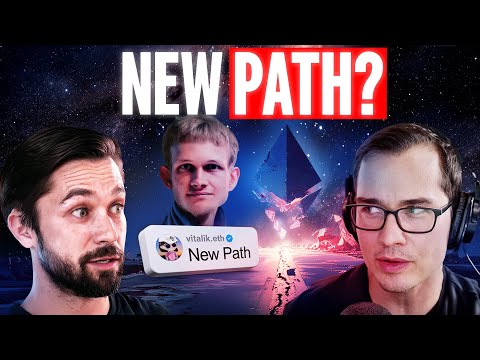
The Macro Shift: Ethereum pivots from a "rollup-centric" vision to a multi-faceted approach: a powerful, ZKVM-scaled L1 coexists with a diverse "alliance" of specialized L2s. This adapts to technical realities and renews L1's core focus.
The Tactical Edge: Builders should prioritize differentiated L2 solutions or contribute to L1's ZKVM scaling. Investors should evaluate L2s based on distinct utility and symbiotic relationship with Ethereum.
The Bottom Line: Ethereum's market leadership remains, but this pivot signals a pragmatic roadmap. The next 6-12 months will see rallying around L1 ZKVM scaling and clearer L2 roles, demanding sharper focus on where value accrual and innovation occur.