**Verification Is the New Moat.** In a world flooded with AI agents, the ability to prove performance is the most critical bottleneck. Recall’s protocol creates a "proof-of-skill" standard.
**From Hype to Hire.** The platform shifts the paradigm from speculative AI hype to a functional marketplace where businesses can effectively "hire" agents with a proven track record for specific, economically valuable tasks.
**Performance Is the Asset.** By scoring agents based on consistent, real-world results, Recall provides a clear signal for organizations looking to deploy AI and for investors seeking to back top performers.
**The Fed Is Trapped:** Powell is trying to project strength, but the underlying trend is toward more liquidity. The pivot to buying T-bills is a form of stealth QE designed to keep the system functioning.
**Markets Are A Rigged Game:** Forget fundamentals. Public markets are now a positioning game defined by extreme concentration in Big Tech and speculative retail frenzies, widening the gap between Wall Street and Main Street.
**The AI Boom Is A Double-Edged Sword:** While driving incredible earnings, the AI buildout is transforming Big Tech into a riskier, debt-fueled, capex-heavy industry, making the entire economy dangerously dependent on a handful of stocks.
**It's Not a Bubble, It's a Race.** The AI buildout is a rational, ROI-positive arms race funded by cash-rich giants. Unlike the dot-com era’s "dark fiber," today’s GPUs are fully utilized, generating immediate returns.
**Sacrifice Margins or Die.** SaaS companies must abandon their obsession with 90% gross margins. In the AI era, lower margins signal that customers are actually using your product. Embrace them or become irrelevant.
**The New Outcome Economy is Coming.** Business models will pivot from subscriptions to outcomes. AI will enable services to be priced on measurable results, from resolving a customer support ticket to booking the perfect vacation, squeezing inefficiency out of the market.
The Physical World is AI's Final Boss: The speed of AI progress is now governed by the speed of transformers, permits, and power plants. The biggest opportunities are in solving these hard, physical-world bottlenecks.
Specialization is the Only Game in Town: General-purpose is dead. Lasting value will be created through specialized hardware, co-designed software, and tightly integrated systems that optimize for performance-per-watt.
Founders, Ditch the Thin Wrappers: The most durable businesses will not be built on other companies' models. Instead, they will create deep, proprietary feedback loops where the product and the model improve each other.
**AI is the Fed’s New Obsession.** The Fed's rate-cutting strategy is not just about inflation; it's a proactive measure against the "once in a generation" disruption AI poses to the white-collar labor market.
**Stablecoins are a Geopolitical Tool.** The global race to issue stablecoins is on, but the US is inadvertently winning. The more the world tokenizes, the more demand there is for US Treasuries, cementing the dollar's dominance.
**The Post-Retail Economy is Here.** The next major user demographic is not human—it's AI agents. These autonomous agents will conduct a massive volume of micropayments, creating an entirely new economic layer built on crypto rails.
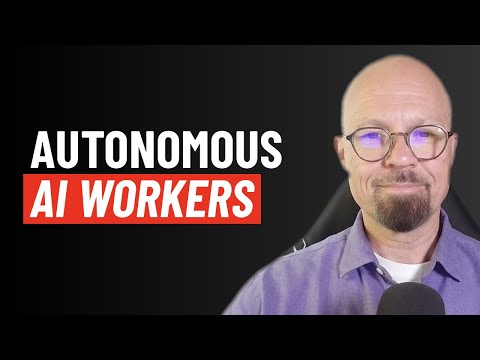
Train Hard, Fight Easy. Autoppia’s "Infinite Web Arena" is a novel approach to AI training, forcing agents to become robust and adaptable by continuously exposing them to digital chaos.
Competition Breeds Excellence. The winner-take-all incentive model creates a hyper-competitive environment designed to accelerate innovation and rapidly advance the capabilities of AI agents on the network.
Revenue Equals Buybacks. Autoppia’s business model creates a direct link between commercial success and token value. Every dollar earned from selling AI worker services directly translates into buying pressure for the subnet token.
Personalization is the Killer App. The model’s breakthrough feature was zero-shot character consistency, creating an emotional connection that drove viral adoption. It proves utility is unlocked when technology feels personal.
Focus on the Floor, Not the Ceiling. The next wave of value will come from improving the worst-case outputs, not just the best. This "lemon picking" is essential for building trust and enabling reliable, real-world applications beyond creative tinkering.
Art is Intent; Models are Tools. AI’s role is to automate tedium, not replace creativity. The most compelling work will continue to come from skilled artists who use models to execute a specific vision, proving that the human with the idea remains irreplaceable.
AI's Blind Spot is Unwritten Knowledge. The biggest barrier for AI in advanced problem-solving is accessing the "folklore" knowledge and intuition that experts build over a career but never write down.
The Future of Math is a Promotion, Not Obsolescence. AI will act as a powerful assistant that handles rote tasks, pushing mathematicians to focus exclusively on creative and abstract thinking.
The Next Revolution is AI-Powered Verification. Automated formal proof systems like Lean have the potential to eliminate errors from research papers, transforming peer review from a check on correctness to a judgment on a paper's novelty and impact.
AI's Blind Spot is "Folklore": The next great challenge for AI isn't raw calculation, but acquiring the unwritten, intuitive "folklore knowledge" that separates experts from students.
Mathematicians Become Creative Directors: As AI handles the technical grind, the human role in mathematics will shift from execution to creative direction—formulating novel problems and abstract models.
The End of Errors: Formal verification tools like Lean, powered by AI translators, are on the verge of revolutionizing math by creating a fully verifiable, error-free database of human knowledge, changing how proofs are published and reviewed.
The demand for specialized "human alpha" in AI is intensifying, particularly for high-stakes problems where LLMs hit a performance ceiling. Platforms like Crunch are essential infrastructure for channeling this scarce human intelligence into decentralized networks.
Builders should integrate abstraction layers that simplify Web3 interaction for non-crypto native experts. This expands the talent pool and accelerates innovation by removing technical barriers to entry.
The future of decentralized AI hinges on effectively combining machine compute with unique human insight. Investing in platforms that bridge this gap will capture significant value as the "price of intelligence above benchmark" becomes increasingly transparent and monetizable.
The US is actively competing for crypto leadership, moving from a reactive, enforcement-first approach to proactive legislation and regulatory guidance. This strategic pivot aims to keep innovation and capital within American borders, positioning the US as a hub for future financial technology.
Monitor the progress of the Clarity Act and other market structure legislation in Congress. Focus on projects and protocols that align with the emerging regulatory framework, particularly those in DeFi and tokenization, as these areas stand to benefit most from increased certainty and institutional participation.
The next few years are critical for establishing durable crypto policy. A stable regulatory environment, coupled with strong political influence, will prevent future policy reversals. This period offers a unique opportunity for builders and investors to capitalize on a clearer path for onchain finance and technology.
The era of individual "superpowers" is here, where AI agents amplify personal expertise, allowing non-technical individuals to build and operate complex systems previously reserved for large teams. This democratizes high-skill output, shifting value from raw coding to strategic system design and prompt engineering.
Implement an agent-first workflow by setting up a personal Discord server with specialized AI sub-agents (e.g., "Saul Goodman" for legal, "Milhouse" for research). Train them with your data and integrate APIs for automated tasks like content generation or data analysis, reducing reliance on manual processes and external hires.
Over the next 6-12 months, the ability to effectively deploy and manage personal AI agents will be a critical differentiator. Those who master this will not only multiply their personal output but also gain a significant competitive advantage in content, trading, and online business, effectively becoming a one-person enterprise.
The convergence of legacy finance and DeFi is accelerating, driven by institutional demand for efficiency and new product capabilities, leading to a "Neo Finance" era where tokenization is the default for asset management.
Focus on infrastructure and protocols that facilitate institutional-grade tokenization and vault strategies, as these will capture significant value as traditional assets migrate on-chain.
The next 6-12 months will see institutions solidify their DeFi presence, making tokenized assets and vaults central to their strategies. Builders and investors must understand this shift to position themselves for the inevitable re-rating of financial infrastructure.
The Macro Shift: As crypto moves from niche tech to mainstream finance, it inherits the complex regulatory and criminal challenges of traditional systems, forcing a re-evaluation of its core principles like self-custody and transaction finality.
The Tactical Edge: Advocate for nuanced regulatory discussions that differentiate between legitimate innovation and outright fraud, while actively exploring privacy-preserving technologies like zero-knowledge proofs to mitigate real-world physical risks for users.
The Bottom Line: The industry must proactively address its vulnerabilities and engage constructively with regulators and the public. Ignoring these issues or retreating into insular arguments will only hinder crypto's long-term legitimacy and widespread adoption over the next 6-12 months.
The global economy is undergoing a dual transformation: a shift from lagging, survey-based economic data to real-time, granular insights (like Truflation's), and a speculative AI infrastructure build-out by tech giants.
Monitor Truflation's real-time inflation data and the balance sheets of MAG7 companies to identify early signs of market dislocation or mispriced assets.
The convergence of AI and blockchain will redefine economic measurement and payment rails, while massive AI infrastructure spending could create a new financial bubble.