Intent Over Implementation: The value in software creation shifts from low-level coding to clearly defining intent and design, with AI handling the technical execution.
Rapid Prototyping: Builders can now rapidly prototype and deploy complex, full-stack applications, significantly compressing development cycles and lowering entry barriers.
New Creator Economy: Expect a surge in non-technical creators building sophisticated applications, driving innovation in UI/UX and personalized content.
Strategic Shift: The "factory-first" mindset is a strategic reorientation towards physical production, enabled by AI, extending beyond traditional manufacturing to all large-scale infrastructure.
Builder/Investor Note: Focus on companies applying modular design, AI-driven process optimization, and automation to sectors like housing, energy, and mining. Data centers are a leading indicator for these trends.
The "So What?": Rebuilding America's industrial capacity through these methods offers a competitive advantage, impacting defense, consumer goods, and commercial sectors in the next 6-12 months.
Strategic Implication: The future of AI agents hinges on practical utility and adaptive reasoning, not just raw scale. Models that integrate expert feedback and iterative thinking will outperform those focused solely on benchmarks.
Builder/Investor Note: Builders should prioritize robust generalization through diverse training perturbations. Investors should seek models that demonstrate real-world adoption and cost-effective scalability for multi-agent architectures.
The So What?: The next 6-12 months will see a shift towards smaller, highly specialized, and deeply integrated AI models that function as reliable co-workers, driving efficiency in developer workflows and complex agentic tasks.
Strategic Shift: The industry is moving from code generation to code orchestration. The value lies in guiding AI, not just prompting it.
Builder/Investor Note: Invest in tools that enhance "vibe engineering" (real-time steering, context management) and education for senior developers. Avoid strategies that solely rely on AI to replace junior talent without skilled oversight.
The "So What?": Over the next 6-12 months, the ability to effectively "vibe engineer" will become a critical differentiator, separating high-performing teams from those drowning in AI-generated "slop."
Strategic Implication: The next frontier in AI involves a fundamental shift from statistical compression to genuine abstraction and understanding.
Builder/Investor Note: Focus on research and development that grounds AI in first principles, leading to more robust, efficient, and interpretable systems, rather than solely scaling existing empirical architectures.
The "So What?": The pursuit of mathematically derived, parsimonious, and self-consistent AI architectures offers a path to overcome current limitations, enabling systems that truly learn, adapt, and reason in the next 6-12 months and beyond.
Data Scarcity is a Feature, Not a Bug: Be wary of narratives built on incomplete data. Just because a dataset (on-chain, AI training) is all we have, doesn't mean it's representative.
Standardization is Survival: For any new technology (crypto protocols, AI models), robust "lexicography" and clear documentation are critical for long-term adoption and preventing fragmentation.
Question the "Received Law": Don't assume current "archaeological evidence" (e.g., current blockchain data, AI model limitations) tells the whole story. Look for the "perishable materials" that might be missing.
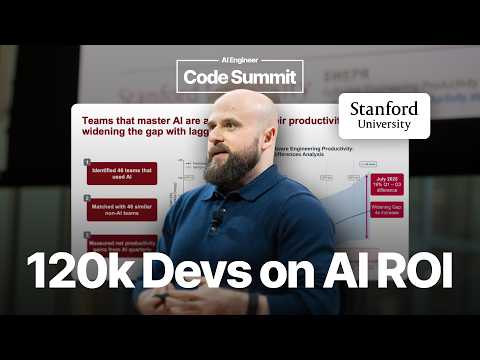
Strategic Shift: AI ROI isn't about adoption, it's about intelligent adoption. The gap between top and bottom performers will widen based on measurement sophistication and codebase health.
Builder/Investor Note: For builders, prioritize codebase hygiene and engineer training before or concurrently with AI rollout. For investors, scrutinize AI productivity claims; ask about code quality, rework rates, and specific measurement frameworks beyond simple usage.
The "So What?": In the next 6-12 months, companies that master AI integration by focusing on quality, measurement, and environment will compound their gains, while those chasing superficial metrics risk significant tech debt and negative ROI.
Strategic Implication: The next frontier of AI in software isn't just *generating* code, but *governing* its quality. This shift will redefine competitive advantage.
Builder/Investor Note: Prioritize investments in AI-powered quality gates, intelligent code review, and dynamic testing. For builders, feed your AI tools rich, comprehensive context. For investors, look for companies building these "picks and shovels."
The "So What?": The promised 2x-10x productivity gains are real, but they won't come from raw code generation alone. The next 6-12 months will see a scramble to implement agentic, context-aware quality workflows to unlock AI's true potential across the SDLC.
Strategic Shift: The competitive edge in AI agents is moving from clever architecture to superior model training data and robust RL environments.
Builder/Investor Note: Prioritize raw model capability over complex agent stacks. Builders should contribute to open-source RL environments; investors should seek companies focused on generating and leveraging high-quality training data.
The "So What?": The next 6-12 months will see a race to build and utilize real-world, outcome-driven benchmarks. Open initiatives like Client Bench could democratize model improvement and accelerate AI development significantly.
Build Real, Not Just Rallies: Prioritize long-term, sustainable businesses with tangible revenue models over chasing fleeting crypto trends.
Utility Tokens Trump Speculation: Design tokens to solve core project problems or incentivize user behavior, not merely for market hype.
Solana's Next Wave: Infrastructure for Reality: Leverage crypto as a backend for innovative solutions to real-world problems, targeting broader, non-crypto native audiences.
Trust is Quantifiable: AI investors can build dynamic trust scores by systematically paper-trading community signals, effectively rewarding proven alpha generators.
Beyond Wallet Snooping: "Social copy wallet" systems can unearth expert insights without needing direct access to individual wallet addresses, thus broadening the discoverable talent pool.
Community as a Vetted Oracle: The collective intelligence of crypto communities, when filtered through a performance-based trust layer, can power sophisticated AI investment decisions.
ETH: Trade the Chart, Doubt the Core. Ethereum’s technicals may offer a trading setup, but deep-seated skepticism about its fundamental delivery persists.
Worldcoin Warning: The massive FDV and emission schedule for Worldcoin scream "sell pressure," making it a risky long-term hold despite any hype.
Invest with Edge: Focus on revenue-generating altcoins and areas you understand; it's okay to miss out on trades where you lack a clear advantage.
Fund Smarter, Not Harder: Tau's SNS tokens let Bittensor subnets raise capital by tokenizing a slice of future emissions, not their core alpha tokens, sidestepping immediate sell pressure.
DTA Means Business: The Dynamic TAO model is a crucible, compelling Bittensor subnets to graduate from emission-chasers to product-driven, revenue-focused ventures.
Unlocking Subnet Investing: SNS tokens, via LayerZero, promise to simplify access to subnet investments, potentially onboarding a wave of new capital and users to the Bittensor ecosystem from other chains.
Bitcoin's Bullish Trajectory: Bitcoin is on a path to potentially reach $150k-$200k, supported by a low-hype, strong-setup environment and a more sophisticated investor base.
Strategic Altcoin Hunting: Focus on revenue-generating altcoins with solid fundamentals (check DeFiLlama) and consider measured exposure to the burgeoning AI crypto sector.
Prioritize Self-Custody: Given exchange vulnerabilities, holding your assets offline in cold storage is more critical than ever.
L1 is HQ: Ethereum's "pivot" reasserts the L1's central role, supported by L2s that offer crucial business model diversity and customization for the world coming on-chain.
Value Accrual via Security & Confidence: ETH's valuation is increasingly tied to the total economic value it secures and the market's confidence in its future, not just direct fee revenue.
Business Development is Crucial: To compete and grow, Ethereum requires a significantly more robust and proactive go-to-market strategy to attract users, institutions, and developers.