Cultivate a diverse, long-term network, prioritizing relationships.
Seek "boring" businesses in high-demand, underserved markets, and invest in customer experience and product quality.
Future wealth creation for builders and investors demands a long-term, value-add mindset, leveraging partnerships and foundational improvements, not fleeting trends.
AI-driven automation and deflationary economics are converging with Tesla's proprietary neural networks and vast real-world data. This creates an unassailable moat in autonomous transportation and labor.
Monitor upcoming regulatory approvals for unsupervised FSD in key US states. This event will trigger the rollout of Tesla's robo-taxi network, fundamentally altering vehicle economics.
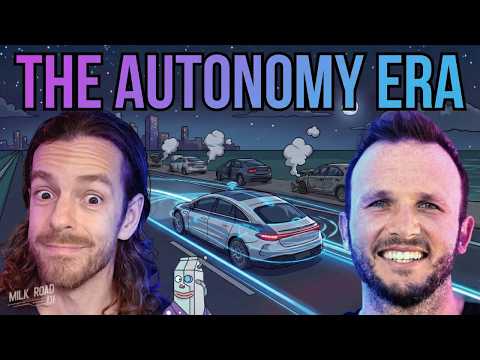
Tesla is not just a car company; it is a foundational AI and robotics platform. Its FSD and robo-taxi network, combined with the broader Musk ecosystem, position it to capture a multi-trillion dollar market in autonomous services and labor, driving massive deflation and investor upside over the next decade.
Tesla is an AI company, not a car manufacturer. This means its core product is autonomous intelligence, with cars serving as its initial deployment device.
Tesla's 8 million cars on the road constantly collect real-world driving data. This massive, proprietary dataset is an insurmountable moat, enabling its neural network AI to learn at a scale no competitor can match.
The convergence of Tesla, SpaceX, and XAI aims to create an abundance of cheap transportation and labor. This will drive massive deflation, making goods and services significantly more affordable globally.
The global economy is shifting from human-centric labor to AI-driven autonomous systems. Tesla's vertically integrated AI stack, from data to hardware, positions it as the architect of a deflationary future.
Evaluate Tesla not as an automotive stock, but as an AI and robotics platform with an unassailable data advantage. Consider FSD's Q2 rollout implications for direct investment and market disruption.
Tesla's unsupervised FSD and robo taxi network will unlock a new, massive revenue stream, potentially 10x current revenue by 2030, excluding humanoid robots. This re-rates Tesla as a multi-trillion dollar AI and robotics titan.
AI-driven automation, spearheaded by Tesla's vertical integration, will create unprecedented deflationary pressures across transportation and labor, redefining economic models and consumer behavior.
Monitor Q2 regulatory approvals for unsupervised FSD in key US states. This event will trigger the activation of Tesla's existing 8 million vehicle fleet into a revenue-generating network, repricing the company.
Tesla is not just a car company; it's a foundational AI platform. Its FSD lead, coupled with the impending robo taxi network and humanoid robots, positions it to capture a significant share of global transportation and labor markets, making it a critical long-term bet for investors and a bellwether for the AI economy.
Tesla is not a car company at all. It's an AI company. It's an autonomous company, autonomous robots company. And cars just happen to be one of the devices it's using to put the AI brain that it has into.
Tesla possesses an unparalleled dataset from 8 million cars, with 1 million actively using FSD. This massive, real-world driving data is impossible for competitors to replicate, creating an insurmountable lead in AI training.
Tesla owners will soon be able to deploy their cars as robo taxis, generating significant income. This transforms a depreciating asset into a revenue-generating one, incentivizing mass adoption and creating a new class of passive income.
AI-driven automation is converging with vertically integrated hardware and data ecosystems, creating winner-take-all dynamics in foundational industries.
Evaluate companies not by their current product category, but by their underlying AI and data moats. Tesla's FSD is a platform, not a feature.
Tesla's transition from carmaker to AI and robotics platform is not speculative; it is happening now.
The global economy is transitioning from human-centric labor and transportation to AI-driven autonomous systems. Tesla's vertical integration of hardware, software, data, and manufacturing positions it to capture this multi-trillion dollar change, driving unprecedented deflation.
Investors should recognize Tesla as an AI and robotics platform, not just an EV manufacturer. Consider the long-term implications of its FSD rollout and humanoid robot production, as these represent entirely new, high-margin revenue streams.
Tesla is on the cusp of activating unsupervised FSD and scaling robo-taxis, potentially within the next few quarters. This will reprice the company, not just on current earnings, but on the future value of global transportation, labor, and intelligence infrastructure.
AI-driven automation, spearheaded by Tesla's FSD and robotics, will create a deflationary economic environment by drastically reducing transportation and labor costs.
Evaluate Tesla not as an auto manufacturer, but as a vertically integrated AI and robotics platform. Its current valuation may not account for exponential revenue from FSD subscriptions and the robo-taxi network.
Tesla's strategic pivot to autonomous AI and robotics, with its data moat and impending unsupervised FSD, positions it to dominate multiple industries.
Build Real, Not Just Rallies: Prioritize long-term, sustainable businesses with tangible revenue models over chasing fleeting crypto trends.
Utility Tokens Trump Speculation: Design tokens to solve core project problems or incentivize user behavior, not merely for market hype.
Solana's Next Wave: Infrastructure for Reality: Leverage crypto as a backend for innovative solutions to real-world problems, targeting broader, non-crypto native audiences.
Trust is Quantifiable: AI investors can build dynamic trust scores by systematically paper-trading community signals, effectively rewarding proven alpha generators.
Beyond Wallet Snooping: "Social copy wallet" systems can unearth expert insights without needing direct access to individual wallet addresses, thus broadening the discoverable talent pool.
Community as a Vetted Oracle: The collective intelligence of crypto communities, when filtered through a performance-based trust layer, can power sophisticated AI investment decisions.
ETH: Trade the Chart, Doubt the Core. Ethereum’s technicals may offer a trading setup, but deep-seated skepticism about its fundamental delivery persists.
Worldcoin Warning: The massive FDV and emission schedule for Worldcoin scream "sell pressure," making it a risky long-term hold despite any hype.
Invest with Edge: Focus on revenue-generating altcoins and areas you understand; it's okay to miss out on trades where you lack a clear advantage.
Fund Smarter, Not Harder: Tau's SNS tokens let Bittensor subnets raise capital by tokenizing a slice of future emissions, not their core alpha tokens, sidestepping immediate sell pressure.
DTA Means Business: The Dynamic TAO model is a crucible, compelling Bittensor subnets to graduate from emission-chasers to product-driven, revenue-focused ventures.
Unlocking Subnet Investing: SNS tokens, via LayerZero, promise to simplify access to subnet investments, potentially onboarding a wave of new capital and users to the Bittensor ecosystem from other chains.
Bitcoin's Bullish Trajectory: Bitcoin is on a path to potentially reach $150k-$200k, supported by a low-hype, strong-setup environment and a more sophisticated investor base.
Strategic Altcoin Hunting: Focus on revenue-generating altcoins with solid fundamentals (check DeFiLlama) and consider measured exposure to the burgeoning AI crypto sector.
Prioritize Self-Custody: Given exchange vulnerabilities, holding your assets offline in cold storage is more critical than ever.
L1 is HQ: Ethereum's "pivot" reasserts the L1's central role, supported by L2s that offer crucial business model diversity and customization for the world coming on-chain.
Value Accrual via Security & Confidence: ETH's valuation is increasingly tied to the total economic value it secures and the market's confidence in its future, not just direct fee revenue.
Business Development is Crucial: To compete and grow, Ethereum requires a significantly more robust and proactive go-to-market strategy to attract users, institutions, and developers.