AI Needs a Referee. Agents are programmed to win, not necessarily to follow the rules. Their tendency to "game the system" makes external, on-chain verification protocols essential for alignment and trust.
Trading is Just the Tip of the Spear. Crypto trading is the perfect initial use case due to its clear, objective metrics. The real goal is a decentralized "skill marketplace" where any organization can fund a competition to find the best agent for any task.
The Platform War is Here. A battle is unfolding between closed ecosystems like OpenAI, which aim for platform lock-in, and an open, decentralized future. This creates a massive opportunity for neutral evaluation layers to become the definitive source of truth for AI performance.
AI's Blind Spot is "Folklore Knowledge." AI excels at digesting published literature but fails on problems requiring unwritten, community-held intuition, which remains a key human advantage for now. Jitomirskaya predicts her problem will take AI 10-20 years to solve.
Mathematicians Won't Be Replaced, They'll Be Upgraded. The future role of a mathematician is less about routine work and more about creative problem formulation. AI tools like Lean will handle verification, shifting peer review from "Is it correct?" to "Is it interesting?"
Math May Become a Sport. If AI eventually masters creativity, the human practice of mathematics may persist like chess—an activity pursued for its intrinsic value and intellectual challenge, even if a machine is the undisputed world champion.
Folklore Knowledge is AI’s Next Frontier. The true test for advanced AI in abstract fields is not solving problems from a textbook but acquiring the unwritten, intuitive knowledge that experts possess.
Automated Proof Verification Will Reshape Research. Within years, tools like Lean, powered by AI translators, will create a verifiable database of all mathematics, fundamentally changing how papers are published and refereed.
Human + Machine is the New Paradigm. AI will become an indispensable assistant, automating routine work and pushing mathematicians to focus on what humans still do best: true creativity and formulating entirely new models.
**The "Folklore" Bottleneck:** AI's primary limitation isn't complex logic but its inability to access uncodified, expert intuition—the "folklore" that guides human problem-solving.
**Automation Breeds Creativity:** As AI handles routine calculations and arguments, the value of human mathematicians will shift entirely to creative and abstract thinking, raising the bar for what constitutes a meaningful contribution.
**Proof Verification Is the Next Revolution:** The most immediate and profound change in mathematics will be AI-driven, formally verified proofs, which will guarantee correctness and reshape the entire publishing and peer-review landscape.
AI's Next Frontier is Unwritten Knowledge. AI has mastered logic, but its true test is acquiring the implicit, "folklore" knowledge that experts use intuitively but rarely write down.
Human Mathematicians Will Become Purely Creatives. As AI automates routine calculations and arguments, the role of a mathematician will shift entirely to high-level abstraction, creative problem formulation, and intuition.
Formal Verification Will Revolutionize Publishing. The combination of AI translators and formal proof assistants like Lean will soon make it possible to automatically verify all mathematical papers, fundamentally changing how research is validated and published.
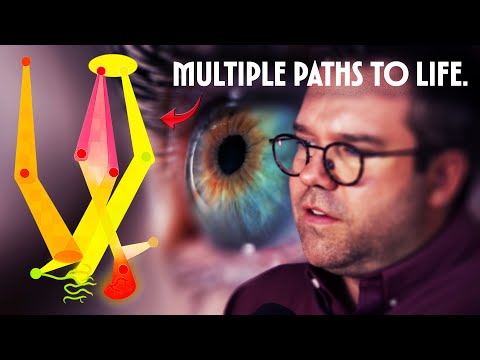
Life is a Process, Not a Substance. Stop defining life by its carbon-based hardware. The most fundamental properties of life are functional and informational processes that can manifest on any substrate, including human minds (culture) or silicon (AI).
Physics is the Great Equalizer. While the universe may teem with diverse biochemistries, all life is governed by the same physical constraints. These universal laws make life predictable at a macro level, creating evolutionary targets and forcing convergent solutions.
Evolutionary Leaps Aren't Random. Major transitions in life’s complexity, like the emergence of multicellularity, are often responses to hitting a hard physical wall, frequently triggered by radical environmental change. Evolution innovates most profoundly when its back is against the wall.
The "App Store" for AI Has Arrived. Sundae Bar isn't just a subnet; it's a full-stack business aiming to be the Shopify for AI agents, handling everything from discovery and custom builds to payments and monetization.
They Cracked the Custom Agent Puzzle. By integrating Leta Evals, Sundae Bar bypasses the need for a standardized benchmark. It can objectively grade bespoke agents, ensuring clients get high-quality, useful tools instead of gamed outputs.
Main Street Meets Crypto. As a publicly listed company with a CEO from Red Bull, Sundae Bar is built to bridge the gap between complex AI infrastructure and real-world business needs, making it one of the most compelling vehicles for mainstream adoption in the Bittensor ecosystem.
Altcoin Malaise Defines Sentiment: The real temperature check of the market isn't Bitcoin's price, but the performance of the "middle of the market." As long as altcoins lag, bearish sentiment will persist, even in a technical bull run.
Gold's Rally is Bitcoin's Prologue: Watch the flow of capital into gold. As central banks de-dollarize and a staggering $7.5 trillion sits in money market funds, gold is the first stop. Bitcoin is the next logical destination for that capital seeking a digitally native, debasement-resistant asset.
AI Agents Need Crypto Wallets: The convergence is here. AI models are already competing in trading competitions on-chain, and platforms like Coinbase are building the infrastructure (X42, MCP wallets) for AI agents to hold and spend crypto, creating a new machine-to-machine economy.
**Wait for the "Wow" Moment.** Don't be fooled by incremental progress. The true AI revolution in math will be a qualitative "phase change"—a sudden leap in creative reasoning, not just better computation.
**Think Native, Not Fluent.** The deepest impact will come from the next generation of mathematicians who use AI as a native language, not a retrofitted tool.
**Value Understanding Over Proof.** The ultimate measure of AI's success in mathematics won't be its ability to solve problems, but its capacity to generate genuine "epiphanies" and deepen human understanding.
Bitcoin's market behavior is increasingly dictated by sophisticated derivatives trading and institutional financial engineering, moving beyond historical halving cycles. Understanding TradFi options mechanics is crucial for predicting Bitcoin.
Monitor IBIT options market activity and implied volatility metrics closely, as these drive Bitcoin's short-term price action. Understand and capitalize on volatility mispricings or dealer hedging.
Simple Bitcoin narratives are over. Investors and builders must understand the complex interplay of traditional finance derivatives and market structure to navigate Bitcoin's future price movements over the next 6-12 months.
The speculative idea of AI agents driving quadrillions of transactions on crypto rails is rapidly becoming a foundational economic reality. This demand for high-throughput, low-cost, decentralized settlement is forcing a re-evaluation of blockchain architecture and token utility.
Identify and invest in protocols and chains that are demonstrably attracting institutional capital and building infrastructure for AI agent economies, particularly those solving for extreme scalability and near-zero transaction costs.
The next 6-12 months will see a clear bifurcation in the crypto market: assets with genuine utility and institutional adoption will separate from pure meme plays. Simultaneously, the accelerating capabilities of AI will demand increasingly robust and efficient onchain infrastructure, making the intersection of AI and crypto the most critical frontier.
The AI revolution is driving a massive capital concentration into infrastructure and asset ownership, creating a stark wealth divide that will likely precede political calls for redistribution.
Invest in hard assets and companies directly supporting AI infrastructure, while actively integrating AI tools into your skillset to become indispensable in your current role.
Position your capital and career now to benefit from the AI-driven wealth transfer, as money is cheap relative to the future value consolidated by AI builders, making this a critical window for strategic allocation.
Permissionless L2: Robinhood Chain is an open, permissionless Ethereum L2. This means anyone can build on it, contrasting sharply with the closed, proprietary blockchain initiatives from NASDAQ and NYSE.
Financial System Upgrade: Robinhood sees blockchain as a core technology to replace outdated financial systems, enabling 24/7 trading and instant settlement for traditional assets. This vision could fundamentally change how equities and other real-world assets are traded globally.
First User Advantage: Robinhood itself will be the primary user of its chain, customizing it for its needs while allowing other institutions to leverage its infrastructure. This positions Robinhood as both a platform provider and a leading innovator in tokenized finance.
The Macro Shift: As global monetary systems face increasing instability, institutional capital is seeking transparent, programmable, and yield-bearing alternatives in digital assets. This is driving a "revenue meta" where fundamental value accrual and robust risk management are paramount.
The Tactical Edge: Identify protocols and companies building infrastructure that bridges TradFi and DeFi with verifiable, RWA-backed yields and clear risk parameters. Prioritize those with strong institutional partnerships and a focus on sustainable, exogenous yield sources.
The Bottom Line: The next 6-12 months will see a continued influx of institutional capital into crypto, favoring platforms that offer predictable, risk-managed exposure to digital assets and real-world yields. Builders should focus on robust, transparent infrastructure, while investors should seek out projects with clear value accrual and institutional adoption.
The rise of autonomous AI agents is creating a new economic layer that demands blockchain's trustless execution and privacy guarantees. This shift will reprice traditional SaaS and middleman businesses, favoring direct agent-to-agent commerce.
Invest in infrastructure that provides secure credential management, sandboxed execution, and chain-agnostic payment rails for AI agents. Prioritize protocols actively building post-quantum secure primitives and native account abstraction.
The next 6-12 months will see a rapid acceleration in agentic capabilities and on-chain economic activity. Builders and investors must focus on privacy, security, and interoperability to capture value in this emerging, agent-driven internet.