Semantic Shift: The future of AI in code moves from text generation to deep semantic understanding and execution simulation.
Builder Opportunity: Develop next-generation debugging tools and code agents that leverage internal simulation for faster, more efficient development cycles.
Investor Focus: Prioritize models and platforms that demonstrate explicit execution modeling, as this capability will redefine software development and create new market leaders.
Infrastructure Shift: AI-driven kernel optimization addresses a critical bottleneck in scaling AI compute, enabling more efficient use of diverse hardware.
Builder/Investor Note: Focus on solutions with robust, hardware-verified performance metrics and a clear human-in-the-loop strategy. AI is a powerful tool for automating optimization, not a magic bullet for novel algorithmic breakthroughs.
The "So What?": This technology frees expert engineers from tedious optimization, allowing them to focus on higher-level research and truly innovative algorithmic design, accelerating the pace of AI development in the next 6-12 months.
Strategic Implication: The era of "free money" inflated the number of perceived compounders; a return to positive real rates demands a sharper focus on businesses demonstrating genuine financial discipline and competitive advantage.
Builder/Investor Note: Seek out "Act 2" entrepreneurs and companies that can leverage AI to transform existing physical or IP-based advantages, not just create new AI products. Be prepared to buy more when market sentiment turns negative on strong businesses.
The "So What?": The next 6-12 months will differentiate companies that merely adopt AI from those that strategically integrate it to build durable, uncatchable cost and distribution advantages.
The Future of Policing is Intelligent: Integrating AI, drones, and smart cameras creates a precise, accountable, and safer policing model for both officers and communities.
Invest in the "How": Builders and investors should focus on technologies that enhance certainty of capture, streamline judicial processes, and support public-private partnerships to modernize urban safety infrastructure.
Safety Fuels Mobility: Eliminating crime is not just about law enforcement; it's about restoring the fundamental safety required for economic mobility and a functional society.
Strategic Implication: The next decade's value will accrue to those building foundational AI infrastructure and the "invisible layers" that connect intelligent systems.
Builder/Investor Note: Focus capital and talent on core AI models, specialized domain intelligence, and the underlying computational fabric. Superficial applications risk rapid commoditization.
The So What?: This is the defining period for the architecture of global intelligence. Participation now determines future influence and relevance.
Strategic Shift: AI security must move beyond superficial guardrails to a full-stack, offensive red-teaming approach that accounts for the expanding attack surface of AI agents and their tool access.
Builder/Investor Note: Builders should prioritize integrating offensive security early in development. Investors should be wary of "security theater" and favor solutions that embrace open-source collaboration and address the entire AI application stack.
The "So What?": The accelerating pace of AI development means static security solutions will quickly become obsolete. Proactive, community-driven, and full-stack security research is essential for navigating the next 6-12 months of AI evolution.
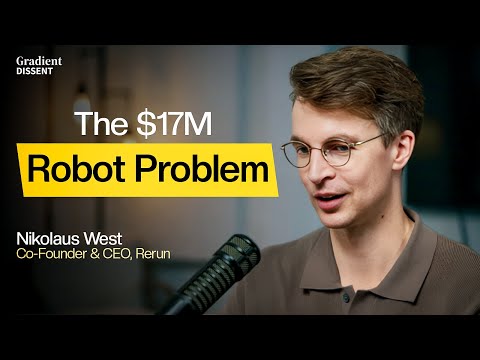
Data Infrastructure is the Next Bottleneck: The physical AI sector's growth hinges on specialized data tooling that can handle multimodal, multi-rate, episodic data, moving beyond traditional tabular models.
Builders, Prioritize Robustness: Focus on building systems that handle real-world variability and simplify data pipelines. Leverage open-source tools and consider combining imitation and reinforcement learning.
The "So What?": The next 6-12 months will see significant improvements in robot robustness and the ability to perform longer, more complex tasks. This progress will be driven by better data management, making the gap between lab demos and deployable products narrower.
The democratization of RL for LLMs will accelerate the deployment of more reliable and sophisticated AI agents across industries.
Builders should move beyond basic prompt engineering and RAG. RL fine-tuning, now accessible via W&B Serverless RL, is a critical next step for high-stakes agentic applications.
For the next 6-12 months, expect a surge in production-grade AI agents, with open-source models increasingly closing the performance gap with proprietary alternatives through advanced fine-tuning.
Dynamic Evaluation is Non-Negotiable: Static benchmarks are dead. Future AI development demands continuously updated, contamination-resistant evaluation sets.
AI Needs AI to Judge AI: As models grow more sophisticated, LLM-driven "hack detectors" become essential for ensuring code quality and preventing adversarial exploitation of evaluation systems.
User Experience Drives Adoption: For interactive AI coding tools, prioritize low latency and human-centric design; technical prowess alone will not guarantee real-world usage.
The Altcoin Graveyard Is Bitcoin's Tailwind. Capital is fleeing "useless" tokens and the defunct VC model, creating steady inflows for Bitcoin. The primary trade is now long BTC, short everything else.
From HODL to Tactical Alpha. The days of 100x returns on random tokens are gone. Generating alpha now requires sophisticated strategies like pairs trading, selling options volatility against spot holdings, and capitalizing on short-term macro events.
S&P is the New Dollar, Bitcoin is the New S&P. As the dollar loses its luster, the S&P 500 has become the default savings vehicle. Bitcoin has cemented its role as the premier risk-on asset within that new paradigm—a bet that “probably won’t” fail.
Wallets are Dead, Long Live Wallets: The future isn't a separate wallet app. It's an embedded, invisible experience inside the consumer apps themselves, just like friend.tech demonstrated.
From Gatekeepers to Curators: Centralized exchanges are becoming obsolete as gatekeepers. The new frontier is building sophisticated curation engines to help users discover signal in a sea of noise.
AI Agents are the Next Big User Base: The most forward-thinking founders aren't just building for humans; they're building for a future where AI agents drive the majority of on-chain trading volume.
**Stop Chasing Max Decentralization.** The market has voted with its volume. Users prioritize performance over ideological purity. "Verifiable Finance"—with centralized sequencers but guaranteed withdrawals—is the pragmatic path forward.
**Market Structure Is Destiny.** Inefficient L1s with toxic MEV force sophisticated teams to build workarounds (like the proprietary AMM Sulfi) or entirely new, controlled environments (like Atlas). The base layer's design dictates the quality of applications built on top.
**The Real Game Is Efficient Markets, Not Memecoins.** The long-term vision for crypto finance depends on building infrastructure that can attract institutional capital with fair, reliable, and highly efficient execution. The current system that incentivizes "bad fills" is a dead end.
Go-to-Market > Tech Specs: In the race between new chains, attracting a single breakout app is more critical than marginal performance gains. Value accrues to whoever owns the user relationship.
Bet on Improvable Niches: The biggest startup opportunities are in high-demand but clunky sectors like prediction markets and memecoin launchpads, where superior UX can create a dominant new player.
Look Forward, Not Sideways: Don't get trapped by the "revenue meta." Successful investing requires a forward-looking view of a project’s potential to capture future value, a lesson exemplified by the early thesis for Solana.
**The Real Bull Case is Boring.** The most significant trend isn't the next memecoin, but the "boring" migration of real-world finance onto blockchains via stablecoins. The winners will be those who solve for on-chain credit and build seamless user experiences, not just hype.
**Tokenization is a Double-Edged Sword.** While providing access to new assets, current tokenized stocks are riddled with counterparty risk, thin liquidity, and opaque structures. They are a step forward but risk backfiring if not communicated with radical transparency.
**The Altcoin Shakeout is Here.** Institutional interest is hyper-focused, leaving most altcoins without a bid. Protocols must now justify their existence with real revenue and utility, as the era of "liquidity-as-a-product" is over.
Tokenized Stocks Are Here, But Imperfect. Major players are live, but the current products are IOUs, not direct equity. The real test will be liquidity, price tracking, and regulatory endurance.
Tom Lee Is Creating the "MicroStrategy for ETH." He's pitching ETH to Wall Street not on decentralist ideals, but as the indispensable settlement layer for the coming stablecoin boom, front-running demand from major banks.
The US Is Pumping Crypto Bags. A massive deficit bill combined with an expected dovish Fed creates a perfect storm for liquidity, positioning assets like BTC and ETH as a necessary hedge against currency debasement.