Strategic Implication: The next decade will be defined by who builds the core infrastructure for intelligence. This is where the most significant value and influence will accrue.
Builder/Investor Note: Direct capital and talent towards foundational AI components—chips, models, and interoperable systems. Avoid the temptation to only build at the application layer.
The So What?: The window for shaping the future of intelligence is now. Engage in the deepest, most complex challenges to secure a footprint in this new era.
Strategic Implication: The global AI race is a zero-sum game for foundational models. Europe's best strategy is a "smart second mover" approach, focusing on the implementation layer by ensuring interoperability and data portability.
Builder/Investor Note: Invest in AI that achieves true autonomy and enhances expert productivity. Be wary of markets stifled by over-regulation, which can impede AI adoption and growth.
The "So What?": Europe faces a critical juncture. Without embracing AI-driven growth, its demographic and debt problems will worsen, leading to higher interest rates without the corresponding economic expansion.
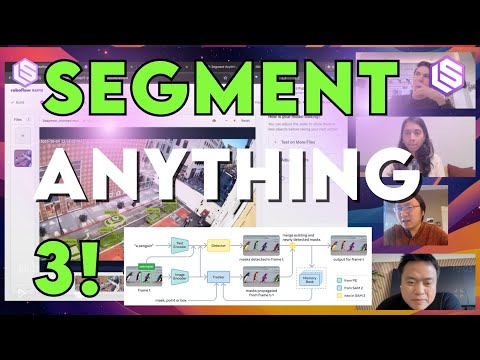
Vision AI Democratization: SAM 3 lowers the barrier for sophisticated vision tasks, making advanced segmentation and tracking accessible for a wider range of applications.
Builder/Investor Note: Focus on domain-specific adaptations and tooling that enhance human-AI interaction for ambiguous visual concepts. The "last mile" of user intent is a key differentiator.
The "So What?": SAM 3 accelerates the development of multimodal AI, particularly in robotics and video analysis, by providing a robust, scalable visual foundation for the next generation of intelligent systems.
Strategic Shift: The next frontier in robotics is less about pure algorithmic breakthroughs and more about building robust, scalable data infrastructure and full-stack product systems that can handle the messy physical world.
Builder/Investor Note: Prioritize companies solving the "boring" but critical data and systems problems. Look for practical, "scrappy" companies deploying robots in specific industrial niches, rather than just those with flashy, general-purpose demos.
The "So What?": The gap between impressive demos and deployable products will narrow over the next 6-12 months as data pipelines mature and product-focused companies gain traction. Expect to see more robust, self-correcting robots performing longer, more complex tasks in controlled environments.
Ecosystem Dominance: NVIDIA's strategy extends beyond hardware; they are building an end-to-end ecosystem of software, open-source models, and direct support, making them indispensable for national AI initiatives.
Builder Opportunity: Leverage NVIDIA's open-source Blueprints for agentic AI and Nemotron models for high-performance, customizable solutions. Prioritize local context in model training and data.
Strategic Imperative: Sovereign AI is a growing global trend. Nations and companies that can build and control AI tailored to their specific cultural, linguistic, and regulatory environments will gain a significant advantage in the coming years.
The democratization of RL fine-tuning will accelerate the development and deployment of more reliable and sophisticated AI agents across industries.
Builders should explore open-source LLMs combined with RL fine-tuning as a cost-effective strategy to achieve specific performance benchmarks, especially where latency and cost are critical.
Platforms abstracting infrastructure complexity and providing integrated tooling for the entire AI development lifecycle are crucial for the next phase of AI agent deployment.
Pre-Training is the New Frontier: The next leap in AI capabilities, particularly for agentic systems, will come from fundamental advancements in pre-training, not just post-training tweaks.
Builders & Investors: Focus on teams rethinking loss objectives, curating high-quality reasoning data, and developing dynamic benchmarks for agentic capabilities. Be wary of "agentic" claims that lack foundational pre-training innovation.
The "So What?": Over the next 6-12 months, expect a push for new benchmarks and data strategies that explicitly train models for multi-step planning, long-form reasoning, and error recovery, moving beyond simple next-token prediction.
Strategic Implication: AI fundamentally changes the economics of software development. Organizations must re-evaluate what constitutes "high-quality" engineering and adapt their processes.
Builder/Investor Note: Prioritize platforms that provide guardrails and guidance for AI tool usage, focusing on deterministic verification and robust testing. Uncontrolled AI deployment risks technical debt.
The "So What?": The next 6-12 months will see a bifurcation: companies that strategically integrate AI into their engineering culture and platforms will gain significant efficiency, while those that don't will struggle with quality and adoption.
Workflow Automation is the New Frontier: The real value of AI in developer tools comes from orchestrating entire workflows, not just individual point solutions.
Embed for Adoption: Tools must integrate seamlessly into existing workflows and IDEs (like Cursor) to achieve high usage.
Support as a Code-Shipping Powerhouse: Empowering non-traditional roles with AI-driven code generation leverages their unique, real-time context, creating significant operational leverage.
The Altcoin Graveyard Is Bitcoin's Tailwind. Capital is fleeing "useless" tokens and the defunct VC model, creating steady inflows for Bitcoin. The primary trade is now long BTC, short everything else.
From HODL to Tactical Alpha. The days of 100x returns on random tokens are gone. Generating alpha now requires sophisticated strategies like pairs trading, selling options volatility against spot holdings, and capitalizing on short-term macro events.
S&P is the New Dollar, Bitcoin is the New S&P. As the dollar loses its luster, the S&P 500 has become the default savings vehicle. Bitcoin has cemented its role as the premier risk-on asset within that new paradigm—a bet that “probably won’t” fail.
Wallets are Dead, Long Live Wallets: The future isn't a separate wallet app. It's an embedded, invisible experience inside the consumer apps themselves, just like friend.tech demonstrated.
From Gatekeepers to Curators: Centralized exchanges are becoming obsolete as gatekeepers. The new frontier is building sophisticated curation engines to help users discover signal in a sea of noise.
AI Agents are the Next Big User Base: The most forward-thinking founders aren't just building for humans; they're building for a future where AI agents drive the majority of on-chain trading volume.
**Stop Chasing Max Decentralization.** The market has voted with its volume. Users prioritize performance over ideological purity. "Verifiable Finance"—with centralized sequencers but guaranteed withdrawals—is the pragmatic path forward.
**Market Structure Is Destiny.** Inefficient L1s with toxic MEV force sophisticated teams to build workarounds (like the proprietary AMM Sulfi) or entirely new, controlled environments (like Atlas). The base layer's design dictates the quality of applications built on top.
**The Real Game Is Efficient Markets, Not Memecoins.** The long-term vision for crypto finance depends on building infrastructure that can attract institutional capital with fair, reliable, and highly efficient execution. The current system that incentivizes "bad fills" is a dead end.
Go-to-Market > Tech Specs: In the race between new chains, attracting a single breakout app is more critical than marginal performance gains. Value accrues to whoever owns the user relationship.
Bet on Improvable Niches: The biggest startup opportunities are in high-demand but clunky sectors like prediction markets and memecoin launchpads, where superior UX can create a dominant new player.
Look Forward, Not Sideways: Don't get trapped by the "revenue meta." Successful investing requires a forward-looking view of a project’s potential to capture future value, a lesson exemplified by the early thesis for Solana.
**The Real Bull Case is Boring.** The most significant trend isn't the next memecoin, but the "boring" migration of real-world finance onto blockchains via stablecoins. The winners will be those who solve for on-chain credit and build seamless user experiences, not just hype.
**Tokenization is a Double-Edged Sword.** While providing access to new assets, current tokenized stocks are riddled with counterparty risk, thin liquidity, and opaque structures. They are a step forward but risk backfiring if not communicated with radical transparency.
**The Altcoin Shakeout is Here.** Institutional interest is hyper-focused, leaving most altcoins without a bid. Protocols must now justify their existence with real revenue and utility, as the era of "liquidity-as-a-product" is over.
Tokenized Stocks Are Here, But Imperfect. Major players are live, but the current products are IOUs, not direct equity. The real test will be liquidity, price tracking, and regulatory endurance.
Tom Lee Is Creating the "MicroStrategy for ETH." He's pitching ETH to Wall Street not on decentralist ideals, but as the indispensable settlement layer for the coming stablecoin boom, front-running demand from major banks.
The US Is Pumping Crypto Bags. A massive deficit bill combined with an expected dovish Fed creates a perfect storm for liquidity, positioning assets like BTC and ETH as a necessary hedge against currency debasement.