The Macro Shift: Scaling laws are hitting a diminishing return on raw data but a massive acceleration in reasoning. The shift from statistical matching to reasoning agents happens when models can recursively check their own logic.
The Tactical Edge: Build for the agentic future by prioritizing high-context data pipelines. Models perform better when you provide massive context rather than relying on zero-shot inference.
The Bottom Line: We are 24 months away from AI that makes unassisted human thought look like navigating London without a map. Prepare for a world where the most valuable skill is directing machine agency rather than performing manual logic.
The transition from model-centric to loop-centric development. Performance is now a function of the feedback cycle rather than just the weights of the frontier model.
Implement an LLM-as-a-judge step that outputs a "Reason for Failure" field. Feed this string directly into a meta-prompt to update your agent's system instructions automatically.
Static prompts are technical debt. Teams that build automated systems to iterate on their agent's instructions will outpace those waiting for the next model training run.
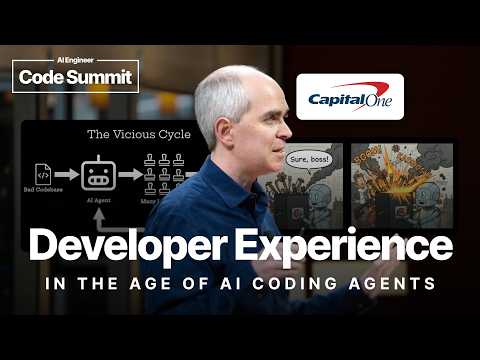
The Macro Shift: The transition from writing to reviewing as the primary engineering activity. As agents generate more code, the human role moves from creator to editor.
The Tactical Edge: Build CLIs for every internal tool to give agents a native text interface. This increases accuracy and speed compared to visual automation.
The Bottom Line: Developer experience is the infrastructure for AI. Investing in clean code and fast feedback loops is the only way to ensure AI productivity gains do not decay over the next 12 months.
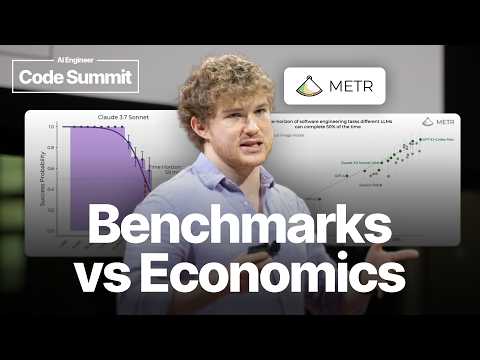
The Capability-Productivity Gap. We are entering a period where model intelligence outpaces our ability to integrate it into high stakes production.
Audit your stack. Identify tasks where "good enough" generation is a win versus high context tasks where AI is currently a net negative.
Do not mistake a climbing benchmark for a finished product. For the next year, the biggest wins are not in smarter models but in better verification loops.
The transition from simple Large Language Models to Reasoning Models marks the end of the stochastic parrot era.
Build agentic workflows that utilize high-context windows for recursive problem solving.
We are moving toward a world where intelligence is a commodity. Your value will shift from knowing things to directing outcomes over the next 12 months.
The Macro Pivot: Agentic Abstraction. As the cost of logic hits zero, the value of a developer moves from how to build to what to build.
The Tactical Edge: Adopt Orchestrators. Replace your standard editor with agent-first platforms today to learn the art of directing sub-agents before the 2026 deadline.
The Bottom Line: The next 12 months will reward those who stop writing code and start building the systems that write it for them.
The Macro Movement: The Token Deflation. As compute becomes a commodity, the value of the "Human-in-the-Loop" moves from production to architectural oversight.
The Tactical Edge: Implement Code Maps. Use AI to index and understand your entire repository to ensure every generated line aligns with existing logic.
The Bottom Line: The next year belongs to the "Taste-Driven Developer." If you optimize for volume, you produce slop; if you optimize for accountability, you build a moat.
The Macro Shift: Software development is moving from human-led logic to agent-led verification.
The Tactical Edge: Use sub-agents to isolate testing from creation to prevent context pollution.
The Bottom Line: The technical barrier is evaporating. In the next 12 months, the winning platforms will be those that require the fewest technical decisions from the user.
The Playbook is the Product. These vehicles are not passive holders. Their value comes from financial engineering—actively arbitraging their own stock premium/discount to accumulate more crypto per share, a dynamic ETFs lack.
Saturation Will Lead to Consolidation. The market is becoming crowded with copycats. Expect a shakeout where many vehicles trade at a discount, leading to a wave of M&A as weaker players are absorbed by stronger ones.
The Next Domino is Corporate America. Public companies and ETFs now own 10% of all Bitcoin. The next major catalyst is a non-crypto-native, Fortune 500 company allocating treasury reserves to Bitcoin, a move the speakers believe could happen within 12 months.
The ICO Meta is Back, On-Chain First: Pump.Fun proved massive capital formation can happen directly on-chain. Pre-launch perpetuals on DEXs like Hyperliquid outmaneuvered centralized exchanges for price discovery, signaling a shift in market infrastructure.
Sentiment is Not Demand: The chasm between negative online chatter and the ICO's massive oversubscription shows that vocal minorities don't always represent market appetite, especially when "complaining is profitable."
Competition is King: Despite its war chest, Pump.Fun's dominance isn't guaranteed. The rise of Let's Bonk demonstrates that in crypto, a strong community-aligned brand can rapidly challenge even the most capitalized incumbent.
**Follow the M2, Not the Alts:** Bitcoin's trajectory is tied to global money printing. Ignore the noise from crappy altcoins and focus on the primary debasement hedge.
**Monitor the "MSTR Clones":** The rise of treasury companies is pumping the market but creating immense, correlated risk. Their eventual selling will be a key market-top signal.
**Plan Your Exit Now:** Decide whether you're a trend-rider or a target-hitter. Consider rotating profits into other hard assets like gold rather than fiat, but have a clear plan before the music stops.
Active Arbitrage, Not Passive Holding: These companies are not just ETFs. They are active financial vehicles designed to outperform spot assets by skillfully arbitraging their own stock and employing complex capital market strategies.
Buyer Beware: The market is saturated with low-quality copycats. While PIPE investors can structure deals to their advantage, retail investors buying on the open market face significant risks from inflated premiums and short-term opportunism.
The Next Domino: The real catalyst for Bitcoin adoption isn't this wave of treasury vehicles, but the first "Mag 7" company adding BTC to its balance sheet. This would validate the strategy for the Fortune 500 and unleash an entirely new class of institutional buyers.
The New Media Blueprint: The winning strategy is a blend of long-form, authentic live streams and hyper-optimized social clips. Platforms that natively support this will win.
Content, Not Just Coins: To achieve longevity, Pump.fun must evolve beyond a pure trading terminal. It needs to give users a reason to stay that isn't just watching a chart.
Finance Is Entertainment: For a new generation, trading is a competitive social game. The most successful platforms will be those that embrace this "leaderboard" mentality and build entertainment-first financial experiences.
Distribution is the New Moat: Wallets like Phantom are becoming aggregator kings. By integrating the best backend protocol (Hyperliquid), they can dominate user flow and marginalize competing applications.
Infrastructure Eats Applications: Hyperliquid’s success stems from its focus on being a permissionless infrastructure layer, not just an app. It outsources distribution to capture flow from the entire crypto ecosystem, a model that standalone DEXes will find nearly impossible to compete with.
Mobile is Crypto’s Next Frontier: Phantom’s mobile-only perp launch is a bet that the next wave of users will prioritize convenience and native experiences. Its initial success signals a critical shift in how DeFi applications must be designed and delivered.