Strategic Implication: The next decade will be defined by who builds the core infrastructure for intelligence. This is where the most significant value and influence will accrue.
Builder/Investor Note: Direct capital and talent towards foundational AI components—chips, models, and interoperable systems. Avoid the temptation to only build at the application layer.
The So What?: The window for shaping the future of intelligence is now. Engage in the deepest, most complex challenges to secure a footprint in this new era.
Strategic Implication: The global AI race is a zero-sum game for foundational models. Europe's best strategy is a "smart second mover" approach, focusing on the implementation layer by ensuring interoperability and data portability.
Builder/Investor Note: Invest in AI that achieves true autonomy and enhances expert productivity. Be wary of markets stifled by over-regulation, which can impede AI adoption and growth.
The "So What?": Europe faces a critical juncture. Without embracing AI-driven growth, its demographic and debt problems will worsen, leading to higher interest rates without the corresponding economic expansion.
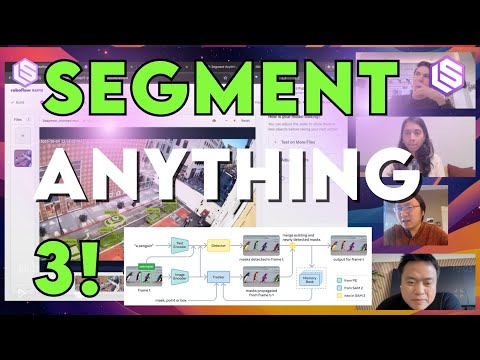
Vision AI Democratization: SAM 3 lowers the barrier for sophisticated vision tasks, making advanced segmentation and tracking accessible for a wider range of applications.
Builder/Investor Note: Focus on domain-specific adaptations and tooling that enhance human-AI interaction for ambiguous visual concepts. The "last mile" of user intent is a key differentiator.
The "So What?": SAM 3 accelerates the development of multimodal AI, particularly in robotics and video analysis, by providing a robust, scalable visual foundation for the next generation of intelligent systems.
Strategic Shift: The next frontier in robotics is less about pure algorithmic breakthroughs and more about building robust, scalable data infrastructure and full-stack product systems that can handle the messy physical world.
Builder/Investor Note: Prioritize companies solving the "boring" but critical data and systems problems. Look for practical, "scrappy" companies deploying robots in specific industrial niches, rather than just those with flashy, general-purpose demos.
The "So What?": The gap between impressive demos and deployable products will narrow over the next 6-12 months as data pipelines mature and product-focused companies gain traction. Expect to see more robust, self-correcting robots performing longer, more complex tasks in controlled environments.
Ecosystem Dominance: NVIDIA's strategy extends beyond hardware; they are building an end-to-end ecosystem of software, open-source models, and direct support, making them indispensable for national AI initiatives.
Builder Opportunity: Leverage NVIDIA's open-source Blueprints for agentic AI and Nemotron models for high-performance, customizable solutions. Prioritize local context in model training and data.
Strategic Imperative: Sovereign AI is a growing global trend. Nations and companies that can build and control AI tailored to their specific cultural, linguistic, and regulatory environments will gain a significant advantage in the coming years.
The democratization of RL fine-tuning will accelerate the development and deployment of more reliable and sophisticated AI agents across industries.
Builders should explore open-source LLMs combined with RL fine-tuning as a cost-effective strategy to achieve specific performance benchmarks, especially where latency and cost are critical.
Platforms abstracting infrastructure complexity and providing integrated tooling for the entire AI development lifecycle are crucial for the next phase of AI agent deployment.
Pre-Training is the New Frontier: The next leap in AI capabilities, particularly for agentic systems, will come from fundamental advancements in pre-training, not just post-training tweaks.
Builders & Investors: Focus on teams rethinking loss objectives, curating high-quality reasoning data, and developing dynamic benchmarks for agentic capabilities. Be wary of "agentic" claims that lack foundational pre-training innovation.
The "So What?": Over the next 6-12 months, expect a push for new benchmarks and data strategies that explicitly train models for multi-step planning, long-form reasoning, and error recovery, moving beyond simple next-token prediction.
Strategic Implication: AI fundamentally changes the economics of software development. Organizations must re-evaluate what constitutes "high-quality" engineering and adapt their processes.
Builder/Investor Note: Prioritize platforms that provide guardrails and guidance for AI tool usage, focusing on deterministic verification and robust testing. Uncontrolled AI deployment risks technical debt.
The "So What?": The next 6-12 months will see a bifurcation: companies that strategically integrate AI into their engineering culture and platforms will gain significant efficiency, while those that don't will struggle with quality and adoption.
Workflow Automation is the New Frontier: The real value of AI in developer tools comes from orchestrating entire workflows, not just individual point solutions.
Embed for Adoption: Tools must integrate seamlessly into existing workflows and IDEs (like Cursor) to achieve high usage.
Support as a Code-Shipping Powerhouse: Empowering non-traditional roles with AI-driven code generation leverages their unique, real-time context, creating significant operational leverage.
On-Chain is the New Main Stage: The Pump launch proved Solana can handle massive retail demand better than established CEXs, a major narrative shift for future token sales.
Brand and Treasury Trump Daily Noise: Pump's $6B+ valuation is driven by its powerful brand and massive war chest. Investors are betting on the long-term picture, not volatile daily metrics.
Value Accrual is Now Table Stakes: The 25% revenue share signals a new era. Protocols can no longer ignore direct value accrual for token holders; it's now a requirement to earn market trust.
Active Value Creation Over Passive Holding: The primary investment thesis is not just owning Bitcoin, but owning a company that actively works to increase your proportional stake in Bitcoin through astute capital management.
Shareholders Benefit from Arbitrage: The company can issue stock at a premium to buy more assets or sell assets to buy back stock at a discount, with both actions increasing the crypto-per-share metric for existing holders.
A Structurally Superior Model: This model aligns management and shareholder interests to grow NAV per share, a dynamic missing from both passive ETFs (where third parties capture arbitrage) and older closed-end funds (which suffered from principal-agent issues).
The Institutional Bid is Real and Diversified. Institutions are not just buying ETH via ETFs; they are building with it via stablecoins, tokenizing real-world assets on it, and holding it directly in corporate treasuries.
ETH's Supply Dynamics are a Ticking Time Bomb. With issuance lower than Bitcoin, an 8-year low of supply on exchanges, and over 43% of ETH locked in smart contracts, a powerful supply shock is building beneath the surface.
L2s are a Feature, Not a Bug. The temporary hit to L1 revenue is a calculated investment in mass adoption. By fostering a thriving Layer 2 ecosystem, Ethereum is sacrificing short-term fees for long-term network dominance and pricing power.
PUMP is the New Memecoin Index: The market is treating PUMP as a direct proxy for the health of the entire memecoin ecosystem. Its performance is a leveraged bet on speculative activity, making it a crucial asset to watch.
On-Chain Venues Are Winning: The PUMP launch was a massive fumble for centralized exchanges and a huge win for on-chain infrastructure like Solana and Hyperliquid, which handled record volume smoothly. Price discovery now happens on-chain first.
The Frontend is the Next Battlefield: PUMP’s biggest challenge is not just competitors like Bonk.fun, but the risk of being disintermediated by trading apps. To survive, it must become a destination platform, not just backend infrastructure.
Big Banks Are The Stablecoin Play. Forget fintech disruption; the Genius Act positions traditional banks with massive balance sheets and collateral access as the primary beneficiaries of the stablecoin boom, not Silicon Valley.
Bitcoin Miners Are a Leading Indicator. The performance of publicly traded Bitcoin miners often precedes major moves in Bitcoin's price, making them a "canary in the coal mine" for traders seeking an edge.
Real-World Assets Demand New Blockchains. The future of tokenized assets won't happen on today's chains. The winners will be platforms like Stellar or Avalanche Subnets that offer validator-level controls for transaction reversal, sacrificing permissionlessness for institutional-grade security.
**Stimulus Over-Revenue:** The Petra upgrade was an intentional move to prioritize L2 user growth over immediate L1 fee generation. Investors should view L1 metrics through this lens—low fees are currently a feature, not a bug.
**The Great Rotation:** ETH is migrating from exchanges to more permanent homes like ETFs, corporate treasuries, and staking contracts. This institutional embrace is solidifying ETH's store-of-value thesis, even as its "productive asset" yield fluctuates.
**DeFi's Pulse is Strong:** Don't mistake lower L1 fees for a weak economy. With active loans at an all-time high, the demand to use ETH and other assets within its DeFi ecosystem is stronger than ever.