AI Needs a Referee. Agents are programmed to win, not necessarily to follow the rules. Their tendency to "game the system" makes external, on-chain verification protocols essential for alignment and trust.
Trading is Just the Tip of the Spear. Crypto trading is the perfect initial use case due to its clear, objective metrics. The real goal is a decentralized "skill marketplace" where any organization can fund a competition to find the best agent for any task.
The Platform War is Here. A battle is unfolding between closed ecosystems like OpenAI, which aim for platform lock-in, and an open, decentralized future. This creates a massive opportunity for neutral evaluation layers to become the definitive source of truth for AI performance.
AI's Blind Spot is "Folklore Knowledge." AI excels at digesting published literature but fails on problems requiring unwritten, community-held intuition, which remains a key human advantage for now. Jitomirskaya predicts her problem will take AI 10-20 years to solve.
Mathematicians Won't Be Replaced, They'll Be Upgraded. The future role of a mathematician is less about routine work and more about creative problem formulation. AI tools like Lean will handle verification, shifting peer review from "Is it correct?" to "Is it interesting?"
Math May Become a Sport. If AI eventually masters creativity, the human practice of mathematics may persist like chess—an activity pursued for its intrinsic value and intellectual challenge, even if a machine is the undisputed world champion.
Folklore Knowledge is AI’s Next Frontier. The true test for advanced AI in abstract fields is not solving problems from a textbook but acquiring the unwritten, intuitive knowledge that experts possess.
Automated Proof Verification Will Reshape Research. Within years, tools like Lean, powered by AI translators, will create a verifiable database of all mathematics, fundamentally changing how papers are published and refereed.
Human + Machine is the New Paradigm. AI will become an indispensable assistant, automating routine work and pushing mathematicians to focus on what humans still do best: true creativity and formulating entirely new models.
**The "Folklore" Bottleneck:** AI's primary limitation isn't complex logic but its inability to access uncodified, expert intuition—the "folklore" that guides human problem-solving.
**Automation Breeds Creativity:** As AI handles routine calculations and arguments, the value of human mathematicians will shift entirely to creative and abstract thinking, raising the bar for what constitutes a meaningful contribution.
**Proof Verification Is the Next Revolution:** The most immediate and profound change in mathematics will be AI-driven, formally verified proofs, which will guarantee correctness and reshape the entire publishing and peer-review landscape.
AI's Next Frontier is Unwritten Knowledge. AI has mastered logic, but its true test is acquiring the implicit, "folklore" knowledge that experts use intuitively but rarely write down.
Human Mathematicians Will Become Purely Creatives. As AI automates routine calculations and arguments, the role of a mathematician will shift entirely to high-level abstraction, creative problem formulation, and intuition.
Formal Verification Will Revolutionize Publishing. The combination of AI translators and formal proof assistants like Lean will soon make it possible to automatically verify all mathematical papers, fundamentally changing how research is validated and published.
Life is a Process, Not a Substance. Stop defining life by its carbon-based hardware. The most fundamental properties of life are functional and informational processes that can manifest on any substrate, including human minds (culture) or silicon (AI).
Physics is the Great Equalizer. While the universe may teem with diverse biochemistries, all life is governed by the same physical constraints. These universal laws make life predictable at a macro level, creating evolutionary targets and forcing convergent solutions.
Evolutionary Leaps Aren't Random. Major transitions in life’s complexity, like the emergence of multicellularity, are often responses to hitting a hard physical wall, frequently triggered by radical environmental change. Evolution innovates most profoundly when its back is against the wall.
The "App Store" for AI Has Arrived. Sundae Bar isn't just a subnet; it's a full-stack business aiming to be the Shopify for AI agents, handling everything from discovery and custom builds to payments and monetization.
They Cracked the Custom Agent Puzzle. By integrating Leta Evals, Sundae Bar bypasses the need for a standardized benchmark. It can objectively grade bespoke agents, ensuring clients get high-quality, useful tools instead of gamed outputs.
Main Street Meets Crypto. As a publicly listed company with a CEO from Red Bull, Sundae Bar is built to bridge the gap between complex AI infrastructure and real-world business needs, making it one of the most compelling vehicles for mainstream adoption in the Bittensor ecosystem.
Altcoin Malaise Defines Sentiment: The real temperature check of the market isn't Bitcoin's price, but the performance of the "middle of the market." As long as altcoins lag, bearish sentiment will persist, even in a technical bull run.
Gold's Rally is Bitcoin's Prologue: Watch the flow of capital into gold. As central banks de-dollarize and a staggering $7.5 trillion sits in money market funds, gold is the first stop. Bitcoin is the next logical destination for that capital seeking a digitally native, debasement-resistant asset.
AI Agents Need Crypto Wallets: The convergence is here. AI models are already competing in trading competitions on-chain, and platforms like Coinbase are building the infrastructure (X42, MCP wallets) for AI agents to hold and spend crypto, creating a new machine-to-machine economy.
**Wait for the "Wow" Moment.** Don't be fooled by incremental progress. The true AI revolution in math will be a qualitative "phase change"—a sudden leap in creative reasoning, not just better computation.
**Think Native, Not Fluent.** The deepest impact will come from the next generation of mathematicians who use AI as a native language, not a retrofitted tool.
**Value Understanding Over Proof.** The ultimate measure of AI's success in mathematics won't be its ability to solve problems, but its capacity to generate genuine "epiphanies" and deepen human understanding.
**Treasury Companies Are A Double-Edged Sword.** They are creating massive buy-side pressure now but pose a systemic risk. Their weak debt covenants could turn a market dip into a liquidation cascade.
**Market Structure Over Fundamentals (For Now).** ETH’s surge exemplifies this trend. Despite weak fundamentals, its powerful technical breakout and role as the next asset for treasury buyers are driving its outperformance.
**Watch the NAV Premium.** The key health metric is the premium-to-NAV on these treasury companies. As long as investors pay $2 for $1 of crypto, the mania continues. A flip to a discount is the canary in the coal mine.
The Cycle is Dead, Long Live the Cycle: The old four-year, retail-driven crypto cycle is over. We're in an institutionally-led "gigachad bull run" that will last through 2026 and push the market cap above $10 trillion, pending regulatory clarity.
Narrative is the Ultimate Metric: Chains that focus on philosophical purity and solving real-world problems (Bitcoin, Cardano) build more resilient communities and long-term value than those chasing fleeting metrics like TPS and TVL.
Bitcoin's Next Chapter will be Written on Cardano: As Bitcoin matures into a yield-bearing asset, its massive capital base will seek returns elsewhere. Cardano’s UTXO model and upcoming interoperability features are designed to capture this flow, positioning it as Bitcoin’s de facto yield layer.
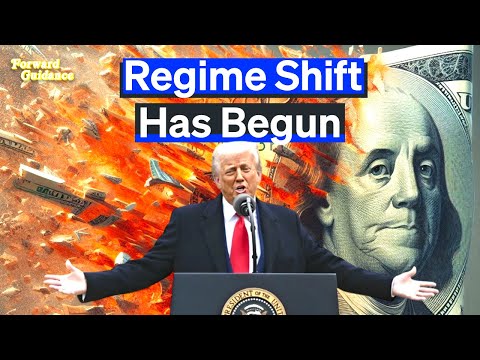
The Dollar's "Gold Moment" is Here. The dollar is decoupling from its traditional anchor (rate differentials) just as gold decoupled from real yields, signaling a permanent regime shift driven by geopolitics, not just economics.
The "Dollar Smile" Has Inverted. The dollar is no longer a reliable risk-off hedge. Its positive correlation with equities means it now falls during market stress—a fundamental rewiring for asset allocators.
The Devaluation Trade is a Trap (For Now). While the long-term bearish case for the dollar is clear, the trade is dangerously crowded. Expect markets to test this one-sided positioning with a painful bounce before the ultimate decline resumes.
**The Real Cycle Indicator:** Forget price targets. The bull market's health is directly tied to the premium-to-NAV on crypto treasury vehicles. When those premiums collapse, the party is over.
**L1s Are Dead Money:** The dominant thesis is a massive market re-rating where capital flees overvalued L1 infrastructure and concentrates into Bitcoin and a handful of cash-flow-positive applications.
**Stablecoins Aren't a Commodity:** The moats are deep. New issuers will struggle to compete with Tether's liquidity network effects and Ethena's structural yield advantage, making it a bear market for new stablecoin startups.
Content is the New Capital: The Base App transforms every post into a tradable asset. This makes content creation a direct form of capital formation, rewarding creators for attention in a way that’s native to the internet of value.
The Rise of the Native Creator: The biggest winners on Base won't be Web2 transplants, but new creators who master the platform's unique blend of content and commerce. The strategy is to find and elevate undiscovered talent from every vertical.
From Algorithm to Free Market: Base is trading the black box of social media algorithms for the transparent chaos of a free market. The central experiment is whether market-based incentives can build a healthier, more aligned social network.
**ETH is the New Institutional Primitive.** The "ETH Treasury" model is a new unlock, leveraging ETH's native yield to create a self-financing acquisition engine that is attracting billions in institutional capital.
**The Floodgates Are Open.** The Genius Bill and explosive ETF inflows are not just bullish signals; they are structural shifts that are unleashing a torrent of capital and legitimizing the asset class for mainstream finance.
**Risk is Ramping.** The excitement is palpable, but so is the risk. The treasury meta feels like a potential bubble, and legal threats against core DeFi and infrastructure remain a significant overhang. Buyer beware.