Semantic Shift: The future of AI in code moves from text generation to deep semantic understanding and execution simulation.
Builder Opportunity: Develop next-generation debugging tools and code agents that leverage internal simulation for faster, more efficient development cycles.
Investor Focus: Prioritize models and platforms that demonstrate explicit execution modeling, as this capability will redefine software development and create new market leaders.
Infrastructure Shift: AI-driven kernel optimization addresses a critical bottleneck in scaling AI compute, enabling more efficient use of diverse hardware.
Builder/Investor Note: Focus on solutions with robust, hardware-verified performance metrics and a clear human-in-the-loop strategy. AI is a powerful tool for automating optimization, not a magic bullet for novel algorithmic breakthroughs.
The "So What?": This technology frees expert engineers from tedious optimization, allowing them to focus on higher-level research and truly innovative algorithmic design, accelerating the pace of AI development in the next 6-12 months.
Strategic Implication: The era of "free money" inflated the number of perceived compounders; a return to positive real rates demands a sharper focus on businesses demonstrating genuine financial discipline and competitive advantage.
Builder/Investor Note: Seek out "Act 2" entrepreneurs and companies that can leverage AI to transform existing physical or IP-based advantages, not just create new AI products. Be prepared to buy more when market sentiment turns negative on strong businesses.
The "So What?": The next 6-12 months will differentiate companies that merely adopt AI from those that strategically integrate it to build durable, uncatchable cost and distribution advantages.
The Future of Policing is Intelligent: Integrating AI, drones, and smart cameras creates a precise, accountable, and safer policing model for both officers and communities.
Invest in the "How": Builders and investors should focus on technologies that enhance certainty of capture, streamline judicial processes, and support public-private partnerships to modernize urban safety infrastructure.
Safety Fuels Mobility: Eliminating crime is not just about law enforcement; it's about restoring the fundamental safety required for economic mobility and a functional society.
Strategic Implication: The next decade's value will accrue to those building foundational AI infrastructure and the "invisible layers" that connect intelligent systems.
Builder/Investor Note: Focus capital and talent on core AI models, specialized domain intelligence, and the underlying computational fabric. Superficial applications risk rapid commoditization.
The So What?: This is the defining period for the architecture of global intelligence. Participation now determines future influence and relevance.
Strategic Shift: AI security must move beyond superficial guardrails to a full-stack, offensive red-teaming approach that accounts for the expanding attack surface of AI agents and their tool access.
Builder/Investor Note: Builders should prioritize integrating offensive security early in development. Investors should be wary of "security theater" and favor solutions that embrace open-source collaboration and address the entire AI application stack.
The "So What?": The accelerating pace of AI development means static security solutions will quickly become obsolete. Proactive, community-driven, and full-stack security research is essential for navigating the next 6-12 months of AI evolution.
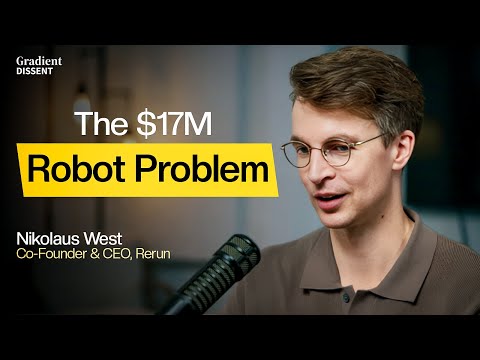
Data Infrastructure is the Next Bottleneck: The physical AI sector's growth hinges on specialized data tooling that can handle multimodal, multi-rate, episodic data, moving beyond traditional tabular models.
Builders, Prioritize Robustness: Focus on building systems that handle real-world variability and simplify data pipelines. Leverage open-source tools and consider combining imitation and reinforcement learning.
The "So What?": The next 6-12 months will see significant improvements in robot robustness and the ability to perform longer, more complex tasks. This progress will be driven by better data management, making the gap between lab demos and deployable products narrower.
The democratization of RL for LLMs will accelerate the deployment of more reliable and sophisticated AI agents across industries.
Builders should move beyond basic prompt engineering and RAG. RL fine-tuning, now accessible via W&B Serverless RL, is a critical next step for high-stakes agentic applications.
For the next 6-12 months, expect a surge in production-grade AI agents, with open-source models increasingly closing the performance gap with proprietary alternatives through advanced fine-tuning.
Dynamic Evaluation is Non-Negotiable: Static benchmarks are dead. Future AI development demands continuously updated, contamination-resistant evaluation sets.
AI Needs AI to Judge AI: As models grow more sophisticated, LLM-driven "hack detectors" become essential for ensuring code quality and preventing adversarial exploitation of evaluation systems.
User Experience Drives Adoption: For interactive AI coding tools, prioritize low latency and human-centric design; technical prowess alone will not guarantee real-world usage.
Crypto Is America's Counter-Offensive. The U.S. is betting on privately-issued, regulated stablecoins—not a government-backed digital dollar—to maintain its edge in global payments. This strategy mirrors how it co-opted the offshore Eurodollar market in the 1970s to expand the dollar’s influence.
The Rise of Parallel Systems. The weaponization of the dollar is forcing countries like China to build their own financial infrastructure (e.g., the M-Bridge platform). This guarantees a future where nations have multiple payment networks to choose from, eroding the U.S.’s unique leverage.
Sanctions Are Not a Free Lunch. While a powerful alternative to military conflict, economic sanctions must be used judiciously. Overusing them risks dulling their impact and ultimately dismantling the very system that grants the U.S. its power.
ETH's Narrative Is Its Near-Term Weapon. ETH's strength lies in a story simple enough for a "dumb banker": massive market cap, 80%+ stablecoin dominance, and the perceived success of its L2s. This makes it an easier buy for TradFi, even if the value accrual thesis is murky.
Solana Is Playing The Long Game. Solana is betting that superior tech will ultimately win. Its focus isn't on the current TradFi narrative but on building the infrastructure for future "internet capital markets," a strategy that requires patience.
Stablecoin Liquidity Is a Vanity Metric. Billions in stablecoins on platforms like Aave don't automatically translate to productive economic activity. The primary use case remains on-chain speculation, challenging the idea that massive liquidity is an end in itself.
Ditch the Beta, Pick Your Alts: The days of everything moving in unison are fading. Idiosyncratic returns are back, rewarding investors who can identify projects with strong, sustainable tokenomics.
Beware the Treasury Treadmill: The crypto treasury model is not an "infinite money glitch." Expect premiums to compress and consolidation to begin as the market becomes saturated and the ability to raise capital at a premium wanes.
Tokenization is the Next Frontier: The real institutional play is the rise of "internet capital markets." The tokenization of money market funds by giants like BNY and Goldman will create new, regulated avenues for investment and yield generation on-chain.
Price Action Is the Best Marketing. ETH’s bullish chart has single-handedly revived interest, breaking a long-term downtrend against BTC and forcing even skeptics to reconsider. The technicals are now undeniably strong.
ETH Is Wall Street’s High-Beta Darling. New institutional money, looking for 5-10x returns and limited to what’s available in brokerage accounts, is flowing into ETH as the logical next step down the risk curve from Bitcoin.
Trade Your Conviction. Don't chase a rally you don't understand. Entering a trade based on technicals without a fundamental framework is a recipe for selling the lows when volatility hits. For some, leveraged Bitcoin remains a more coherent trade.
Crypto as a Political Countermeasure: For Hoskinson, blockchain is the practical tool to enforce the sound money and transparent governance that the US government has abandoned.
The Federal Reserve Is a Core Target: He identifies the Federal Reserve's unchecked power over the monetary supply as a central flaw in the current system, positioning decentralized currencies as a direct challenge to its authority.
A Mission, Not a Job: His daily engagement isn't for financial gain but is driven by the conviction that the fight for a more honest and accountable system is far from over.
Tech Over Hype: Solana’s long-term bet is on fundamental technology. Upgrades like Jito’s BAM are designed to create a superior on-chain environment for sophisticated finance, even if it means losing short-term narrative battles to ETH.
The Institutional Gap: Ethereum is currently winning the institutional game with simple, powerful stories around stablecoins and treasury assets. Solana needs a clearer, more accessible pitch beyond raw performance to compete for this capital.
Performance is Non-Negotiable: The Solana ecosystem is doubling down on its high-throughput thesis. Expect a continued push for more blockspace and faster finality, even if it makes running a validator more exclusive. The trade-off is deemed worth it to bring global-scale finance on-chain.