Strategic Implication: The next decade will be defined by who builds the core infrastructure for intelligence. This is where the most significant value and influence will accrue.
Builder/Investor Note: Direct capital and talent towards foundational AI components—chips, models, and interoperable systems. Avoid the temptation to only build at the application layer.
The So What?: The window for shaping the future of intelligence is now. Engage in the deepest, most complex challenges to secure a footprint in this new era.
Strategic Implication: The global AI race is a zero-sum game for foundational models. Europe's best strategy is a "smart second mover" approach, focusing on the implementation layer by ensuring interoperability and data portability.
Builder/Investor Note: Invest in AI that achieves true autonomy and enhances expert productivity. Be wary of markets stifled by over-regulation, which can impede AI adoption and growth.
The "So What?": Europe faces a critical juncture. Without embracing AI-driven growth, its demographic and debt problems will worsen, leading to higher interest rates without the corresponding economic expansion.
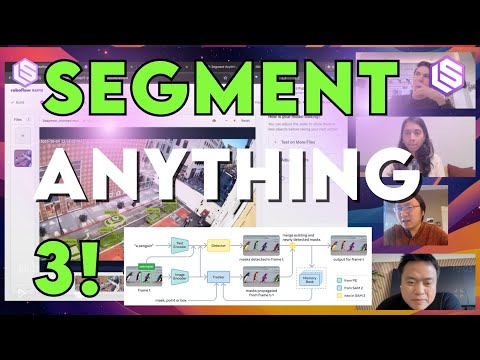
Vision AI Democratization: SAM 3 lowers the barrier for sophisticated vision tasks, making advanced segmentation and tracking accessible for a wider range of applications.
Builder/Investor Note: Focus on domain-specific adaptations and tooling that enhance human-AI interaction for ambiguous visual concepts. The "last mile" of user intent is a key differentiator.
The "So What?": SAM 3 accelerates the development of multimodal AI, particularly in robotics and video analysis, by providing a robust, scalable visual foundation for the next generation of intelligent systems.
Strategic Shift: The next frontier in robotics is less about pure algorithmic breakthroughs and more about building robust, scalable data infrastructure and full-stack product systems that can handle the messy physical world.
Builder/Investor Note: Prioritize companies solving the "boring" but critical data and systems problems. Look for practical, "scrappy" companies deploying robots in specific industrial niches, rather than just those with flashy, general-purpose demos.
The "So What?": The gap between impressive demos and deployable products will narrow over the next 6-12 months as data pipelines mature and product-focused companies gain traction. Expect to see more robust, self-correcting robots performing longer, more complex tasks in controlled environments.
Ecosystem Dominance: NVIDIA's strategy extends beyond hardware; they are building an end-to-end ecosystem of software, open-source models, and direct support, making them indispensable for national AI initiatives.
Builder Opportunity: Leverage NVIDIA's open-source Blueprints for agentic AI and Nemotron models for high-performance, customizable solutions. Prioritize local context in model training and data.
Strategic Imperative: Sovereign AI is a growing global trend. Nations and companies that can build and control AI tailored to their specific cultural, linguistic, and regulatory environments will gain a significant advantage in the coming years.
The democratization of RL fine-tuning will accelerate the development and deployment of more reliable and sophisticated AI agents across industries.
Builders should explore open-source LLMs combined with RL fine-tuning as a cost-effective strategy to achieve specific performance benchmarks, especially where latency and cost are critical.
Platforms abstracting infrastructure complexity and providing integrated tooling for the entire AI development lifecycle are crucial for the next phase of AI agent deployment.
Pre-Training is the New Frontier: The next leap in AI capabilities, particularly for agentic systems, will come from fundamental advancements in pre-training, not just post-training tweaks.
Builders & Investors: Focus on teams rethinking loss objectives, curating high-quality reasoning data, and developing dynamic benchmarks for agentic capabilities. Be wary of "agentic" claims that lack foundational pre-training innovation.
The "So What?": Over the next 6-12 months, expect a push for new benchmarks and data strategies that explicitly train models for multi-step planning, long-form reasoning, and error recovery, moving beyond simple next-token prediction.
Strategic Implication: AI fundamentally changes the economics of software development. Organizations must re-evaluate what constitutes "high-quality" engineering and adapt their processes.
Builder/Investor Note: Prioritize platforms that provide guardrails and guidance for AI tool usage, focusing on deterministic verification and robust testing. Uncontrolled AI deployment risks technical debt.
The "So What?": The next 6-12 months will see a bifurcation: companies that strategically integrate AI into their engineering culture and platforms will gain significant efficiency, while those that don't will struggle with quality and adoption.
Workflow Automation is the New Frontier: The real value of AI in developer tools comes from orchestrating entire workflows, not just individual point solutions.
Embed for Adoption: Tools must integrate seamlessly into existing workflows and IDEs (like Cursor) to achieve high usage.
Support as a Code-Shipping Powerhouse: Empowering non-traditional roles with AI-driven code generation leverages their unique, real-time context, creating significant operational leverage.
Crypto Is America's Counter-Offensive. The U.S. is betting on privately-issued, regulated stablecoins—not a government-backed digital dollar—to maintain its edge in global payments. This strategy mirrors how it co-opted the offshore Eurodollar market in the 1970s to expand the dollar’s influence.
The Rise of Parallel Systems. The weaponization of the dollar is forcing countries like China to build their own financial infrastructure (e.g., the M-Bridge platform). This guarantees a future where nations have multiple payment networks to choose from, eroding the U.S.’s unique leverage.
Sanctions Are Not a Free Lunch. While a powerful alternative to military conflict, economic sanctions must be used judiciously. Overusing them risks dulling their impact and ultimately dismantling the very system that grants the U.S. its power.
ETH's Narrative Is Its Near-Term Weapon. ETH's strength lies in a story simple enough for a "dumb banker": massive market cap, 80%+ stablecoin dominance, and the perceived success of its L2s. This makes it an easier buy for TradFi, even if the value accrual thesis is murky.
Solana Is Playing The Long Game. Solana is betting that superior tech will ultimately win. Its focus isn't on the current TradFi narrative but on building the infrastructure for future "internet capital markets," a strategy that requires patience.
Stablecoin Liquidity Is a Vanity Metric. Billions in stablecoins on platforms like Aave don't automatically translate to productive economic activity. The primary use case remains on-chain speculation, challenging the idea that massive liquidity is an end in itself.
Ditch the Beta, Pick Your Alts: The days of everything moving in unison are fading. Idiosyncratic returns are back, rewarding investors who can identify projects with strong, sustainable tokenomics.
Beware the Treasury Treadmill: The crypto treasury model is not an "infinite money glitch." Expect premiums to compress and consolidation to begin as the market becomes saturated and the ability to raise capital at a premium wanes.
Tokenization is the Next Frontier: The real institutional play is the rise of "internet capital markets." The tokenization of money market funds by giants like BNY and Goldman will create new, regulated avenues for investment and yield generation on-chain.
Price Action Is the Best Marketing. ETH’s bullish chart has single-handedly revived interest, breaking a long-term downtrend against BTC and forcing even skeptics to reconsider. The technicals are now undeniably strong.
ETH Is Wall Street’s High-Beta Darling. New institutional money, looking for 5-10x returns and limited to what’s available in brokerage accounts, is flowing into ETH as the logical next step down the risk curve from Bitcoin.
Trade Your Conviction. Don't chase a rally you don't understand. Entering a trade based on technicals without a fundamental framework is a recipe for selling the lows when volatility hits. For some, leveraged Bitcoin remains a more coherent trade.
Crypto as a Political Countermeasure: For Hoskinson, blockchain is the practical tool to enforce the sound money and transparent governance that the US government has abandoned.
The Federal Reserve Is a Core Target: He identifies the Federal Reserve's unchecked power over the monetary supply as a central flaw in the current system, positioning decentralized currencies as a direct challenge to its authority.
A Mission, Not a Job: His daily engagement isn't for financial gain but is driven by the conviction that the fight for a more honest and accountable system is far from over.
Tech Over Hype: Solana’s long-term bet is on fundamental technology. Upgrades like Jito’s BAM are designed to create a superior on-chain environment for sophisticated finance, even if it means losing short-term narrative battles to ETH.
The Institutional Gap: Ethereum is currently winning the institutional game with simple, powerful stories around stablecoins and treasury assets. Solana needs a clearer, more accessible pitch beyond raw performance to compete for this capital.
Performance is Non-Negotiable: The Solana ecosystem is doubling down on its high-throughput thesis. Expect a continued push for more blockspace and faster finality, even if it makes running a validator more exclusive. The trade-off is deemed worth it to bring global-scale finance on-chain.