Semantic Shift: The future of AI in code moves from text generation to deep semantic understanding and execution simulation.
Builder Opportunity: Develop next-generation debugging tools and code agents that leverage internal simulation for faster, more efficient development cycles.
Investor Focus: Prioritize models and platforms that demonstrate explicit execution modeling, as this capability will redefine software development and create new market leaders.
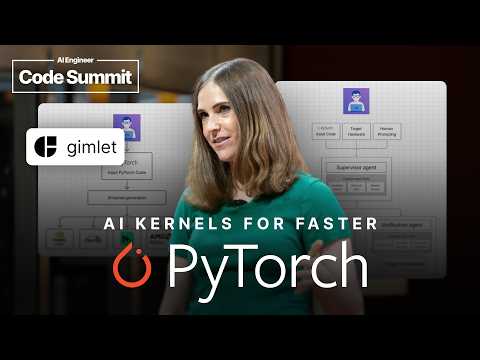
Infrastructure Shift: AI-driven kernel optimization addresses a critical bottleneck in scaling AI compute, enabling more efficient use of diverse hardware.
Builder/Investor Note: Focus on solutions with robust, hardware-verified performance metrics and a clear human-in-the-loop strategy. AI is a powerful tool for automating optimization, not a magic bullet for novel algorithmic breakthroughs.
The "So What?": This technology frees expert engineers from tedious optimization, allowing them to focus on higher-level research and truly innovative algorithmic design, accelerating the pace of AI development in the next 6-12 months.
Strategic Implication: The era of "free money" inflated the number of perceived compounders; a return to positive real rates demands a sharper focus on businesses demonstrating genuine financial discipline and competitive advantage.
Builder/Investor Note: Seek out "Act 2" entrepreneurs and companies that can leverage AI to transform existing physical or IP-based advantages, not just create new AI products. Be prepared to buy more when market sentiment turns negative on strong businesses.
The "So What?": The next 6-12 months will differentiate companies that merely adopt AI from those that strategically integrate it to build durable, uncatchable cost and distribution advantages.
The Future of Policing is Intelligent: Integrating AI, drones, and smart cameras creates a precise, accountable, and safer policing model for both officers and communities.
Invest in the "How": Builders and investors should focus on technologies that enhance certainty of capture, streamline judicial processes, and support public-private partnerships to modernize urban safety infrastructure.
Safety Fuels Mobility: Eliminating crime is not just about law enforcement; it's about restoring the fundamental safety required for economic mobility and a functional society.
Strategic Implication: The next decade's value will accrue to those building foundational AI infrastructure and the "invisible layers" that connect intelligent systems.
Builder/Investor Note: Focus capital and talent on core AI models, specialized domain intelligence, and the underlying computational fabric. Superficial applications risk rapid commoditization.
The So What?: This is the defining period for the architecture of global intelligence. Participation now determines future influence and relevance.
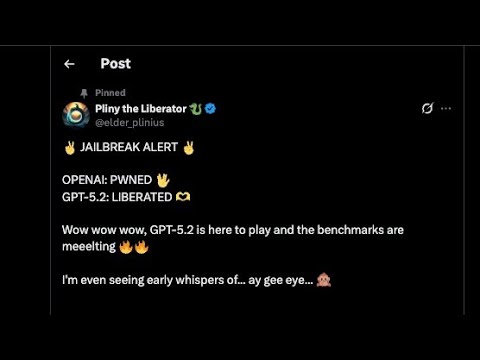
Strategic Shift: AI security must move beyond superficial guardrails to a full-stack, offensive red-teaming approach that accounts for the expanding attack surface of AI agents and their tool access.
Builder/Investor Note: Builders should prioritize integrating offensive security early in development. Investors should be wary of "security theater" and favor solutions that embrace open-source collaboration and address the entire AI application stack.
The "So What?": The accelerating pace of AI development means static security solutions will quickly become obsolete. Proactive, community-driven, and full-stack security research is essential for navigating the next 6-12 months of AI evolution.
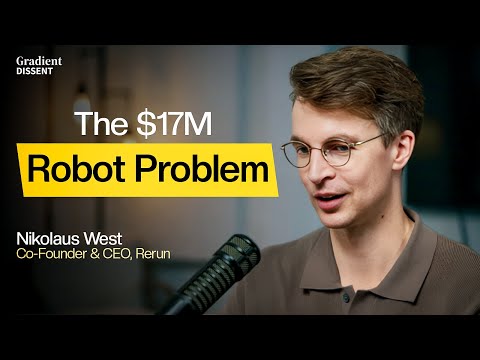
Data Infrastructure is the Next Bottleneck: The physical AI sector's growth hinges on specialized data tooling that can handle multimodal, multi-rate, episodic data, moving beyond traditional tabular models.
Builders, Prioritize Robustness: Focus on building systems that handle real-world variability and simplify data pipelines. Leverage open-source tools and consider combining imitation and reinforcement learning.
The "So What?": The next 6-12 months will see significant improvements in robot robustness and the ability to perform longer, more complex tasks. This progress will be driven by better data management, making the gap between lab demos and deployable products narrower.
The democratization of RL for LLMs will accelerate the deployment of more reliable and sophisticated AI agents across industries.
Builders should move beyond basic prompt engineering and RAG. RL fine-tuning, now accessible via W&B Serverless RL, is a critical next step for high-stakes agentic applications.
For the next 6-12 months, expect a surge in production-grade AI agents, with open-source models increasingly closing the performance gap with proprietary alternatives through advanced fine-tuning.
Dynamic Evaluation is Non-Negotiable: Static benchmarks are dead. Future AI development demands continuously updated, contamination-resistant evaluation sets.
AI Needs AI to Judge AI: As models grow more sophisticated, LLM-driven "hack detectors" become essential for ensuring code quality and preventing adversarial exploitation of evaluation systems.
User Experience Drives Adoption: For interactive AI coding tools, prioritize low latency and human-centric design; technical prowess alone will not guarantee real-world usage.
The investment focus must shift from foundational layers to the services built on top.
Prioritize investments in public equities of companies that actively use crypto infrastructure or in private equity of crypto-native applications with strong, centralized teams capable of rapid decision-making and direct value reinvestment into their token.
The market is increasingly discerning between tokens that compound value and those that do not.
The quantum threat forces a re-evaluation of cryptographic foundations, pushing blockchains towards more robust, future-proof designs. This shift is not just about defense but about positioning for long-term institutional trust and capital.
Prioritize chains actively researching and implementing post-quantum solutions, especially those with clear migration roadmaps and a willingness to adapt core protocols.
The race to quantum-proof crypto is on. Chains that act decisively now will secure their future, attract significant capital, and potentially set new industry standards, while those that delay risk systemic failure.
AI's compute demand reshapes infrastructure, pulling Bitcoin miners into stable new business models while forcing crypto to confront an existential quantum threat.
Prioritize chains and protocols investing in post-quantum cryptography, focusing on clear migration roadmaps and robust hash- or lattice-based solutions.
The next 6-12 months will clarify miner AI contracts, Bitcoin's market correlation, and quantum upgrade urgency. Position your portfolio and research towards projects showing foresight and execution.
The fragmentation of crypto liquidity across chains demands a unified, programmable interface for complex user strategies. LI.FI's VM and transaction rail are building this composable layer, abstracting away the underlying complexity.
Investigate protocols building on LI.FI's infrastructure for streamlined multi-chain operations. For tokenized asset issuers, prioritize integration with platforms offering broad wallet distribution like LI.FI.
The future of crypto involves seamless multi-chain interactions and widespread tokenized asset adoption. LI.FI's innovations position them as a core enabler, making sophisticated DeFi accessible and driving liquidity to new assets over the next 6-12 months.
The era of easy, broad-market gains from passive investing is ending. Unprecedented AI capital expenditure is driving a wedge between tech and tangible assets, forcing a re-evaluation of traditional correlations and creating a bifurcated market where "real things" with fixed supply constraints are gaining favor over software-driven growth. This shift is also revealing a quiet reacceleration in Main Street economics, previously masked by top-tier spending.
Adopt a long-short, beta-neutral approach to capitalize on extreme market dispersion. Identify and invest in "bottleneck" assets (e.g., metals, energy, manufacturing inputs) that are essential for AI infrastructure and have inelastic supply, while selectively shorting or avoiding overvalued software companies facing existential threats from AI.
The market is undergoing a fundamental re-rating. Capital will increasingly flow from over-indexed, high-multiple digital assets to under-owned, supply-constrained physical assets. Ignoring this "flipping of the boat" means missing out on significant alpha and risking capital in sectors facing structural headwinds.
AI is driving a rapid, unprecedented capital concentration into a select group of companies and hard assets, creating a bifurcated economic reality where skilled labor gains leverage while low-skill labor faces immediate displacement.
Invest in the "picks and shovels" of the AI boom: the companies building data centers, providing energy, and offering specialized services to this infrastructure. For individuals, become an AI-fluent, indispensable contributor in your field.
The next 3-4 years are a critical window. Position your finances and career now to capitalize on the AI-driven wealth transfer and avoid being left behind as economic value consolidates at an accelerating pace.