The Macro Shift: Scaling laws are hitting a diminishing return on raw data but a massive acceleration in reasoning. The shift from statistical matching to reasoning agents happens when models can recursively check their own logic.
The Tactical Edge: Build for the agentic future by prioritizing high-context data pipelines. Models perform better when you provide massive context rather than relying on zero-shot inference.
The Bottom Line: We are 24 months away from AI that makes unassisted human thought look like navigating London without a map. Prepare for a world where the most valuable skill is directing machine agency rather than performing manual logic.
The transition from model-centric to loop-centric development. Performance is now a function of the feedback cycle rather than just the weights of the frontier model.
Implement an LLM-as-a-judge step that outputs a "Reason for Failure" field. Feed this string directly into a meta-prompt to update your agent's system instructions automatically.
Static prompts are technical debt. Teams that build automated systems to iterate on their agent's instructions will outpace those waiting for the next model training run.
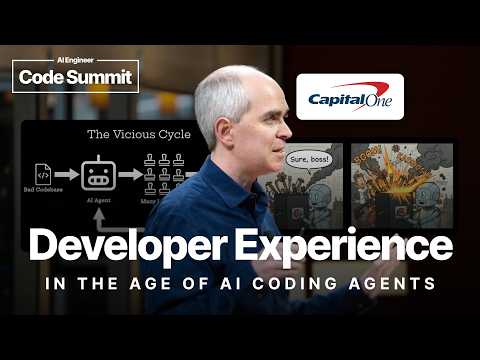
The Macro Shift: The transition from writing to reviewing as the primary engineering activity. As agents generate more code, the human role moves from creator to editor.
The Tactical Edge: Build CLIs for every internal tool to give agents a native text interface. This increases accuracy and speed compared to visual automation.
The Bottom Line: Developer experience is the infrastructure for AI. Investing in clean code and fast feedback loops is the only way to ensure AI productivity gains do not decay over the next 12 months.
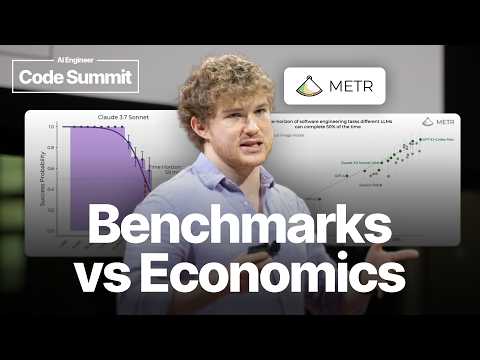
The Capability-Productivity Gap. We are entering a period where model intelligence outpaces our ability to integrate it into high stakes production.
Audit your stack. Identify tasks where "good enough" generation is a win versus high context tasks where AI is currently a net negative.
Do not mistake a climbing benchmark for a finished product. For the next year, the biggest wins are not in smarter models but in better verification loops.
The transition from simple Large Language Models to Reasoning Models marks the end of the stochastic parrot era.
Build agentic workflows that utilize high-context windows for recursive problem solving.
We are moving toward a world where intelligence is a commodity. Your value will shift from knowing things to directing outcomes over the next 12 months.
The Macro Pivot: Agentic Abstraction. As the cost of logic hits zero, the value of a developer moves from how to build to what to build.
The Tactical Edge: Adopt Orchestrators. Replace your standard editor with agent-first platforms today to learn the art of directing sub-agents before the 2026 deadline.
The Bottom Line: The next 12 months will reward those who stop writing code and start building the systems that write it for them.
The Macro Movement: The Token Deflation. As compute becomes a commodity, the value of the "Human-in-the-Loop" moves from production to architectural oversight.
The Tactical Edge: Implement Code Maps. Use AI to index and understand your entire repository to ensure every generated line aligns with existing logic.
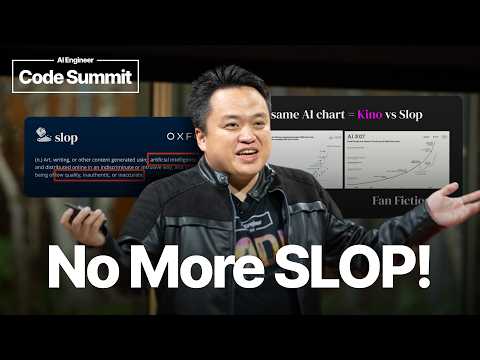
The Bottom Line: The next year belongs to the "Taste-Driven Developer." If you optimize for volume, you produce slop; if you optimize for accountability, you build a moat.
The Macro Shift: Software development is moving from human-led logic to agent-led verification.
The Tactical Edge: Use sub-agents to isolate testing from creation to prevent context pollution.
The Bottom Line: The technical barrier is evaporating. In the next 12 months, the winning platforms will be those that require the fewest technical decisions from the user.
The investment focus must shift from foundational layers to the services built on top.
Prioritize investments in public equities of companies that actively use crypto infrastructure or in private equity of crypto-native applications with strong, centralized teams capable of rapid decision-making and direct value reinvestment into their token.
The market is increasingly discerning between tokens that compound value and those that do not.
The quantum threat forces a re-evaluation of cryptographic foundations, pushing blockchains towards more robust, future-proof designs. This shift is not just about defense but about positioning for long-term institutional trust and capital.
Prioritize chains actively researching and implementing post-quantum solutions, especially those with clear migration roadmaps and a willingness to adapt core protocols.
The race to quantum-proof crypto is on. Chains that act decisively now will secure their future, attract significant capital, and potentially set new industry standards, while those that delay risk systemic failure.
AI's compute demand reshapes infrastructure, pulling Bitcoin miners into stable new business models while forcing crypto to confront an existential quantum threat.
Prioritize chains and protocols investing in post-quantum cryptography, focusing on clear migration roadmaps and robust hash- or lattice-based solutions.
The next 6-12 months will clarify miner AI contracts, Bitcoin's market correlation, and quantum upgrade urgency. Position your portfolio and research towards projects showing foresight and execution.
The fragmentation of crypto liquidity across chains demands a unified, programmable interface for complex user strategies. LI.FI's VM and transaction rail are building this composable layer, abstracting away the underlying complexity.
Investigate protocols building on LI.FI's infrastructure for streamlined multi-chain operations. For tokenized asset issuers, prioritize integration with platforms offering broad wallet distribution like LI.FI.
The future of crypto involves seamless multi-chain interactions and widespread tokenized asset adoption. LI.FI's innovations position them as a core enabler, making sophisticated DeFi accessible and driving liquidity to new assets over the next 6-12 months.
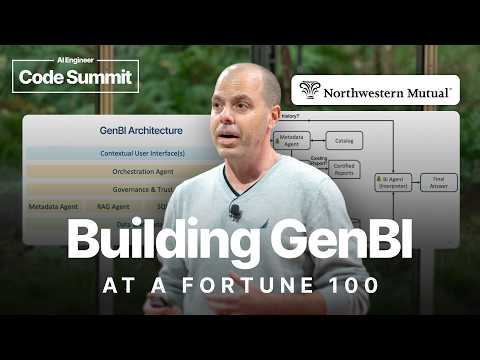
The era of easy, broad-market gains from passive investing is ending. Unprecedented AI capital expenditure is driving a wedge between tech and tangible assets, forcing a re-evaluation of traditional correlations and creating a bifurcated market where "real things" with fixed supply constraints are gaining favor over software-driven growth. This shift is also revealing a quiet reacceleration in Main Street economics, previously masked by top-tier spending.
Adopt a long-short, beta-neutral approach to capitalize on extreme market dispersion. Identify and invest in "bottleneck" assets (e.g., metals, energy, manufacturing inputs) that are essential for AI infrastructure and have inelastic supply, while selectively shorting or avoiding overvalued software companies facing existential threats from AI.
The market is undergoing a fundamental re-rating. Capital will increasingly flow from over-indexed, high-multiple digital assets to under-owned, supply-constrained physical assets. Ignoring this "flipping of the boat" means missing out on significant alpha and risking capital in sectors facing structural headwinds.
AI is driving a rapid, unprecedented capital concentration into a select group of companies and hard assets, creating a bifurcated economic reality where skilled labor gains leverage while low-skill labor faces immediate displacement.
Invest in the "picks and shovels" of the AI boom: the companies building data centers, providing energy, and offering specialized services to this infrastructure. For individuals, become an AI-fluent, indispensable contributor in your field.
The next 3-4 years are a critical window. Position your finances and career now to capitalize on the AI-driven wealth transfer and avoid being left behind as economic value consolidates at an accelerating pace.