The transition from general-purpose LLMs to specialized coding agents that operate on the entire codebase rather than isolated snippets.
Audit your current stack for agentic readiness. Prioritize tools that integrate with Gemini 3 or similar high-reasoning models to automate repetitive pull requests.
Code is the substrate of the digital world. If you control the means of AI code generation, you control the speed of innovation for every other industry.
The move from a singular "Universe" view to a "Multiverse" perspective mirrors the transition from centralized monoliths to fragmented, interoperable ecosystems.
Build systems that fail gracefully when hitting Gödelian limits.
Truth is a vast ocean while proof is a small boat. Your roadmap must account for the reality that your system will eventually encounter truths it cannot verify.
The Macro Pivot: Outcome-Based Intelligence. We are moving from AI as a Service to Results as a Service where software value is tied to revenue generation rather than seat licenses.
The Tactical Edge: Verticalize the Data. Build in sectors with non-public outcome data to create a compounding moat that resists commoditization by foundation models.
The winners of 2026 will be those who use AI to solve core human needs for connection and discovery while building defensible, data-rich business models.
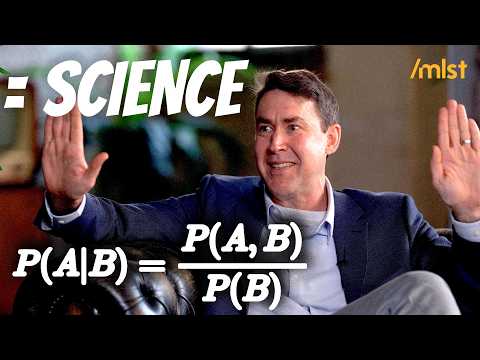
The Macro Transition: Moving from "Big Model" monoliths to "Lots of Little Models" where distributed Bayesian assets represent specific physical objects.
The Tactical Edge: Prioritize "Object-Centered" architectures that track uncertainty. This allows robots to "phone a friend" when encountering novel data.
The LLM era is hitting a wall of implicit representation. The next 12 months belong to those building explicit, causal world models grounded in physics rather than language.
The Macro Trend: The transition from static benchmarks to live human-in-the-loop evaluation. As models saturate fixed tests, the only remaining signal is subjective human preference at scale.
The Tactical Edge: Monitor secret model drops on Arena to spot frontier capabilities before official releases. This provides a lead time advantage for builders choosing their tech stack.
The Bottom Line: Arena is the new kingmaker. If you are building AI products, their expert-tier data is the most reliable map for navigating the frontier.
The move from small models to medium models (15B to 70B) suggests that reasoning capability is outstripping the desire for low-latency edge deployment.
Implement instruction-following re-rankers to prune your context window. This prevents the model from getting confused by irrelevant data.
Stop building toys. The next year belongs to those who can build full agentic systems that handle billions of tokens without losing the plot.
The investment focus must shift from foundational layers to the services built on top.
Prioritize investments in public equities of companies that actively use crypto infrastructure or in private equity of crypto-native applications with strong, centralized teams capable of rapid decision-making and direct value reinvestment into their token.
The market is increasingly discerning between tokens that compound value and those that do not.
The quantum threat forces a re-evaluation of cryptographic foundations, pushing blockchains towards more robust, future-proof designs. This shift is not just about defense but about positioning for long-term institutional trust and capital.
Prioritize chains actively researching and implementing post-quantum solutions, especially those with clear migration roadmaps and a willingness to adapt core protocols.
The race to quantum-proof crypto is on. Chains that act decisively now will secure their future, attract significant capital, and potentially set new industry standards, while those that delay risk systemic failure.
AI's compute demand reshapes infrastructure, pulling Bitcoin miners into stable new business models while forcing crypto to confront an existential quantum threat.
Prioritize chains and protocols investing in post-quantum cryptography, focusing on clear migration roadmaps and robust hash- or lattice-based solutions.
The next 6-12 months will clarify miner AI contracts, Bitcoin's market correlation, and quantum upgrade urgency. Position your portfolio and research towards projects showing foresight and execution.
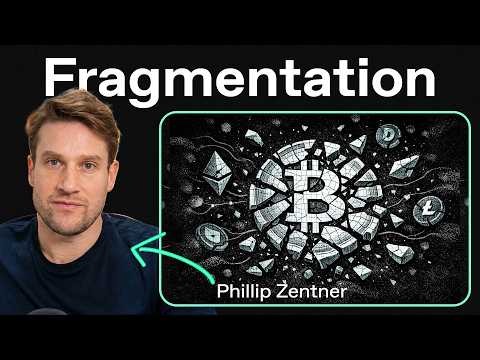
The fragmentation of crypto liquidity across chains demands a unified, programmable interface for complex user strategies. LI.FI's VM and transaction rail are building this composable layer, abstracting away the underlying complexity.
Investigate protocols building on LI.FI's infrastructure for streamlined multi-chain operations. For tokenized asset issuers, prioritize integration with platforms offering broad wallet distribution like LI.FI.
The future of crypto involves seamless multi-chain interactions and widespread tokenized asset adoption. LI.FI's innovations position them as a core enabler, making sophisticated DeFi accessible and driving liquidity to new assets over the next 6-12 months.
The era of easy, broad-market gains from passive investing is ending. Unprecedented AI capital expenditure is driving a wedge between tech and tangible assets, forcing a re-evaluation of traditional correlations and creating a bifurcated market where "real things" with fixed supply constraints are gaining favor over software-driven growth. This shift is also revealing a quiet reacceleration in Main Street economics, previously masked by top-tier spending.
Adopt a long-short, beta-neutral approach to capitalize on extreme market dispersion. Identify and invest in "bottleneck" assets (e.g., metals, energy, manufacturing inputs) that are essential for AI infrastructure and have inelastic supply, while selectively shorting or avoiding overvalued software companies facing existential threats from AI.
The market is undergoing a fundamental re-rating. Capital will increasingly flow from over-indexed, high-multiple digital assets to under-owned, supply-constrained physical assets. Ignoring this "flipping of the boat" means missing out on significant alpha and risking capital in sectors facing structural headwinds.
AI is driving a rapid, unprecedented capital concentration into a select group of companies and hard assets, creating a bifurcated economic reality where skilled labor gains leverage while low-skill labor faces immediate displacement.
Invest in the "picks and shovels" of the AI boom: the companies building data centers, providing energy, and offering specialized services to this infrastructure. For individuals, become an AI-fluent, indispensable contributor in your field.
The next 3-4 years are a critical window. Position your finances and career now to capitalize on the AI-driven wealth transfer and avoid being left behind as economic value consolidates at an accelerating pace.