Demand for provably correct systems in hardware, software, and critical infrastructure creates a massive market for formal verification. AI scales these human-bottlenecked processes.
Investigate formal verification tools for high-stakes codebases or chip designs. Prioritize solutions combining probabilistic generation with deterministic proof for speed and reliability.
"Good enough" code is ending for critical applications. AI-driven formal verification is a commercial imperative, redefining development cycles and trust.
The macro shift: Geopolitical competition in AI is not just about raw model power; it is about who controls the foundational research and development platforms. Open models are the battleground for long-term national AI sovereignty.
The tactical edge: Invest in open model research and infrastructure, particularly in post-training environments and high-quality data generation. This builds a resilient, transparent AI ecosystem that can adapt and innovate independently.
The bottom line: The US must prioritize open model development now to secure its position as a global AI leader, foster domestic innovation, and provide accessible AI options for a diverse global user base over the next 6-12 months.
The convergence of AI and immersive computing is pushing towards a "HoloDeck" future. Roblox's vector-based data storage of 13 billion monthly hours provides unprecedented training data for agentic NPCs and real-time world generation, fundamentally changing how virtual worlds are built and experienced.
Invest in platforms that offer cloud-native, AI-accelerated creation tools and robust multiplayer synchronization. Prioritize those building on rich, proprietary 3D interaction data for superior AI agent training.
The future of digital interaction is 4D, photorealistic, and AI-driven. Companies with a clear, long-term vision paired with rapid, cloud-connected iteration will capture the next wave of virtual co-experience, making them prime targets for investment and partnership over the next 6-12 months.
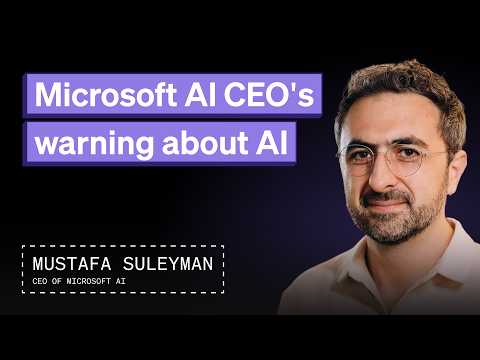
The exponential reduction in the cost of intelligence is transforming AI from a mere tool into a "hyperobject" with quasi-human capabilities, forcing society to adapt from a scarcity-based operating system to one of intelligence abundance.
Cultivate "AI muscle" by actively experimenting with AI tools, understanding their capabilities and limitations, and pushing their boundaries. This hands-on engagement is the best inoculation against "AI psychosis" and prepares you for a world where AI is ubiquitous.
AI's rapid proliferation and increasing autonomy demand immediate, collective action from governments, companies, and individuals to establish clear boundaries and ensure human control. Ignoring this "fourth class" of being risks societal instability and the erosion of human agency over the next 6-12 months.
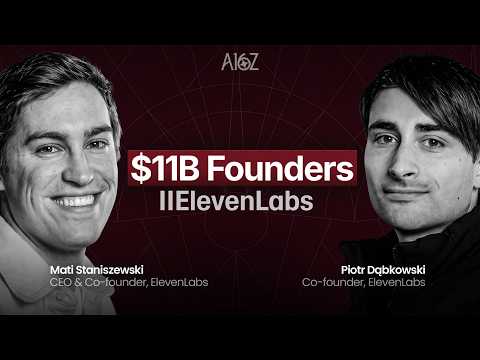
The computing paradigm is shifting from visual-centric to auditory-first, driven by AI's ability to process raw audio data for emotional depth and contextual understanding. This opens new frontiers for immersive experiences and global communication.
Invest in or build solutions that prioritize raw audio data processing and multimodal AI integration. Focus on applications where emotional nuance and natural interaction create a distinct user experience.
Voice AI, particularly with ElevenLabs' approach to emotional intelligence, is not just an incremental improvement; it is a foundational shift that will redefine human-computer interaction and unlock massive markets in education, entertainment, and global connectivity over the next 6-12 months.
AI's memory demands invert data center design, moving from storage-first to memory-first. High-speed networks and NVMe flash are now core memory tiers.
Fund software-defined memory solutions like WEKA's Axon and Augmented Memory Grid. These convert existing NVMe drives into high-performance context memory.
Persistent, rapid KV cache access through "Token Warehouses" will determine AI application and agent deployment profitability over the next 6-12 months.
AI is moving from opaque, data-driven systems to transparent, intentionally designed agents. This shift is driven by the need for reliability, safety, and the ability to extract novel insights from increasingly powerful models.
Invest in tools and research that provide granular control over AI internals, like Goodfire's platform. This enables precise customization, reduces unintended behaviors, and accelerates scientific discovery in critical domains.
The future of AI isn't just about bigger models; it's about smarter, more controllable ones. Understanding and directly influencing AI's "mind" will be a competitive differentiator and a prerequisite for deploying AI in high-stakes, real-world applications over the next 6-12 months.
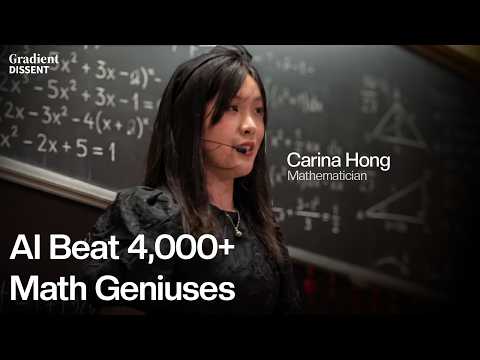
The era of "good enough" probabilistic AI for critical systems is ending; the market demands provable correctness. Axiom Math's approach signals a return to formal methods, supercharged by AI, addressing the verification bottleneck in software and hardware.
Investigate formal verification tools for safety-critical code generation, hardware design, and legacy code migration. Prioritize solutions combining AI generation with deterministic proof for speed and certainty.
Formally verifying complex systems with AI will redefine trust in software and hardware. Companies integrating these capabilities gain a competitive advantage, reducing bugs, accelerating development, and meeting regulatory demands over the next 6-12 months.
The scaling laws seen in large language and video models are now extending to physical robotics. Internet-scale human video data, combined with humanoid morphology, is creating a new paradigm for robot generalization.
Invest in or build systems that prioritize multi-stage data pipelines, especially those incorporating diverse egocentric data. This approach is proving key to unlocking zero-shot capabilities in physical AI.
World models are not just a research curiosity; they are a practical tool for accelerating robot deployment. Their ability to generalize and act as learned simulators will redefine how robots are trained, tested, and ultimately integrated into our daily lives over the next 6-12 months.
The investment focus must shift from foundational layers to the services built on top.
Prioritize investments in public equities of companies that actively use crypto infrastructure or in private equity of crypto-native applications with strong, centralized teams capable of rapid decision-making and direct value reinvestment into their token.
The market is increasingly discerning between tokens that compound value and those that do not.
The quantum threat forces a re-evaluation of cryptographic foundations, pushing blockchains towards more robust, future-proof designs. This shift is not just about defense but about positioning for long-term institutional trust and capital.
Prioritize chains actively researching and implementing post-quantum solutions, especially those with clear migration roadmaps and a willingness to adapt core protocols.
The race to quantum-proof crypto is on. Chains that act decisively now will secure their future, attract significant capital, and potentially set new industry standards, while those that delay risk systemic failure.
AI's compute demand reshapes infrastructure, pulling Bitcoin miners into stable new business models while forcing crypto to confront an existential quantum threat.
Prioritize chains and protocols investing in post-quantum cryptography, focusing on clear migration roadmaps and robust hash- or lattice-based solutions.
The next 6-12 months will clarify miner AI contracts, Bitcoin's market correlation, and quantum upgrade urgency. Position your portfolio and research towards projects showing foresight and execution.
The fragmentation of crypto liquidity across chains demands a unified, programmable interface for complex user strategies. LI.FI's VM and transaction rail are building this composable layer, abstracting away the underlying complexity.
Investigate protocols building on LI.FI's infrastructure for streamlined multi-chain operations. For tokenized asset issuers, prioritize integration with platforms offering broad wallet distribution like LI.FI.
The future of crypto involves seamless multi-chain interactions and widespread tokenized asset adoption. LI.FI's innovations position them as a core enabler, making sophisticated DeFi accessible and driving liquidity to new assets over the next 6-12 months.
The era of easy, broad-market gains from passive investing is ending. Unprecedented AI capital expenditure is driving a wedge between tech and tangible assets, forcing a re-evaluation of traditional correlations and creating a bifurcated market where "real things" with fixed supply constraints are gaining favor over software-driven growth. This shift is also revealing a quiet reacceleration in Main Street economics, previously masked by top-tier spending.
Adopt a long-short, beta-neutral approach to capitalize on extreme market dispersion. Identify and invest in "bottleneck" assets (e.g., metals, energy, manufacturing inputs) that are essential for AI infrastructure and have inelastic supply, while selectively shorting or avoiding overvalued software companies facing existential threats from AI.
The market is undergoing a fundamental re-rating. Capital will increasingly flow from over-indexed, high-multiple digital assets to under-owned, supply-constrained physical assets. Ignoring this "flipping of the boat" means missing out on significant alpha and risking capital in sectors facing structural headwinds.
AI is driving a rapid, unprecedented capital concentration into a select group of companies and hard assets, creating a bifurcated economic reality where skilled labor gains leverage while low-skill labor faces immediate displacement.
Invest in the "picks and shovels" of the AI boom: the companies building data centers, providing energy, and offering specialized services to this infrastructure. For individuals, become an AI-fluent, indispensable contributor in your field.
The next 3-4 years are a critical window. Position your finances and career now to capitalize on the AI-driven wealth transfer and avoid being left behind as economic value consolidates at an accelerating pace.