Strategic Implication: The next decade will be defined by who builds the core infrastructure for intelligence. This is where the most significant value and influence will accrue.
Builder/Investor Note: Direct capital and talent towards foundational AI components—chips, models, and interoperable systems. Avoid the temptation to only build at the application layer.
The So What?: The window for shaping the future of intelligence is now. Engage in the deepest, most complex challenges to secure a footprint in this new era.
Strategic Implication: The global AI race is a zero-sum game for foundational models. Europe's best strategy is a "smart second mover" approach, focusing on the implementation layer by ensuring interoperability and data portability.
Builder/Investor Note: Invest in AI that achieves true autonomy and enhances expert productivity. Be wary of markets stifled by over-regulation, which can impede AI adoption and growth.
The "So What?": Europe faces a critical juncture. Without embracing AI-driven growth, its demographic and debt problems will worsen, leading to higher interest rates without the corresponding economic expansion.
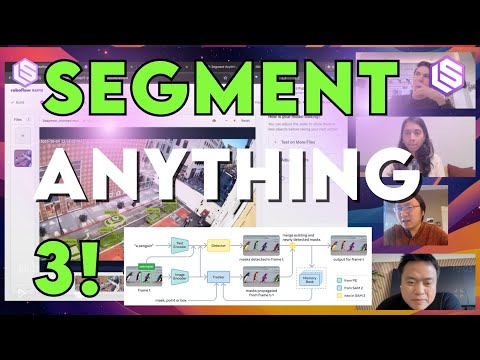
Vision AI Democratization: SAM 3 lowers the barrier for sophisticated vision tasks, making advanced segmentation and tracking accessible for a wider range of applications.
Builder/Investor Note: Focus on domain-specific adaptations and tooling that enhance human-AI interaction for ambiguous visual concepts. The "last mile" of user intent is a key differentiator.
The "So What?": SAM 3 accelerates the development of multimodal AI, particularly in robotics and video analysis, by providing a robust, scalable visual foundation for the next generation of intelligent systems.
Strategic Shift: The next frontier in robotics is less about pure algorithmic breakthroughs and more about building robust, scalable data infrastructure and full-stack product systems that can handle the messy physical world.
Builder/Investor Note: Prioritize companies solving the "boring" but critical data and systems problems. Look for practical, "scrappy" companies deploying robots in specific industrial niches, rather than just those with flashy, general-purpose demos.
The "So What?": The gap between impressive demos and deployable products will narrow over the next 6-12 months as data pipelines mature and product-focused companies gain traction. Expect to see more robust, self-correcting robots performing longer, more complex tasks in controlled environments.
Ecosystem Dominance: NVIDIA's strategy extends beyond hardware; they are building an end-to-end ecosystem of software, open-source models, and direct support, making them indispensable for national AI initiatives.
Builder Opportunity: Leverage NVIDIA's open-source Blueprints for agentic AI and Nemotron models for high-performance, customizable solutions. Prioritize local context in model training and data.
Strategic Imperative: Sovereign AI is a growing global trend. Nations and companies that can build and control AI tailored to their specific cultural, linguistic, and regulatory environments will gain a significant advantage in the coming years.
The democratization of RL fine-tuning will accelerate the development and deployment of more reliable and sophisticated AI agents across industries.
Builders should explore open-source LLMs combined with RL fine-tuning as a cost-effective strategy to achieve specific performance benchmarks, especially where latency and cost are critical.
Platforms abstracting infrastructure complexity and providing integrated tooling for the entire AI development lifecycle are crucial for the next phase of AI agent deployment.
Pre-Training is the New Frontier: The next leap in AI capabilities, particularly for agentic systems, will come from fundamental advancements in pre-training, not just post-training tweaks.
Builders & Investors: Focus on teams rethinking loss objectives, curating high-quality reasoning data, and developing dynamic benchmarks for agentic capabilities. Be wary of "agentic" claims that lack foundational pre-training innovation.
The "So What?": Over the next 6-12 months, expect a push for new benchmarks and data strategies that explicitly train models for multi-step planning, long-form reasoning, and error recovery, moving beyond simple next-token prediction.
Strategic Implication: AI fundamentally changes the economics of software development. Organizations must re-evaluate what constitutes "high-quality" engineering and adapt their processes.
Builder/Investor Note: Prioritize platforms that provide guardrails and guidance for AI tool usage, focusing on deterministic verification and robust testing. Uncontrolled AI deployment risks technical debt.
The "So What?": The next 6-12 months will see a bifurcation: companies that strategically integrate AI into their engineering culture and platforms will gain significant efficiency, while those that don't will struggle with quality and adoption.
Workflow Automation is the New Frontier: The real value of AI in developer tools comes from orchestrating entire workflows, not just individual point solutions.
Embed for Adoption: Tools must integrate seamlessly into existing workflows and IDEs (like Cursor) to achieve high usage.
Support as a Code-Shipping Powerhouse: Empowering non-traditional roles with AI-driven code generation leverages their unique, real-time context, creating significant operational leverage.
A New Economic Primitive: Bittensor is pioneering "Incentivism," a model that replaces traditional companies with a decentralized network of goals and globally competing workers, creating a system that is described as "capitalism squared.
TAO is an Index on Innovation: The network is designed so all value accrues back to the base TAO token through staking mechanisms. Investing in TAO is effectively an index bet on the entire ecosystem’s innovation.
An Unbeatable Cost Structure: The "Law of Subnet Stacking" enables exponential cost reductions, giving the Bittensor ecosystem a potentially insurmountable competitive advantage over centralized incumbents.
**The Market Is Cooked.** With momentum buyers exhausted and value buyers absent, the risk/reward on majors like BTC and ETH is heavily skewed to the downside. The party may not be over, but it's time to find the exit.
**DEXs Are Not CEXs.** Decentralized perpetual exchanges like Hyperliquid offer unparalleled access but lack the circuit breakers and centralized oversight of a Binance. In these venues, you are the risk manager, and there is no sheriff coming to save you.
**Beware OG Whales.** The market is still heavily influenced by a small number of early crypto holders operating with immense capital and unsophisticated "ape first, research later" strategies. Their unpredictable actions can and will create violent dislocations.
**The Fed's dovish turn is the primary market catalyst.** Powell's signals of impending rate cuts have injected massive optimism, driving ETH to a new all-time high and confirming that macro now dictates crypto's direction.
**Capital is aggressively rotating from Bitcoin to Ether.** This classic cycle rotation, amplified by whale activity and trader expectations, is a self-fulfilling prophecy, positioning ETH as the next dominant asset to watch.
**The Solana treasury narrative is the next frontier.** With the window closing for new Bitcoin and ETH treasury vehicles, a fierce competition is underway to establish the dominant, "Saylor-like" figurehead for Solana, creating a new focal point for institutional capital.
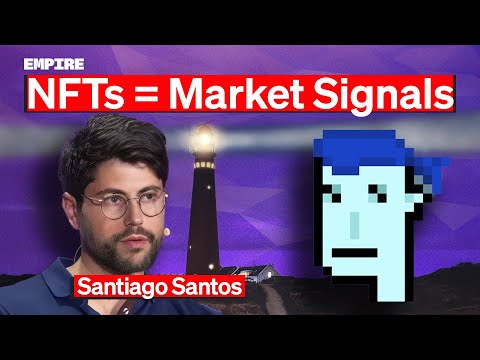
**Track NFT Blue-Chips as a Signal.** The price action of collections like CryptoPunks acts as a potent gauge for the "wealth effect" and overall risk appetite within the crypto ecosystem. Their peaks often correlate with broader market tops.
**Separate Collecting from Investing.** Frame high-end NFT acquisitions as an "expense" for art you genuinely love, not a financial investment. This strategy decouples your emotional well-being from market volatility.
**Embrace Your Top-Signal Buys.** An expensive purchase at a market peak isn't just a loss; it's a powerful lesson in humility. Use it as a constant reminder that no one is immune to market psychology.
Ditch the Rotator Playbook. This isn't 2021. Stop chasing every pump. Success this cycle requires picking a few narratives, believing in them, and holding with conviction.
Make On-Chain Money Real. Stablecoins encourage bad habits. Cash out profits to a real bank account to create a psychological barrier against recklessly aping your gains back into the market.
Plan for Post-Win Depression. The dopamine crash after a massive score is inevitable. Resist the urge to chase that high; prioritize building sustainable, real-world income instead of buying status symbols.
A Politicized Fed is the Baseline. Assume the Federal Reserve will be pressured to cut rates to neutral (~3%) by 2026, creating an unusually loose policy backdrop relative to strong nominal growth.
Mind the Fiscal Cliff, Then the Rocket Ship. Brace for a temporary growth slowdown as tariffs bite over the next few months, but prepare for a sharp re-acceleration in 2026 if and when new stimulus kicks in.
Ditch Old Hedges, Buy Protest Assets. Your portfolio's traditional diversifiers (long bonds, USD) are broken. Shift allocation toward assets that benefit from inflation risk and high nominal growth: commodities, crypto, and undervalued international equities.