Demand for provably correct systems in hardware, software, and critical infrastructure creates a massive market for formal verification. AI scales these human-bottlenecked processes.
Investigate formal verification tools for high-stakes codebases or chip designs. Prioritize solutions combining probabilistic generation with deterministic proof for speed and reliability.
"Good enough" code is ending for critical applications. AI-driven formal verification is a commercial imperative, redefining development cycles and trust.
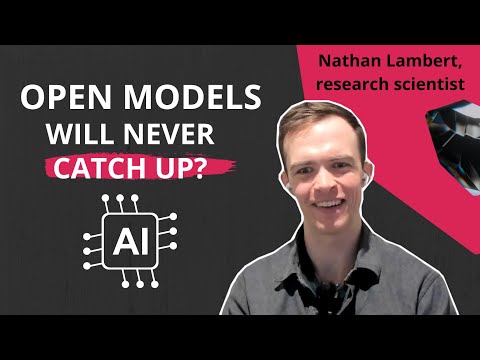
The macro shift: Geopolitical competition in AI is not just about raw model power; it is about who controls the foundational research and development platforms. Open models are the battleground for long-term national AI sovereignty.
The tactical edge: Invest in open model research and infrastructure, particularly in post-training environments and high-quality data generation. This builds a resilient, transparent AI ecosystem that can adapt and innovate independently.
The bottom line: The US must prioritize open model development now to secure its position as a global AI leader, foster domestic innovation, and provide accessible AI options for a diverse global user base over the next 6-12 months.
The convergence of AI and immersive computing is pushing towards a "HoloDeck" future. Roblox's vector-based data storage of 13 billion monthly hours provides unprecedented training data for agentic NPCs and real-time world generation, fundamentally changing how virtual worlds are built and experienced.
Invest in platforms that offer cloud-native, AI-accelerated creation tools and robust multiplayer synchronization. Prioritize those building on rich, proprietary 3D interaction data for superior AI agent training.
The future of digital interaction is 4D, photorealistic, and AI-driven. Companies with a clear, long-term vision paired with rapid, cloud-connected iteration will capture the next wave of virtual co-experience, making them prime targets for investment and partnership over the next 6-12 months.
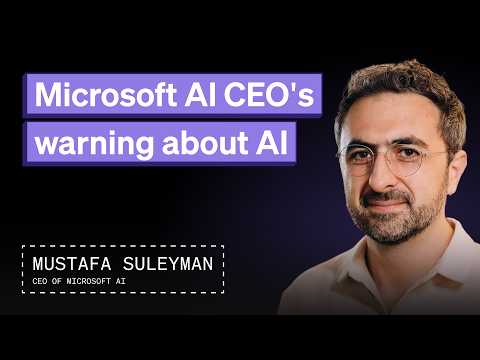
The exponential reduction in the cost of intelligence is transforming AI from a mere tool into a "hyperobject" with quasi-human capabilities, forcing society to adapt from a scarcity-based operating system to one of intelligence abundance.
Cultivate "AI muscle" by actively experimenting with AI tools, understanding their capabilities and limitations, and pushing their boundaries. This hands-on engagement is the best inoculation against "AI psychosis" and prepares you for a world where AI is ubiquitous.
AI's rapid proliferation and increasing autonomy demand immediate, collective action from governments, companies, and individuals to establish clear boundaries and ensure human control. Ignoring this "fourth class" of being risks societal instability and the erosion of human agency over the next 6-12 months.
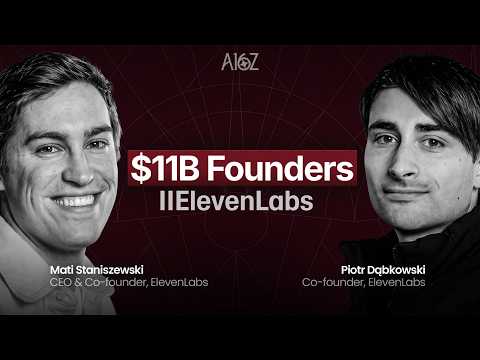
The computing paradigm is shifting from visual-centric to auditory-first, driven by AI's ability to process raw audio data for emotional depth and contextual understanding. This opens new frontiers for immersive experiences and global communication.
Invest in or build solutions that prioritize raw audio data processing and multimodal AI integration. Focus on applications where emotional nuance and natural interaction create a distinct user experience.
Voice AI, particularly with ElevenLabs' approach to emotional intelligence, is not just an incremental improvement; it is a foundational shift that will redefine human-computer interaction and unlock massive markets in education, entertainment, and global connectivity over the next 6-12 months.
AI's memory demands invert data center design, moving from storage-first to memory-first. High-speed networks and NVMe flash are now core memory tiers.
Fund software-defined memory solutions like WEKA's Axon and Augmented Memory Grid. These convert existing NVMe drives into high-performance context memory.
Persistent, rapid KV cache access through "Token Warehouses" will determine AI application and agent deployment profitability over the next 6-12 months.
AI is moving from opaque, data-driven systems to transparent, intentionally designed agents. This shift is driven by the need for reliability, safety, and the ability to extract novel insights from increasingly powerful models.
Invest in tools and research that provide granular control over AI internals, like Goodfire's platform. This enables precise customization, reduces unintended behaviors, and accelerates scientific discovery in critical domains.
The future of AI isn't just about bigger models; it's about smarter, more controllable ones. Understanding and directly influencing AI's "mind" will be a competitive differentiator and a prerequisite for deploying AI in high-stakes, real-world applications over the next 6-12 months.
The era of "good enough" probabilistic AI for critical systems is ending; the market demands provable correctness. Axiom Math's approach signals a return to formal methods, supercharged by AI, addressing the verification bottleneck in software and hardware.
Investigate formal verification tools for safety-critical code generation, hardware design, and legacy code migration. Prioritize solutions combining AI generation with deterministic proof for speed and certainty.
Formally verifying complex systems with AI will redefine trust in software and hardware. Companies integrating these capabilities gain a competitive advantage, reducing bugs, accelerating development, and meeting regulatory demands over the next 6-12 months.
The scaling laws seen in large language and video models are now extending to physical robotics. Internet-scale human video data, combined with humanoid morphology, is creating a new paradigm for robot generalization.
Invest in or build systems that prioritize multi-stage data pipelines, especially those incorporating diverse egocentric data. This approach is proving key to unlocking zero-shot capabilities in physical AI.
World models are not just a research curiosity; they are a practical tool for accelerating robot deployment. Their ability to generalize and act as learned simulators will redefine how robots are trained, tested, and ultimately integrated into our daily lives over the next 6-12 months.
**Gold's rally is fundamentally driven.** Falling rates and central bank de-dollarization are creating a powerful tailwind for the precious metal, signaling a major shift in global asset allocation.
**Bitcoin is riding gold's coattails.** As the "digital gold" narrative strengthens, a rising gold price is perceived as a bullish leading indicator for BTC, with investors watching the BTC/Gold market cap ratio as a key metric.
**Your past market experiences are blinding you.** Investors must actively identify and challenge their "childhood curses"—biases formed during previous market cycles—to capitalize on new trends.
**The 10-Minute Rule:** If you’re not in a memecoin launch within the first 10 minutes, you are the exit liquidity. The game is rigged by snipers with privileged information.
**Deception is the Default:** Insiders use sophisticated tactics like one-sided LPs to hide their selling, making it crucial for investors to look beyond simple price charts.
**Self-Policing is the Only Way:** Don't wait for regulators. The crypto community must build its own systems of accountability to expose and sideline repeat offenders.
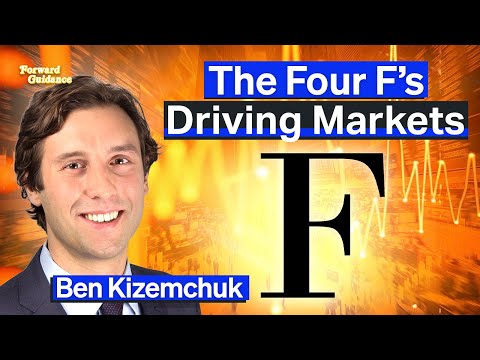
**Fiscal Is King.** The government, not the Fed, is in the driver's seat. Higher interest rates are now stimulative, as higher interest payments on government debt inject more cash directly into the private sector.
**The Market Is The Economy.** Passive flows have rewired capital allocation, turning the stock market into an automated utility that concentrates wealth in mega-cap companies, making traditional valuation metrics less relevant.
**Invest in Scarcity.** In a world of unlimited fiat currency and financially repressed bond yields, assets with a fixed supply, such as gold and crypto, become critical portfolio components, while traditional fixed income loses its appeal.
Fade the Crowd. Widespread retail despair is a signal of an underexposed market, creating a powerful contrarian buying opportunity.
Macro Is the Driver. Pro-crypto deregulation and future rate cuts are the real forces to watch, not short-term price action.
Alpha Demands Work. The era of easy altcoin gains is over. The new "wealth hack" is to develop deep expertise by embedding yourself in a project's ecosystem.
**Incentives Define the Game:** Arjun’s 10-year compensation plan isn't just a detail; it’s a strategy. It forces long-term thinking and aligns the entire organization around monumental growth targets, a stark contrast to the short-term focus of many public companies.
**Win the "Meaty Middle":** While competitors fight over retail users or institutional whales, Kraken is cornering the market of professional traders. This overlooked segment is the engine of global liquidity and the key to building a durable, high-volume exchange.
**On-Chain IPOs Are Coming:** The future of capital markets is global, on-chain, and permissionless. Traditional companies are already looking to bypass Wall Street for venues like Kraken, signaling a fundamental shift in how businesses access capital.
**The 2:1 Rule for Valuing ETH:** The simplest institutional valuation model correlates ETH's market cap to the value it secures. For every $2 in assets (stablecoins, RWAs) on Ethereum, ETH's value historically grows by $1, providing a clear framework for its future potential.
**Productive Assets Win:** Ether’s ability to generate yield through staking makes it a fundamentally superior treasury reserve asset compared to non-productive alternatives. This allows companies like Sharplink (ESBET) to generate revenue, compound holdings, and attract public market multiples.
**Tokenization Unlocks Trillions:** The shift to on-chain, atomically settled assets will free up tens of trillions in capital currently locked in settlement risk, counterparty risk, and collateral management, creating an overwhelming incentive for institutional adoption on secure networks like Ethereum.