Strategic Implication: The next decade will be defined by who builds the core infrastructure for intelligence. This is where the most significant value and influence will accrue.
Builder/Investor Note: Direct capital and talent towards foundational AI components—chips, models, and interoperable systems. Avoid the temptation to only build at the application layer.
The So What?: The window for shaping the future of intelligence is now. Engage in the deepest, most complex challenges to secure a footprint in this new era.
Strategic Implication: The global AI race is a zero-sum game for foundational models. Europe's best strategy is a "smart second mover" approach, focusing on the implementation layer by ensuring interoperability and data portability.
Builder/Investor Note: Invest in AI that achieves true autonomy and enhances expert productivity. Be wary of markets stifled by over-regulation, which can impede AI adoption and growth.
The "So What?": Europe faces a critical juncture. Without embracing AI-driven growth, its demographic and debt problems will worsen, leading to higher interest rates without the corresponding economic expansion.
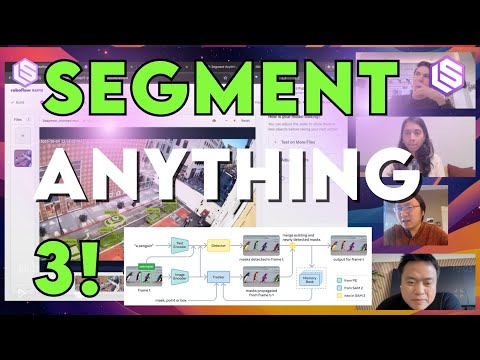
Vision AI Democratization: SAM 3 lowers the barrier for sophisticated vision tasks, making advanced segmentation and tracking accessible for a wider range of applications.
Builder/Investor Note: Focus on domain-specific adaptations and tooling that enhance human-AI interaction for ambiguous visual concepts. The "last mile" of user intent is a key differentiator.
The "So What?": SAM 3 accelerates the development of multimodal AI, particularly in robotics and video analysis, by providing a robust, scalable visual foundation for the next generation of intelligent systems.
Strategic Shift: The next frontier in robotics is less about pure algorithmic breakthroughs and more about building robust, scalable data infrastructure and full-stack product systems that can handle the messy physical world.
Builder/Investor Note: Prioritize companies solving the "boring" but critical data and systems problems. Look for practical, "scrappy" companies deploying robots in specific industrial niches, rather than just those with flashy, general-purpose demos.
The "So What?": The gap between impressive demos and deployable products will narrow over the next 6-12 months as data pipelines mature and product-focused companies gain traction. Expect to see more robust, self-correcting robots performing longer, more complex tasks in controlled environments.
Ecosystem Dominance: NVIDIA's strategy extends beyond hardware; they are building an end-to-end ecosystem of software, open-source models, and direct support, making them indispensable for national AI initiatives.
Builder Opportunity: Leverage NVIDIA's open-source Blueprints for agentic AI and Nemotron models for high-performance, customizable solutions. Prioritize local context in model training and data.
Strategic Imperative: Sovereign AI is a growing global trend. Nations and companies that can build and control AI tailored to their specific cultural, linguistic, and regulatory environments will gain a significant advantage in the coming years.
The democratization of RL fine-tuning will accelerate the development and deployment of more reliable and sophisticated AI agents across industries.
Builders should explore open-source LLMs combined with RL fine-tuning as a cost-effective strategy to achieve specific performance benchmarks, especially where latency and cost are critical.
Platforms abstracting infrastructure complexity and providing integrated tooling for the entire AI development lifecycle are crucial for the next phase of AI agent deployment.
Pre-Training is the New Frontier: The next leap in AI capabilities, particularly for agentic systems, will come from fundamental advancements in pre-training, not just post-training tweaks.
Builders & Investors: Focus on teams rethinking loss objectives, curating high-quality reasoning data, and developing dynamic benchmarks for agentic capabilities. Be wary of "agentic" claims that lack foundational pre-training innovation.
The "So What?": Over the next 6-12 months, expect a push for new benchmarks and data strategies that explicitly train models for multi-step planning, long-form reasoning, and error recovery, moving beyond simple next-token prediction.
Strategic Implication: AI fundamentally changes the economics of software development. Organizations must re-evaluate what constitutes "high-quality" engineering and adapt their processes.
Builder/Investor Note: Prioritize platforms that provide guardrails and guidance for AI tool usage, focusing on deterministic verification and robust testing. Uncontrolled AI deployment risks technical debt.
The "So What?": The next 6-12 months will see a bifurcation: companies that strategically integrate AI into their engineering culture and platforms will gain significant efficiency, while those that don't will struggle with quality and adoption.
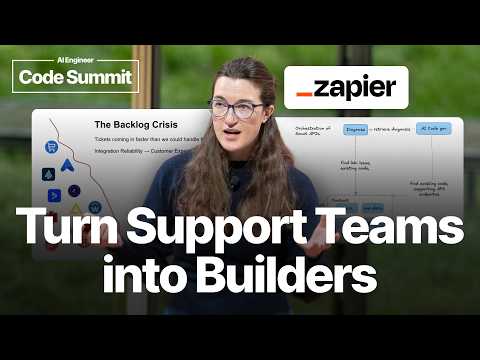
Workflow Automation is the New Frontier: The real value of AI in developer tools comes from orchestrating entire workflows, not just individual point solutions.
Embed for Adoption: Tools must integrate seamlessly into existing workflows and IDEs (like Cursor) to achieve high usage.
Support as a Code-Shipping Powerhouse: Empowering non-traditional roles with AI-driven code generation leverages their unique, real-time context, creating significant operational leverage.
Profit, Don't HODL. The current market is a trader’s paradise, not an investor’s dream. The strategy is to ride the seasonal Q4 pump and exit by January, refusing to get caught in another brutal bear cycle.
Fade the Old, Farm the New. Capital is mercenary, flowing from established tokens to the next hot airdrop farm or launch. The relentless hunt for volatility means older coins are treated as exit liquidity for the next shiny object.
Unlocks Are the Silent Killer. Before investing, map out the token unlock schedule. Even fundamentally sound projects with strong revenue face a massive gravitational pull on their price from insider and team unlocks.
**Stablecoins Are Rebranding Crypto.** The FinTech industry is adopting stablecoin technology not as a niche crypto asset, but as the foundational layer for "FinTech 3.0," poised to overhaul global payments.
**The EVM Is The New COBOL.** Specialized payments chains are standardizing the EVM as the backend for modern finance, creating high-throughput, compliant on-ramps that will bring trillions in TradFi volume on-chain.
**Payments Are Just The Beginning.** Once the world rebuilds its payments infrastructure on stablecoins, the floodgates will open for the complete tokenization of all financial assets, forever blurring the line between crypto and finance.
Onchain Rails Create New Economies. By digitizing physical assets on high-performance chains like Solana, you eliminate friction around custody, settlement, and global access, unlocking novel business models like the Gotcha Machine.
Real-World Logistics Are the Ultimate Moat. While anyone can build a smart contract, Collector Crypt’s defensibility comes from its physical supply chain—dealer relationships and automated acquisition tools that secure inventory below market price.
Novel Oracles Unlock the Next Wave of DeFi. The future of onchain finance depends on reliably pricing illiquid, real-world assets. Developing proprietary oracles, like Collector Crypt’s, is the first step to building DeFi for everything.
**De-Risk Your Alts.** Crypto is showing significant weakness by failing to rally with equities. Ethereum's lower high is a major red flag for the altcoin market; it's time to reduce leverage and concentrate into Bitcoin or cash.
**Hunt for Value in TradFi.** Traditional markets are offering powerful narrative-driven plays with crypto-like upside. Focus on assets like Tesla (robotics), Robinhood (gambling culture), and commodities like uranium (energy independence).
**Fade the ETF Narrative.** The institutional "sugar high" from ETFs is wearing off as the front-running trade becomes crowded and inflows wane. The market needs a new, more durable catalyst to move higher.
Subnets are becoming more complex. The introduction of sub-subnets will allow for more sophisticated, multi-faceted incentive mechanisms within a single subnet, effectively turning them into "mixtures of experts."
Performance is now paramount. Subnet deregistration creates a "perform or perish" dynamic. Underperforming subnets risk being automatically removed, with their assets returned to token holders as TAO.
Decentralization is on the horizon. The shift to Proof-of-Stake and a formal on-chain governance structure are actively being developed, marking a deliberate move toward placing control in the hands of the community.
Recessions Are Canceled, Inflation Is Not: Perpetual government stimulus will prevent deep downturns, but it locks in higher inflation. Plan for a ~3% floor and a market that swings between boom and stagflation.
The US Super Cycle Is Over: After a historic 15-year run, US market dominance has peaked. The next decade’s alpha will be found in undervalued international markets benefiting from a weakening dollar.
Build a Debasement-Proof Portfolio: Ditch long-duration bonds. Hold cash for opportunity, stay invested in global equities, and overweight hard assets like gold and crypto to preserve purchasing power.