The Macro Shift: Context management is the new compute. As models get smarter, the winning architecture will be the one that most efficiently partitions and feeds relevant data to sub-agents.
The Tactical Edge: Prioritize reviewability. When building or using agents, focus on tools that provide clear diffs and tours of changes rather than just raw code generation.
The Bottom Line: The developer's role is evolving from a writer to an orchestrator. Success in the next 12 months depends on mastering the skill of agentic review rather than manual syntax.
The Macro Shift: Engineering is moving from a headcount-driven Opex model to an infrastructure-driven autonomy model where validation is the primary capital asset.
The Tactical Edge: Audit your codebase against the eight pillars of automated validation. Start by asking agents to generate tests for existing logic to close the coverage gap.
The Bottom Line: Massive velocity gains are not found in the next model update. They are found in the rigorous internal standards that allow agents to operate without human hand-holding.
[Algorithmic Convergence]. The gap between symbolic logic and neural networks is closing through category theory. Expect architectures that are "correct by construction" rather than just "likely correct."
[Audit Architecture]. Evaluate new models based on their "algorithmic alignment" rather than just parameter count. Prioritize implementations that bake in non-invertible logic.
The next year will see a shift from scaling data to scaling structural priors. If you aren't thinking about how your model's architecture mirrors the problem's topology, you are just an alchemist in a world about to discover chemistry.
Strategic Implication: The future of software development isn't about *if* we use AI, but *how* we integrate human understanding and architectural discipline to prevent an "infinite software crisis.
Builder/Investor Note: Builders must prioritize deep system understanding and explicit planning over raw generation speed. Investors should favor companies that implement robust human-in-the-loop processes for AI-assisted development.
The "So What?": Over the next 6-12 months, the ability to "see the seams" and manage complexity will differentiate thriving engineering teams from those drowning in unmaintainable, AI-generated code.
Strategic Implication: The market for AI transformation services is expanding rapidly, driven by enterprises seeking to integrate AI for tangible business outcomes.
Builder/Investor Note: Focus on AI solutions with clear, practical applications for mid-market and enterprise clients. Technical talent capable of bridging research with deployment holds significant value.
The "So What?": The next 6-12 months will see increased demand for AI engineers who can implement and scale AI solutions, moving beyond proof-of-concept to widespread adoption.
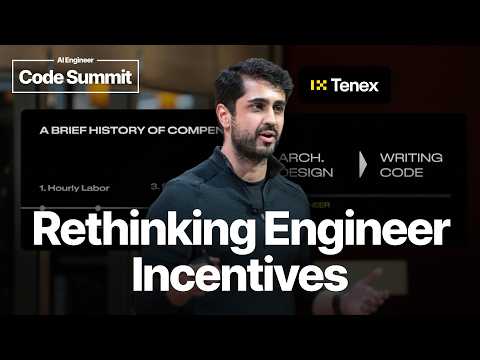
Compensation Innovation: The traditional compensation playbook for engineers is outdated. New models that directly reward AI-augmented output will attract top talent and drive efficiency.
Builder/Investor Note: Founders should re-evaluate their incentive structures. Investors should seek companies experimenting with these models, as they may achieve outsized productivity.
The "So What?": The productivity gap between AI-augmented and non-AI-augmented engineers will widen. Companies that adapt their incentives will capture disproportionate value in the next 6-12 months.
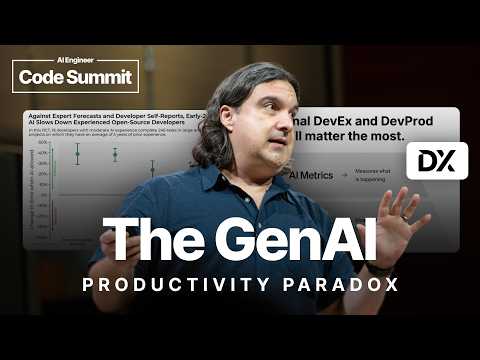
Strategic Shift: Successful AI integration means identifying and solving *your* organization's specific SDLC bottlenecks, not just boosting code completion.
Builder/Investor Note: Prioritize psychological safety and invest in AI skill development. For builders, this means dedicated learning time; for investors, look for companies that do this well.
The "So What?": The next 6-12 months will separate organizations that merely *adopt* AI from those that *master* its strategic application and measurement, driving real competitive advantage.
Strategic Implication: AI integration is a company-wide transformation, not a feature. Organizations must re-architect processes, tools, and culture to compete.
Builder/Investor Note: Prioritize internal tooling that democratizes AI experimentation. Look for companies establishing "model behavior" as a distinct, cross-functional discipline.
The "So What?": The next 6-12 months will reward builders who bake AI security and user control into product design from day one, recognizing that technical mitigations alone are insufficient.
From Voting to Value: Futarchy transforms governance from a popularity contest into a pure value-maximization engine, where the only thing that matters is whether a decision increases the token's price.
Investor Protection on-Chain: By locking funds in a market-governed treasury, Futarchy offers automated, code-enforced investor protections that mimic—and may even surpass—traditional shareholder rights.
The End of the Rug Pull Era: Platforms like MetaDAO create a new asset class of "ownership coins" where the incentive to rug is eliminated, signaling a potential turning point for the quality and reliability of crypto investments.
**Invisible Blockchain is the Endgame.** The biggest barrier to mass adoption is user experience. The ultimate winners will make crypto so seamless that users don't even realize they're using it.
**Revenue Beats Hype.** The industry is maturing from extractive schemes to sustainable businesses. Valuations must follow suit, focusing on ecosystem health, attention, and earned revenue—not just mints.
**Coordination Creates Wealth.** Crypto's core innovation is "human coordination on steroids," a force powerful enough to potentially trigger the largest single wealth creation event in the internet's history.
**The Four-Year Cycle Is Dead.** The absence of a parabolic, post-halving rally confirms a new paradigm. Investors should expect more sustained, multi-year growth fueled by institutional adoption and macro trends, pointing to a strong 2026.
**Stablecoins Are Capital Formation Engines.** The primary use case isn't peer-to-peer payments; it's a new financial primitive for funding real-world assets. This is crypto’s killer app for institutions.
**DeFi's Transparency Wins.** The recent liquidations proved that while CeFi remains a house of cards with opaque risks and preferential treatment for insiders, DeFi’s transparent, on-chain systems offer superior resilience.
**The Great Bifurcation Is Here.** Institutional capital is flowing into Bitcoin and Ethereum, but the flash crash proved the altcoin market is a liquidity desert. Do not mistake ETF inflows for broad market support.
**DeFi Won the Battle, CeFi Won the War (For Now).** Protocols like Aave performed perfectly, but the system's reliance on centralized exchange oracles was the critical point of failure. The future is hybrid, but the current integration is dangerously fragile.
**Cash Flow Is King.** The era of vaporware is ending. From DATs to new tokens, the market will no longer tolerate projects without a clear path to revenue. The music has stopped for assets without a viable business model.
Leverage is the market's double-edged sword. The $19B flash crash was a cascade failure driven by leverage, not fundamentals. It exposed the fragility of perpetual exchanges and the critical risk of Auto-Deleveraging (ADL) even for sophisticated traders.
Wall Street is tokenizing everything. Larry Fink and BlackRock are building the operating system to move trillions in traditional assets on-chain. This isn't a speculative bet; it's a core strategy to capture a massive, untapped global market.
Infrastructure is maturing, but risks are shifting. While core DeFi protocols proved bulletproof under stress, centralized exchanges and their oracle dependencies remain a systemic weak point, as shown by Binance's API failures and the resulting market chaos.
Altcoins Are Cooked. A decimated retail buyer base combined with relentless selling pressure from insider token unlocks creates a structurally bearish environment for the entire altcoin complex.
Farm, Don't Buy. Stop being exit liquidity. The winning strategy is to farm airdrops to acquire tokens for free and become the one who sells at launch.
Capital Preservation is King. The "one more 2x" mentality is a trap. Protect your gains by holding significant stablecoin reserves and acting quickly to de-risk. Take care of the downside, and the upside will take care of itself.