The landscape of wealth creation for public figures is shifting from transient endorsement income to durable equity ownership, driven by increased financial literacy and the strategic deployment of capital into high-growth, often tech-enabled, ventures.
Cultivate a "deal-making rolodex" by consistently networking, prioritizing early attendance at key events, and seeking out mentors who can open doors to opportunities.
Long-term value creation hinges on a disciplined investment philosophy that embraces "boring" businesses with strong demand, leverages strategic partnerships, and prioritizes equity stakes over short-term cash, positioning investors to capitalize on the next wave of innovation in AI and beyond.
The cultural pivot from short-term celebrity endorsements to long-term equity ownership is accelerating, driven by the transparency and efficiency of modern tech platforms. This creates a new class of builder-investors who leverage their brand for strategic capital deployment.
Cultivate a "give first" mentality in networking, prioritizing long-term relationships over immediate transactions. Seek out "boring" businesses with clear demand in underserved markets, applying a disciplined, data-driven approach to investment and operational excellence.
Success in the next decade demands a blend of relentless execution, strategic partnership, and a willingness to invest in foundational assets and experiences. For investors, this means looking beyond hype to identify enduring value, while for builders, it means leveraging new tools like AI to create efficient, high-impact ventures.
The era of celebrity endorsements is giving way to celebrity equity ownership, where personal brands are used as strategic capital in high-growth ventures. This move is driven by a desire for long-term wealth creation and the recognition that influence, combined with smart capital, can accelerate business success.
Cultivate a diverse network of mentors and partners, prioritizing those who offer deep expertise and shared vision over immediate financial gain. Invest in "boring" businesses with clear market demand and be prepared to put your own capital at risk to secure significant equity.
Building a multi-generational business empire requires a long-term mindset, a willingness to learn from the best, and the courage to invest in overlooked opportunities and emerging technologies.
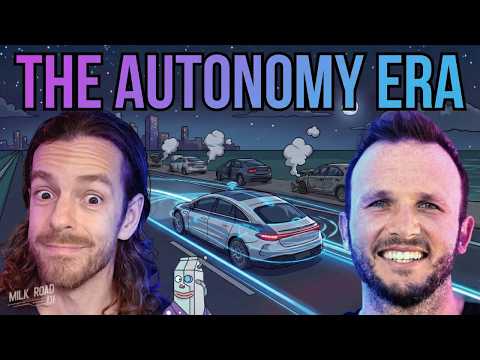
AI-driven automation converges with Tesla's vertically integrated hardware and data infrastructure, creating a deflationary force across transportation and labor markets and an unparalleled economic moat.
Investors should re-evaluate Tesla not as an automotive stock, but as a dominant AI and robotics platform with compounding revenue streams. Builders should study Tesla's full-stack, data-centric AI deployment.
Tesla's imminent unsupervised FSD rollout and robo-taxi network will fundamentally alter personal mobility and asset ownership, making it critical for anyone tracking the future of AI, robotics, and global economics over the next 6-12 months.
Evaluate Tesla not as an automotive stock, but as a leading AI and robotics platform with multiple, compounding revenue streams.
AI-driven automation, powered by vertically integrated hardware and software, is poised to create unprecedented deflationary forces across transportation and labor, concentrating immense value in companies that control the full stack.
Tesla's imminent unsupervised FSD rollout and robo-taxi network, coupled with its robotics and space infrastructure, represent a multi-trillion dollar opportunity that the market is only beginning to price in, making it a critical consideration for long-term tech investors.
AI-driven vertical integration, exemplified by Tesla's FSD and robotics, is creating a new economic order where traditional industry boundaries dissolve. This shift will drive massive deflation in transportation and labor costs, fundamentally altering consumer behavior and capital allocation.
Investors should evaluate companies not just on current revenue streams but on their proprietary data moats and ability to vertically integrate AI across hardware and software. Builders should focus on platforms that enable autonomous services, recognizing the immense value in owning both the AI and the physical means of deployment.
Tesla's strategic pivot to autonomous AI and robotics, coupled with its unique data advantage and vertical integration, positions it to capture unprecedented market share in multiple trillion-dollar industries. This is about owning the future of movement, work, and even space exploration, making it a critical long-term bet for those looking beyond today's market narratives.
From Voting to Value: Futarchy transforms governance from a popularity contest into a pure value-maximization engine, where the only thing that matters is whether a decision increases the token's price.
Investor Protection on-Chain: By locking funds in a market-governed treasury, Futarchy offers automated, code-enforced investor protections that mimic—and may even surpass—traditional shareholder rights.
The End of the Rug Pull Era: Platforms like MetaDAO create a new asset class of "ownership coins" where the incentive to rug is eliminated, signaling a potential turning point for the quality and reliability of crypto investments.
**Invisible Blockchain is the Endgame.** The biggest barrier to mass adoption is user experience. The ultimate winners will make crypto so seamless that users don't even realize they're using it.
**Revenue Beats Hype.** The industry is maturing from extractive schemes to sustainable businesses. Valuations must follow suit, focusing on ecosystem health, attention, and earned revenue—not just mints.
**Coordination Creates Wealth.** Crypto's core innovation is "human coordination on steroids," a force powerful enough to potentially trigger the largest single wealth creation event in the internet's history.
**The Four-Year Cycle Is Dead.** The absence of a parabolic, post-halving rally confirms a new paradigm. Investors should expect more sustained, multi-year growth fueled by institutional adoption and macro trends, pointing to a strong 2026.
**Stablecoins Are Capital Formation Engines.** The primary use case isn't peer-to-peer payments; it's a new financial primitive for funding real-world assets. This is crypto’s killer app for institutions.
**DeFi's Transparency Wins.** The recent liquidations proved that while CeFi remains a house of cards with opaque risks and preferential treatment for insiders, DeFi’s transparent, on-chain systems offer superior resilience.
**The Great Bifurcation Is Here.** Institutional capital is flowing into Bitcoin and Ethereum, but the flash crash proved the altcoin market is a liquidity desert. Do not mistake ETF inflows for broad market support.
**DeFi Won the Battle, CeFi Won the War (For Now).** Protocols like Aave performed perfectly, but the system's reliance on centralized exchange oracles was the critical point of failure. The future is hybrid, but the current integration is dangerously fragile.
**Cash Flow Is King.** The era of vaporware is ending. From DATs to new tokens, the market will no longer tolerate projects without a clear path to revenue. The music has stopped for assets without a viable business model.
Leverage is the market's double-edged sword. The $19B flash crash was a cascade failure driven by leverage, not fundamentals. It exposed the fragility of perpetual exchanges and the critical risk of Auto-Deleveraging (ADL) even for sophisticated traders.
Wall Street is tokenizing everything. Larry Fink and BlackRock are building the operating system to move trillions in traditional assets on-chain. This isn't a speculative bet; it's a core strategy to capture a massive, untapped global market.
Infrastructure is maturing, but risks are shifting. While core DeFi protocols proved bulletproof under stress, centralized exchanges and their oracle dependencies remain a systemic weak point, as shown by Binance's API failures and the resulting market chaos.
Altcoins Are Cooked. A decimated retail buyer base combined with relentless selling pressure from insider token unlocks creates a structurally bearish environment for the entire altcoin complex.
Farm, Don't Buy. Stop being exit liquidity. The winning strategy is to farm airdrops to acquire tokens for free and become the one who sells at launch.
Capital Preservation is King. The "one more 2x" mentality is a trap. Protect your gains by holding significant stablecoin reserves and acting quickly to de-risk. Take care of the downside, and the upside will take care of itself.