The Macro Shift: In an era of rapid technological disruption and diversified portfolios, 3G Capital's success with "old economy" brands highlights the enduring power of deep operational expertise, long-term alignment, and a relentless focus on fundamental business quality, even in non-tech sectors.
The Tactical Edge: Cultivate Ownership: Implement incentive structures that align management with long-term shareholder value, treating company capital as personal capital. This means disproportionately rewarding top performers and fostering a culture of accountability.
The Bottom Line: In a market obsessed with rapid tech cycles, 3G's long-term, deep-operator model suggests that enduring value lies in fundamental business quality, direct customer relationships, and a culture that empowers talent, offering a counter-narrative for builders and investors seeking sustainable alpha.
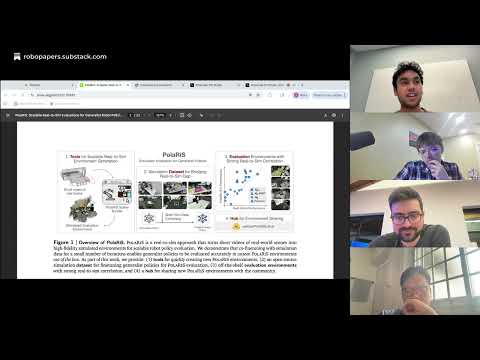
The robotics community is moving from bespoke, task-specific benchmarks to generalist policy evaluation platforms that prioritize real-world correlation and scalability. This mirrors LLM benchmark evolution, demanding tools that enable rapid, diverse testing.
Builders and researchers should prioritize evaluation frameworks that offer easy, real-to-sim environment generation (like PolaRiS's Gaussian splatting) and incorporate small, diverse sim data for distribution alignment. This accelerates policy iteration and ensures applicability.
Scalable, real-world-correlated simulation is the missing link for accelerating generalist robot policy development. Investing in or building on tools like PolaRiS, which democratize environment creation and robust evaluation, will be key to unlocking the next generation of capable robots over the next 6-12 months.
The rise of generalist robot policies demands a new generation of evaluation tools that are both scalable and highly correlated with real-world performance.
Adopt hybrid real-to-sim evaluation frameworks like PolaRiS to accelerate robot policy iteration and ensure real-world applicability.
Reliable, scalable simulation is no longer a pipe dream; it's a present reality for rigid body tasks. This means faster development cycles and more robust robot policies in the next 6-12 months.
The rise of generalist robot policies, trained on large real-world datasets, demands a new evaluation framework. PolaRiS provides a scalable, real-world correlated simulation, moving robotics towards an LLM-like benchmark ecosystem where models are tested for zero-shot generalization across diverse, easily created environments.
Adopt PolaRiS to rapidly iterate on robot policies. Leverage its real-to-sim environment generation and minimal sim-code training to achieve high correlation with real-world performance, significantly cutting development time and cost compared to physical testing.
For builders and investors, PolaRiS means faster, cheaper, and more reliable robot policy development. This tool accelerates the path to deployable, generalist robots, making advanced robotics more accessible and competitive in the next 6-12 months.
The push for generalist robot policies, akin to foundation models in other AI fields, necessitates a shift from bespoke, real-world-only evaluations to scalable, correlated simulation benchmarks.
Adopt PolaRiS for faster policy iteration. Integrate small, diverse sets of *unrelated* sim data into your co-training mix to significantly boost real-to-sim correlation.
Robotics is moving towards LLM-style benchmarking.
While the market obsesses over "bits" and rapid tech disruption, 3G Capital demonstrates that enduring value often resides in "atoms"—physical businesses with strong brands and direct customer relationships. This highlights a counter-cyclical opportunity in overlooked, tangible assets.
Cultivate an owner-operator mentality in your ventures. Focus on attracting and empowering top talent with significant equity, then decentralize execution while maintaining clear strategic alignment.
In the next 6-12 months, prioritize investments in businesses with defensible customer relationships and clear, long-term growth runways, even if they appear "boring." Your ability to instill a true ownership culture will be a differentiator, driving outsized returns where others chase fleeting trends.
In a world where capital is abundant but truly great businesses are rare and often overpriced, 3G's model highlights a strategic pivot: deep, operator-led concentration on defensible, customer-centric assets with long-term growth potential, rather than broad, passive diversification.
Cultivate an "owner operator" mindset within your organization, pushing decision-making closer to the problems and aligning incentives with long-term shareholder value, not just short-term metrics.
Over the next 6-12 months, focus on identifying businesses with strong, direct customer relationships and inherent resistance to technological disruption. These "forever businesses," often family-controlled, offer a more reliable path to compounding returns than pursuing fleeting trends or commoditized assets.
The Macro Shift: In an era of rapid technological change, businesses with strong, direct customer relationships and physical moats are increasingly resilient. Technology should improve, not replace, core offerings.
The Tactical Edge: Cultivate a "brand bigger than the business" mindset. Seek out established brands with global recognition but underperforming operations, then apply rigorous, owner-operator principles to create latent value and growth.
The Bottom Line: Long-term thinking and a relentless focus on people and business quality, even in a concentrated portfolio, remain the most powerful engines for compounding capital. This means patience, deep operational involvement, and a willingness to bet big on exceptional talent.
The Old Playbooks Are Obsolete. This isn't your 2021 bull run. The four-year cycle is broken, institutional flows have altered market dynamics, and historical patterns are no longer reliable predictors of future performance.
Ethereum Is Entering Hyper-Scale. A relentless upgrade cadence is simultaneously scaling both L1 (via gas limit increases) and L2s (via blob scaling), even before the ZK revolution delivers another 100x+ throughput boost to the mainnet.
Adaptability Is the Ultimate Security. Existential threats like quantum computing are moving from science fiction to near-term reality. Ethereum's culture of continuous improvement is its greatest defense, while chains resistant to change face a brewing crisis.
**ETH is Overvalued and Avoidable.** Its fundamentals do not justify its sky-high valuation. View it as a flawed asset, not a mandatory portfolio holding for crypto investors.
**Farm, Don't Trade.** The most reliable retail edge isn't trading, but airdrop farming. It allows you to acquire assets from overvalued launches without providing exit liquidity.
**Cash is a Position.** In a market defined by negative reflexivity and dwindling liquidity, the winning strategy is capital preservation. Avoid the casino, raise cash, and wait for the market to present clear, undervalued opportunities.
Stop Obsessing Over the Halving. The four-year cycle is a narrative, not a driver. The real signal is the macro business cycle, driven by debt refinancing and central bank liquidity. Track the ISM index: historically, buying below 50 and selling above 57 has been a winning strategy.
Invest in Networks, Not Spreadsheets. Value crypto protocols based on network effects (active users and transaction value), not discounted cash flows. The long-term bet is on the growth of the network itself, as this is where wealth has compounded most dramatically.
Survive to Compound. Structure your portfolio to withstand volatility. Have external cash flow so you’re never a forced seller, and take "lifestyle chips" off the table during rallies to manage psychological stress. Drawdowns are a feature, not a bug—use them to add to your long-term positions.
**The Trend is Up, The Cycle is Peaking.** Relentless government spending ensures long-term monetary inflation, making assets like Bitcoin and gold essential core holdings. However, the 65-month cycle is nearing its peak, signaling a time to reduce risk and prepare for turbulence.
**Own Both Sides of the Capital War.** The future is a bipolar monetary world. An optimal portfolio holds both Bitcoin (representing the US digital collateral system) and gold (representing China’s hard money strategy) to hedge against persistent inflation from both sides.
**Watch the Repo Market for the Spark.** The immediate flashing red light is in the repo markets, where interest rate spreads are blowing out. An unwind of leveraged positions here could be the catalyst that ends the current cycle, creating a prime buying opportunity for patient, long-term investors.
Fundamentals Are Coming Home to Roost. Valuations for Layer 1s are untethered from reality. Scrutinize value-capture mechanisms and stop treating staking rewards as revenue.
Follow the Smart Money's Feet, Not Their Mouths. While headlines scream adoption, crypto VCs are quietly pivoting to AI and fintech. This "disbelief" phase in venture often precedes a broader market bottom.
Macro Is the Main Character. Crypto is still on the far end of the risk curve. The sell-off is a macro-driven flight to safety, not a crypto-specific crisis. Until liquidity returns, expect continued correlation with traditional markets.
The Four-Year Cycle is Dead. The market is no longer driven by simple cyclical hype. Macro headwinds and competition for attention from AI mean investors must focus on projects with demonstrable utility, not just memetic potential.
Ethereum Gets Pragmatic. The Ethereum ecosystem is ditching idealism for execution, re-focusing on scaling its core infrastructure (L1) and building products with clear, real-world use cases for both consumers and institutions.
Institutions are Buying the Dip. Don't mistake retail fear for institutional exit. From Harvard's massive ETF allocation to Kraken's IPO plans, smart money is using the downturn to secure its position in the industry's foundational layers.