Mining is a software problem. The biggest gains aren't just in new drilling tech, but in using AI to optimize complex, thousand-variable refining processes and automate construction, slashing project timelines from years to months.
Vertical integration is non-negotiable. Selling point solutions to "calcified" incumbents is a dead end. To capture efficiency gains, a company must own the entire process from mine to metal, internalizing risk and innovation.
Government’s biggest lever is buying. To unlock trillions in private capital for this critical sector, the government must act as a reliable customer, providing offtake agreements and price floors that de-risk projects in a volatile commodity market.
Comet is the agent, Dia is the assistant. Comet acts on your behalf across your digital life (scheduling, buying, emailing), while Dia excels as a hyper-competent assistant for automating complex research and content creation.
The killer app is integration, not just chat. The browser that wins will be the one that most seamlessly orchestrates a user's entire digital ecosystem. Comet’s ability to connect and push tasks to core apps gives it the current edge.
The sleeping giants are waking up. With vast user data and powerful proprietary models, Google and OpenAI’s eventual entry into the agentic browser market will be the next major catalyst, likely redefining the competitive landscape.
Hardware is the New Frontier. The scaling race isn't about building more data centers for the same old chips. The next 1000x improvement will come from a fundamental paradigm shift that works with physics, not against it.
Noise is a Feature, Not a Bug. The future of efficient computing lies in harnessing stochasticity. The "noise" we spend billions to suppress in classical chips is the very resource that can power probabilistic AI models with unparalleled efficiency.
Prepare for an Algorithmic Renaissance. The dominance of Transformers is a temporary state dictated by current hardware. As thermodynamic computers become available, developers and researchers should dust off their probabilistic ML textbooks—the algorithms of tomorrow will look very different.
Invest in AI's Tailwinds: The essential question for any AI investment is: "Does this business get better as foundation models improve?" Companies fighting against the current of AI's scaling laws are on the wrong side of a powerful trade.
The "Mag 7" Will Expand, Not Just Turn Over: AI is not a zero-sum game for incumbents. The total addressable market is set to 10x as AI drives labor costs toward zero, creating room for a "Mag 25" and turning today's $500B companies into tomorrow's $5T behemoths.
Private Market Alpha Exists, But Edge is Paramount: The private AI market cap is a mere ~$700B, signaling massive growth potential. However, like in crypto, investors must be paranoid about their "edge," as the best deals require deep ecosystem access to avoid negative selection.
**AI Isn't a Feature; It's a New Infrastructure Primitive.** For the first time, developers are outsourcing logic, not just resources. This fundamentally changes how software is built, valued, and sold.
**Abandon Zero-Sum Thinking.** The AI market is in a massive expansion phase, not a consolidation battle. Value is accruing at every layer of the stack simultaneously; assuming one layer's gain is another's loss is a flawed thesis.
**The Future is More Developers, Not Fewer.** AI tools augment productivity and lower the barrier to entry. This elevates the developer's role to focus on product design and workflow definition—the *real* hard problem in software.
**A Killer Value Prop:** Chutes makes deploying powerful AI models 85% cheaper and as easy as building a website on Squarespace.
**The Investor's Dilemma:** While all revenue is used to buy back the Chutes alpha token, this currently covers only 10% of the daily token emissions. The token's price stability is heavily dependent on external market demand outstripping this inflation.
**Watch for Catalysts:** Two key events could dramatically increase buy pressure: the imminent launch of BitTensor subnet tokens on Solana and an anticipated wave of institutional capital from newly formed crypto hedge funds.
**Specialization Unlocks Performance.** ZEUS proves that a decentralized network of specialized AI agents can outperform monolithic, state-of-the-art models, achieving a nearly 40% lower error rate in weather forecasting.
**Revenue Sharing is the Next Evolution.** The plan to distribute API revenue directly to network participants in stablecoins represents a major step toward sustainable subnet economies, moving beyond token buybacks and emission-based rewards.
**The Valuation Gap is the Opportunity.** Despite massive potential, subnets have extremely low market caps compared to their Web2 equivalents. For long-term believers, this asymmetry presents a compelling, albeit early, investment thesis.
Human Intelligence is the Ultimate Moat: In an era of synthetic data, Dojo is creating a defensible moat by generating proprietary, high-quality human preference data. This is the raw material for the next generation of fine-tuned, specialized models.
A New Paradigm for Validation: Dojo’s mechanism of using subtle "perturbations" to test labelers is a breakthrough. It solves the cold start problem of validating subjective human feedback in a decentralized network.
The Future is Human-Agentic Collaboration: Dojo is evolving from a data-generation subnet to a platform for human-agentic workflows, with applications in robotics, video analytics, and 3D generation. In the long term, it aims to be a crucial tool for aligning AI with human values.
Your Pricing Model Is Now a Dynamic Weapon. The five-year pricing plan is dead. You must build the infrastructure and culture for constant experimentation and rapid iteration. If you’re not re-evaluating your model quarterly, you're falling behind.
This Is a CEO-Level Mandate. Shifting to usage-based pricing is a full-company transformation that requires top-down vision. The CEO must act as the "pricing dictator" to align sales, product, and finance around a unified strategy of value creation and capture.
Your Product Team Now Owns Revenue. In a usage-based world, the core value metric *is* your revenue. Product and engineering teams must become obsessed with driving the specific usage that customers pay for, making their impact on the bottom line completely objective.
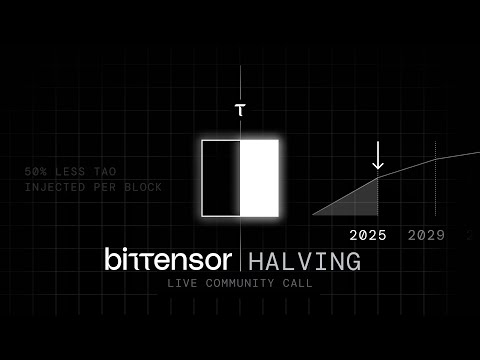
TAO's Centrality: The halving reinforces TAO's role as the ecosystem's core asset, with its scarcity driving value for all denominated subnet tokens.
Builder/Investor Note: Focus on subnet "flow" and long-term vision over immediate revenue. Identify projects with strong community and innovative tech, as TAO Flow will accelerate the decline of underperforming subnets.
The "So What?": Bittensor is entering a more mature, capital-efficient phase. The halving and technical upgrades create a more elastic market, rewarding genuine innovation and stake accumulation, while weeding out less viable projects.
Strategic Shift: The battle for privacy is a battle for power asymmetry. Companies with transparent, privacy-aligned business models (e.g., Proton's hybrid non-profit/for-profit structure) offer a viable alternative to surveillance capitalism.
Builder/Investor Note: Invest in and build open-source, privacy-preserving infrastructure and applications with strong technical guarantees. The shrinking gap between open-source and proprietary AI makes this increasingly feasible and competitive.
The "So What?": Your digital identity is paramount. Switching your primary email from a Big Tech provider (like Gmail) to a privacy-focused one (like Proton Mail) is a high-impact, low-effort action to opt out of pervasive data consolidation and reclaim agency in the digital age.
Proactive Tax Planning: Engage in tax loss harvesting now, leveraging the current wash sale exemption (with economic substance).
Meticulous Record Keeping: The 1099-DA will be incomplete. Investors must maintain robust personal records for all crypto activity, especially for ETPs and DeFi.
Software Opportunity: The complexity creates a massive market for sophisticated crypto tax software that can aggregate data and reconcile discrepancies.
Strategic Implication: Crypto is moving past its "everything is beta" phase. Expect greater dispersion in asset performance, rewarding fundamental analysis over broad market exposure.
Builder/Investor Note: Focus on projects with clear paths to productivity, durable advantages, and strong, substance-backed narratives. Opportunities exist in fixing token market inefficiencies and integrating crypto into existing consumer distribution channels.
The "So What?": The market demands a more sophisticated approach. Investors and builders who can identify and execute on real-world value creation, rather than relying on hype cycles, will capture the most significant returns in the next 6-12 months.
Compute is King (for now): The race for compute and data center capacity will intensify until the fundamental scaling laws of AI hit a wall.
Agents are Coming, with Caveats: Expect significant agentic progress in 2026, but real-world, fully autonomous agents require breakthroughs in reliability and new human-computer interaction data.
Privacy as a Differentiator: Decentralized AI offering true data privacy will become a critical value proposition as centralized platforms inevitably monetize user data.
Strategic Implication: The market is a casino. Success hinges on understanding market cycles, personal psychology, and the art of strategic entry and exit, not blind loyalty.
Builder/Investor Note: Prioritize identifying early narratives and catalysts. For smaller capital, focus on "grind drops" over TVL-based airdrops to maintain liquidity.
The "So What?": In the next 6-12 months, expect continued volatility. The ability to adapt strategies between "easy" and "hard" market modes, coupled with disciplined profit-taking, will define success.