Vision & Spatial Reasoning Remain Hard: Despite advances, LLMs like Claude struggle profoundly with interpreting visual game environments and navigating physical space, requiring clever workarounds or direct data access ("cheating").
Simpler is Often Better: As models improve, complex scaffolding and overly detailed prompts can become counterproductive; minimal guidance often yields better results.
Novel Infrastructure Unlocks New Agent Strategies: Platforms like Morph Cloud, with features like low-overhead snapshotting and branching, enable advanced agent development techniques (like scaled testing and backtracking) previously impractical.
**TVM Enables Provable Privacy:** Targon V6 uses hardware-level security (TEEs + Nvidia CC) to offer verifiable confidential compute, unlocking enterprise adoption and immediate monetization via platforms like Open Router.
**Shift from Software to Hardware Incentives:** The incentive mechanism pivots to reward miners for deploying and optimizing sophisticated, secure hardware setups, rather than just software-level speed optimizations.
**Building an AI Moat:** The ultimate goal is training proprietary, high-value AI models exclusively on Targon, creating unique value and an economic moat within the BitTensor network, potentially making SN4 compute highly sought after.
Confidential Compute is King: TVM fundamentally shifts Subnet 4, enabling secure, verifiable AI training and inference, addressing enterprise privacy concerns and potentially unlocking paid services like OpenRouter access next week.
Hardware > Software (for Incentives): The new incentive model rewards miners for building robust, secure hardware setups (confidential compute capabilities, low-latency interconnects, fast storage) rather than exploiting software loopholes.
Building the AI Moat: Manifold aims to use TVM to train proprietary, state-of-the-art models (like JEPA) exclusively on Targon, creating unique value and a powerful competitive advantage within the Bitensor ecosystem.
Tariff Uncertainty is the New Norm: Expect continued market volatility as businesses grapple with unpredictable trade policies, potentially delaying significant investment and hiring decisions.
AI Open Source Battle Heats Up: OpenAI's entry into more open models directly challenges Meta and puts pressure on others, potentially accelerating commoditization while intensifying US vs. China platform competition.
Infrastructure is King, But Scrutinized: Companies like Coreweave are essential plumbing for the AI boom and attracting major customers, but face investor questions on capital intensity and long-term asset value (depreciation).
**Evolve, Don't Fight:** View decentralized AI as the natural evolution from the necessary "Mainframe" stage of centralized AI, fostering collaboration over conflict.
**Master the Four Pillars:** Success requires simultaneously solving for true privacy, Web3-powered incentives, cryptographic verifiability, and novel "crowd UX" interfaces.
**Build the Agent Economy:** Prepare for a future where autonomous agents socialize, learn, and earn, demanding decentralized infrastructure for this new digital labor market.
**MCP is the USBC for AI Apps:** It standardizes how applications integrate diverse external tools and data, moving beyond ad-hoc solutions.
**Richer Interactions via Primitives:** Tools, Resources, and Prompts offer application developers finer control over user experience than just model-controlled function calls.
**Composable & Open Ecosystem:** Servers acting as clients unlock complex, potentially agentic workflows, built within an open standard framework welcoming broad participation.
Invest in Access: The largest bottleneck—and opportunity—in Bittensor is user experience. Simple, intuitive interfaces for subnet discovery and investment are critical to unlocking value.
Bet on Specialization: Decentralized, niche AI models on Bittensor subnets hold significant potential, mirroring historical tech shifts. Current low market caps may present a unique entry point.
Follow Free AI to Physical Form: As AI software becomes increasingly powerful and commoditized (free), the most significant value capture will likely occur in its physical applications, particularly humanoid robots.
AI Hype is Real: AI & Robotics advancements are genuinely capturing attention and capital, fueled by tangible progress (FSD, coding tools, new models), while crypto seeks its next major narrative beyond incremental TradFi integration.
Crypto Wars Turn Inward: The main crypto battleground is now internal: CEXs vs. DEXs vs. TradFi entrants like Robin Hood fighting over the same trading and stablecoin pie, leading to aggressive competitive tactics.
AI Lowers Startup Barriers: AI tools drastically cut the cost and complexity of building software, enabling smaller, nimbler teams (even non-technical founders) to launch "micro-apps" and potentially "micro-unicorns," while disrupting traditional education and junior professional roles.
Hyper-Acceleration: AI adoption and feature deployment cycles are compressing dramatically, from days to minutes for millions of users.
Infrastructure Resilience: Despite market fears, investment in core AI infrastructure like GPU compute (e.g., CoreWeave) remains exceptionally strong, signaling deep conviction in sustained AI demand.
Crypto AI Finds Its Niche: While broad AI models battle for supremacy, crypto AI is carving out tangible use cases in areas like decentralized data (Vanna), DeFi abstraction (Banker), prediction markets, and specialized agents (Billy Bets, OLAS), attracting significant market attention.
Strategic Implication: The shift in regulatory tone and corporate demand for privacy signals a maturation of the crypto industry. Solutions that balance privacy with accountability will capture significant market share.
Builder/Investor Note: Focus on projects building privacy-preserving compliance tools and "programmable risk management" frameworks. These are the infrastructure plays for mainstream adoption. Avoid projects that offer absolute privacy without any recourse mechanisms, as they face significant regulatory risk.
The "So What?": Over the next 6-12 months, expect increased innovation and investment in ZK-based privacy solutions that enable selective disclosure and verifiable compliance. This will be crucial for onboarding institutional capital and protecting individual users in a data-exposed world.
Integrated Finance is the Future: Robinhood's super app strategy, combining traditional and crypto assets, points to a future where financial services are consolidated and cross-pollinated.
Builders: Simplify, Simplify, Simplify: The path to mainstream crypto adoption requires abstracting away technical details. Focus on product utility, not underlying blockchain mechanics.
Tokenization's Long Game: Expect tokenization to redefine access to private markets and real-world assets, potentially disrupting traditional capital raising and ownership structures over the next 2-5 years.
Strategic Implication: The crypto industry is moving beyond speculative cycles, driven by the integration of real-world assets and the pursuit of tangible efficiencies by both startups and traditional financial giants.
Builder/Investor Note: Builders should prioritize utility and cost reduction for mainstream users, while investors must scrutinize projects for sustainable business models and genuine decentralization, rather than relying on hype or incentive schemes.
The "So What?": Regulatory clarity, particularly around DeFi and asset classification, will shape the next 6-12 months, determining which projects thrive by truly delivering value and which struggle under increased scrutiny.
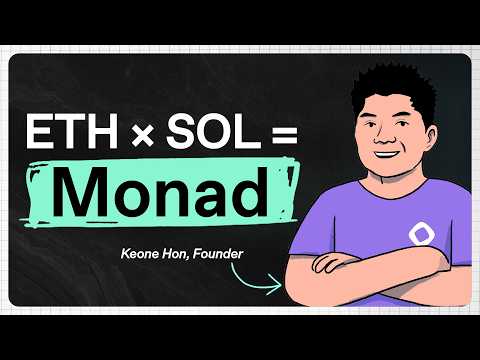
Strategic Implication: Monad represents a significant bet on vertical scaling of Layer 1s, aiming to unlock a new class of high-performance DeFi applications by directly addressing core execution bottlenecks.
Builder/Investor Note: Full EVM bytecode compatibility means existing Ethereum dApps can migrate with minimal changes, immediately benefiting from 10,000+ TPS and 1-second finality. This opens doors for high-frequency DeFi, on-chain order books, and complex AI/ML applications.
The "So What?": If Monad delivers on its promises, it could validate a powerful alternative scaling path for crypto, shifting focus back to base-layer innovation and enabling decentralized finance to truly compete with centralized exchanges in performance and cost within the next 6-12 months.
Strategic Implication: The industry's future lies in seamless integration with the broader economy, making blockchain an invisible, value-adding layer for everyday products.
Builder/Investor Note: Focus on projects solving real problems, demonstrating product-market fit in proven sectors (stablecoins, perps, token issuance), and prioritizing user experience over maximalist decentralization.
The "So What?": The next 6-12 months will reward deep research and conviction in quality assets, as the market shifts from speculative narratives to tangible utility and real-world adoption.
Strategic Implication: The lines between traditional finance, crypto, and cultural markets will blur. "Internet markets" will encompass everything, driven by attention and mimetics.
Builder/Investor Note: Focus on platforms that facilitate permissionless market creation and enhance the "spectacle" of trading. User experience that feels as native as social media will capture Gen Z's capital.
The "So What?": Crypto's open, liquid, and attention-driven nature makes it the ultimate infrastructure for this new financial paradigm. The next decade will see an explosion of internet asset trading, with crypto at its core.