An AGI Moonshot, Not an LLM Factory: Hone’s singular focus is solving the ARC-AGI benchmark to achieve true generalization. This is a high-risk, high-reward play for a step-function leap in AI, not just another incremental improvement.
Architecture Over Data: The strategy is to out-innovate, not out-collect. By exploring novel architectures like JEPA, Hone aims to create models that think more efficiently and don't depend on ever-expanding datasets, sidestepping the data moat of centralized giants.
The Business Model is the Breakthrough: There is no immediate revenue. The investment thesis is straightforward: solve AGI, earn the ultimate bragging rights, and then monetize the world’s first truly intelligent model through distribution partners like Targon.
Vertical Integration is Non-Negotiable: To build AGI, the old model of horizontal specialization is dead. Owning the stack—from research to infrastructure to product—is the only way to move fast enough.
Ship to Socialize: Don't build AGI in a lab and drop it on an unsuspecting world. Products like Sora are deliberate steps to co-evolve technology with society, managing impact through iterative, public-facing releases.
The Real Turing Test is Science: The true measure of AI's power is its ability to make novel scientific discoveries. Altman believes GPT-5 is already approaching this milestone, which will have a more profound impact on humanity than any chatbot.
Stop Fearing Parameters. When in doubt, go bigger. Scale is not just about capacity; it’s a tool for inducing a powerful simplicity bias that improves generalization and paradoxically reduces overfitting.
Trade Hard Constraints for Soft Biases. Instead of rigidly constraining your model architecture, use gentle encouragements. An expressive model with a soft simplicity bias will find the simple solution if the data supports it, while retaining the flexibility to capture true complexity.
Think Like a Bayesian. Even if you don't run complex MCMC, adopt the core principle of marginalization. Techniques like ensembling or stochastic weight averaging approximate the benefits of considering multiple solutions, leading to more robust and generalizable models.
Reward Function is Everything. Mantis’s success hinges on its information-gain-based reward system, which attributes value based on a miner’s marginal contribution to a collective ensemble, not just their individual accuracy.
Inherent Sybil Resistance. By rewarding unique signals, the incentive mechanism naturally discourages miners from running the same model across many UIDs, solving a critical vulnerability in decentralized AI networks.
The Product is Verifiable Alpha. The endgame is not just to build a subnet but to produce a monetizable product: high-quality financial signals, auctioned to the highest bidder and backed by an immutable on-chain performance record.
Incentives Dictate Intelligence. Mantis's breakthrough is its reward function. By precisely measuring a miner's marginal contribution, it makes unique alpha the only profitable strategy and naturally defends against Sybil attacks.
The Ensemble is the Alpha. The network’s power lies not in finding one genius quant, but in combining many good-enough signals into one great one. The collective intelligence is designed to be far more valuable than any individual participant.
The Future is Verifiable, On-Chain Alpha. Mantis plans to monetize by auctioning its predictive signals, creating a transparent marketplace for intelligence and proving that a decentralized network can produce a product valuable enough to compete with Wall Street's top firms.
Google's "Tax on GDP" Is Under Threat. AI is eroding the informational searches that feed Google's funnel and will eventually intercept high-intent commercial queries, redirecting economic power to new agentic platforms.
The Future of Shopping Is Agentic, Not Search-Based. Consumers will delegate research and purchasing to specialized AI agents that optimize every variable, from product choice to payment method, fundamentally changing how brands acquire customers.
Trust Is the Ultimate Moat. In a world of automated "crap," business models built on human trust and strict curation, like Costco's, become exceptionally defensible.
AI's next frontier isn't just language; it's simulating life. The "virtual cell"—a model that predicts how to change a cell's state—is the industry's next "AlphaFold moment," aiming to compress drug discovery from years of lab work into forward passes of a neural network.
Biology's core bottleneck is physical, not digital. Unlike pure software, progress is gated by the "lab-in-the-loop" reality: every AI prediction must be validated by slow, expensive physical experiments. Solving this requires new platforms that can scale the generation of high-quality biological data.
The biotech business model needs a new playbook. With a 90% clinical trial failure rate, the economics are broken. The future belongs to companies that either A) use AI to drastically improve the hit rate of drug targets or B) tackle massive markets like obesity, where GLP-1s proved the prize is worth the squeeze.
Enterprise AI is a Services Business. The best models are not enough. Success requires deep integration via "Forward Deployed Engineers" who build the necessary data scaffolding and orchestration layers.
GPT-5 Was Co-developed with Customers. Its focus on "craft" (behavior, tone) over raw benchmarks was a direct result of an intensive feedback loop with enterprise partners, making it more practical for real-world use.
Bet on Applications, Not Tooling. The speakers are short the entire category of AI tooling (frameworks, vector DBs), arguing the underlying tech stack is evolving too rapidly. Long-term value will accrue to those building applications in high-impact sectors like healthcare.
Intelligence Has a Size Limit: Forget galaxy-spanning superintelligences. The physics of self-organizing systems suggest intelligence thrives at a specific scale, unable to exist when systems become too large or too small.
True Agency is Self-Inference: The crucial leap to higher intelligence is not just modeling the world, but modeling yourself as a cause within it. This recursive "strange loop" is the foundation of planning and agentic behavior.
Hardware is the Software: Consciousness is not an algorithm you can run on any machine. It likely requires a specific physical substrate where memory and processing are unified, making the body and brain inseparable from the mind.
Strategic Implication: The shift in regulatory tone and corporate demand for privacy signals a maturation of the crypto industry. Solutions that balance privacy with accountability will capture significant market share.
Builder/Investor Note: Focus on projects building privacy-preserving compliance tools and "programmable risk management" frameworks. These are the infrastructure plays for mainstream adoption. Avoid projects that offer absolute privacy without any recourse mechanisms, as they face significant regulatory risk.
The "So What?": Over the next 6-12 months, expect increased innovation and investment in ZK-based privacy solutions that enable selective disclosure and verifiable compliance. This will be crucial for onboarding institutional capital and protecting individual users in a data-exposed world.
Integrated Finance is the Future: Robinhood's super app strategy, combining traditional and crypto assets, points to a future where financial services are consolidated and cross-pollinated.
Builders: Simplify, Simplify, Simplify: The path to mainstream crypto adoption requires abstracting away technical details. Focus on product utility, not underlying blockchain mechanics.
Tokenization's Long Game: Expect tokenization to redefine access to private markets and real-world assets, potentially disrupting traditional capital raising and ownership structures over the next 2-5 years.
Strategic Implication: The crypto industry is moving beyond speculative cycles, driven by the integration of real-world assets and the pursuit of tangible efficiencies by both startups and traditional financial giants.
Builder/Investor Note: Builders should prioritize utility and cost reduction for mainstream users, while investors must scrutinize projects for sustainable business models and genuine decentralization, rather than relying on hype or incentive schemes.
The "So What?": Regulatory clarity, particularly around DeFi and asset classification, will shape the next 6-12 months, determining which projects thrive by truly delivering value and which struggle under increased scrutiny.
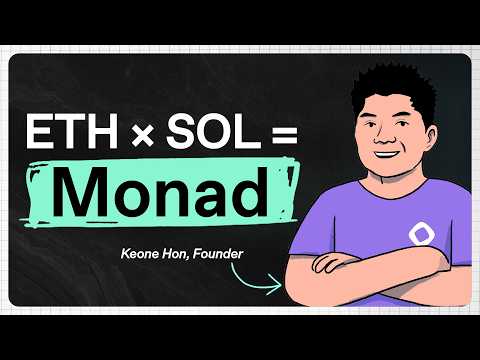
Strategic Implication: Monad represents a significant bet on vertical scaling of Layer 1s, aiming to unlock a new class of high-performance DeFi applications by directly addressing core execution bottlenecks.
Builder/Investor Note: Full EVM bytecode compatibility means existing Ethereum dApps can migrate with minimal changes, immediately benefiting from 10,000+ TPS and 1-second finality. This opens doors for high-frequency DeFi, on-chain order books, and complex AI/ML applications.
The "So What?": If Monad delivers on its promises, it could validate a powerful alternative scaling path for crypto, shifting focus back to base-layer innovation and enabling decentralized finance to truly compete with centralized exchanges in performance and cost within the next 6-12 months.
Strategic Implication: The industry's future lies in seamless integration with the broader economy, making blockchain an invisible, value-adding layer for everyday products.
Builder/Investor Note: Focus on projects solving real problems, demonstrating product-market fit in proven sectors (stablecoins, perps, token issuance), and prioritizing user experience over maximalist decentralization.
The "So What?": The next 6-12 months will reward deep research and conviction in quality assets, as the market shifts from speculative narratives to tangible utility and real-world adoption.
Strategic Implication: The lines between traditional finance, crypto, and cultural markets will blur. "Internet markets" will encompass everything, driven by attention and mimetics.
Builder/Investor Note: Focus on platforms that facilitate permissionless market creation and enhance the "spectacle" of trading. User experience that feels as native as social media will capture Gen Z's capital.
The "So What?": Crypto's open, liquid, and attention-driven nature makes it the ultimate infrastructure for this new financial paradigm. The next decade will see an explosion of internet asset trading, with crypto at its core.