Trillion-dollar AI compute investments create market divergence: immediate monetization (Meta) is rewarded, while slower conversion (Microsoft) faces skepticism, as geopolitical tensions rise over open-source model parity.
Prioritize AI models balancing raw intelligence with superior user experience and collaborative features, as developer loyalty and enterprise adoption increasingly hinge on usability.
The AI landscape is rapidly reordering. Investors and builders must assess monetization pathways, geopolitical implications, and AI's social contract over the next 6-12 months.
The Macro Trend: The transition from opaque scaling to verifiable reasoning.
The Tactical Edge: Audit your models for brittleness by testing them on edge cases that require first principles logic rather than historical data.
The Bottom Line: The next winners in AI will not have the biggest models but the most verifiable ones. If you cannot prove how a model reached a conclusion, you cannot trust it in production.
The transition from more data to better thinking via inference-time compute. Reasoning is becoming a post-training capability rather than a pre-training byproduct.
Use AI for anti-gravity coding to automate bug fixes and data visualization. Treat the model as a passive aura that buffs the productivity of every senior engineer.
AGI will not be a collection of narrow tools but a single model that reasons its way through any domain. The gap between closed labs and open source is widening as these reasoning tricks compound.
The transition from static LLMs to interactive world models marks the move from AI as a tool to AI as a persistent environment.
Monitor the Hugging Face release of the 2B model to build custom image-to-experience wrappers for niche training or spatial entertainment.
Local world models will become the primary interface for spatial computing within the next year, making high-end local compute more valuable than cloud-based streaming.
The Strategic Pivot: The transition from "Understanding-First" science to "Prediction-First" engineering. We are building artifacts that work perfectly but remain theoretically opaque.
The Tactical Edge: Audit your AI stack for "Leaky Abstractions." Don't assume a model's reasoning capabilities in one domain will hold when the underlying causal structure changes.
AGI isn't just an engineering milestone; it's a philosophical wager. If the brain isn't a computer, we are building a very powerful helicopter, not a synthetic human.
The pivot from "Understanding-First" science to "Prediction-First" engineering creates massive technical liability in our models.
Audit your AI implementations for "Leaky Abstractions" where the model fails to account for physical edge cases.
High-performance automation is not the same as sentient reasoning. Builders who recognize this distinction will avoid the cultural illusion of inevitable AGI.
The transition from deterministic software to agentic networks. Companies are moving from rigid workflows to fluid systems that plan and execute autonomously.
Build an internal LLM gateway early. Centralizing model routing and cost monitoring allows you to swap providers as the model horse race changes without refactoring your product.
AI is not just a feature but a fundamental restructuring of the corporate cost center. Efficiency gains allow a static headcount of 300 engineers to support a business growing 5x.
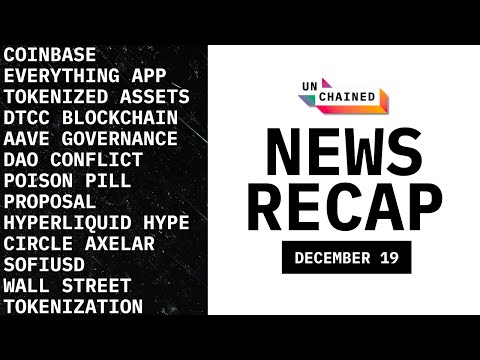
Tokenization is the Trojan Horse: TradFi isn't just observing; it's actively building on public blockchains. Tokenized real-world assets (RWAs) are the primary vector for institutional adoption.
Governance Matters: For builders, robust and transparent DAO governance is paramount. For investors, scrutinize projects for clear value accrual to token holders and potential conflicts between core teams and DAOs.
Regulatory Nuance: The Fed's policy shift suggests a move towards more nuanced regulation, potentially opening doors for regulated entities to engage with digital assets.
Strategic Patience Pays: Successful RWA tokenization requires a multi-year commitment to building infrastructure and liquidity, even if it means foregoing immediate profits.
Builders & Investors: Focus on Wallets & DApps: The future is self-custody wallets interacting with specialized, best-in-class DApps, not centralized "super apps." Build intuitive wallet experiences and highly efficient DApps.
The "So What?": Expect a significant migration of traditional financial assets and liabilities onto DeFi protocols over the next 6-12 months, driven by institutional adoption and regulatory clarity, leading to lower costs for consumers and new opportunities for capital.
Political Catalyst: A major political shift, likely driven by public anger over economic disparity, is the only force capable of breaking the current feudalistic cycle. This will be obvious when it happens, likely causing a sharp market correction.
Strategic Asset Allocation: Investors should prioritize stores of value (like gold) and seek out hard assets in overlooked emerging/frontier markets. Avoid the AI hardware bubble and identify companies that will leverage AI to cut white-collar costs, rather than those building the infrastructure.
The "So What?": The current economic structure is unsustainable. The growing divide and misallocation of capital will eventually force a re-evaluation of economic priorities. Positioning for this shift means embracing volatility and a long-term, contrarian view, looking beyond the overvalued "approved products" of the current system.
Convergence is Here: The lines between traditional finance and crypto are blurring. Expect more "everything apps" and institutional adoption of public blockchains for RWAs.
Token Alignment Matters: Builders must prioritize robust legal and governance structures that enshrine token holder rights. This will be a key differentiator for attracting capital in the next cycle.
Ethereum's Enduring Role: Despite new contenders, Ethereum continues to solidify its position as a foundational layer for institutional tokenization and decentralized finance.
Market Structure Overhaul: The current token distribution model is broken. Expect continued pressure on altcoins until tokenomics evolve to prioritize product-market fit over continuous investor unlocks.
Strategic Accumulation: This period of apathy is ideal for researching and accumulating Bitcoin and high-conviction RWAs. Cash is a strategic asset for deploying when opportunities arise.
TradFi on Chain: The next growth vector for crypto involves capturing traditional finance flows through tokenized equities, commodities, and FX. Builders should focus on robust, order-book based solutions with improved user experience.
Institutional Integration: Crypto is embedding itself into traditional finance, not replacing it. Expect more "everything apps" and verticalized services from major players.
Yield Evolution: As interest rates decline, the demand for diversified, transparent yield-bearing stablecoins will intensify. Protocols with robust risk management and RWA exposure will lead.
Creator Economy's Next Frontier: On-chain tools will redefine creator monetization, shifting from vanity metrics to direct value capture and deeper fan relationships.