Architecture is the new frontier. The move to a "Mixture of Models" is the real story of GPT-5. It’s the blueprint for future multi-agent systems, where coordination, not just raw power, is the key differentiator.
The application layer is the battleground. As foundational models become a commodity, the fight for market dominance will move up the stack. Expect AI giants to build integrated, all-in-one agents, threatening to absorb the niche currently occupied by smaller startups.
Ecosystems are becoming walled gardens. The uneasy truce between Big Tech platforms is fragile. Prepare for strategic "deplatforming" as companies like Google leverage their control over data and integrations (Gmail, Drive) to sideline competitors and favor their native AI.
**Sustainable Economics Trump Naive Subsidies.** Taoash’s pivot proves that simply wrapping a commodity in TAO isn't enough. Successful subnets require robust, self-sustaining economic loops that align incentives by returning primary value (BTC) directly to producers.
**The New Frontier is Niche & Nimble.** Subnet 5 (Hone) is betting against sheer scale. By targeting a specific, difficult benchmark (ARC-AGI-2) with smaller, more efficient models, it aims to deliver a step-function AI breakthrough without the astronomical cost of frontier labs.
**Invest in Measurable Missions.** Both subnets have quantifiable goals. Taoash targets a competitive net pool fee and a NiceHash-style marketplace. Hone is focused on winning the ARC-AGI-2 prize. This shift from vague roadmaps to falsifiable objectives is a defining feature of the network's next phase.
**Sustainable Economics Win:** TaoHash's initial model failed because it tried to use an inefficient token subsidy to capture a hyper-efficient market (Bitcoin mining). The successful pivot was to act like a standard pool and use its token as a *value-add* subsidy, not a revenue replacement.
**Architecture Over Brute Force:** Subnet 5 is a bet that the next leap in AI will come from architectural innovation, not just throwing more parameters at the problem. By focusing on hierarchical models, it aims to build smaller, smarter systems that can out-reason massive LLMs on complex tasks.
**Benchmarks Ground Innovation:** A clear, difficult, and measurable goal like solving ARC-AGI-2 focuses the network's energy. It transforms a vague mission ("build AGI") into a concrete engineering problem, allowing for rapid, cost-effective iteration and a clear definition of success.
From Prompts to Projects. The focus is shifting from single-shot answers to long-running, asynchronous tasks. The willingness of users to wait for high-quality output unlocks complex use cases, turning AI from a chatbot into a digital chief of staff.
Data is the New Oil, Again. With learning algorithms becoming hyper-efficient, the primary bottleneck is no longer compute or architecture, but the creation of high-quality, task-specific data and realistic reinforcement learning environments.
Taste is the Ultimate Differentiator. As AI becomes a commodity, the ability to define a problem with simplicity and elegance—"good taste"—is the most valuable, non-commoditizable skill in AI development.
Galaxy is an AI Data Center Play. The market misunderstands GLXY as a crypto bank. The real thesis is its emergent data center business, which positions it as a key infrastructure provider for the AI revolution.
Ethena & Hyperliquid are Revenue Machines with Clear Catalysts. Ethena is set to benefit directly from Fed rate cuts, while Hyperliquid's upcoming HIP-3 upgrade will unlock permissionless markets for any asset, creating a powerful growth flywheel.
Digital Asset Treasuries (DATs) are the New Institutional Bid. Forget the old "institutions are coming" meme. They're here, spinning up public vehicles to gain exposure to high-growth assets like ENA and HYP that aren't easily accessible through ETFs.
**Market Trumps Team.** The most critical factor for success is timing. Don't fight the mega-trend; ensure AI is a tailwind for whatever you build. A great team in a bad market will lose to a good team in a great market.
**Attack the Beachhead.** To disrupt an incumbent or create a new category, you must be 10x better or do something previously impossible. Start with a hyper-specific "ideal practitioner profile," saturate that niche, and only then expand.
**Innovate or Die.** Cashing out a tech business without aggressive innovation is a self-fulfilling prophecy of failure. The formula is simple: get 1.27% better every day. The power of compounding in product development is unstoppable.
**DTAO is a Feature, Not a Bug.** The system's sell pressure is an intentional guardrail against manipulation. It’s designed to reward long-term, high-conviction investors over a year-long cycle, not short-term traders.
**Stop Complaining, Start Staking.** Miner burns are an economic choice. The protocol won’t intervene; the only cryptographic solution is for opponents to accumulate stake and participate in governance by running validators.
**The Stack is the Strategy.** BitTensor is building a modular AI network. Subnets like Aphīne demonstrate the end-game: integrating specialized layers like inference and fine-tuning to deliver top-tier AI products on a fully decentralized back-end.
A Pick-and-Shovel Play on Two Megatrends. GLXY provides exposure to both the institutionalization of crypto and the insatiable demand for AI data center capacity, all in a single stock.
The Data Center is the Crown Jewel. The CoreWeave contract provides a solid revenue baseline, but the real upside is the 1.7 GW expansion pipeline, which could transform Galaxy into a top-tier AI infrastructure player.
An Undervalued and Misunderstood Story. The stock's complexity creates a valuation disconnect. As the Helios data center begins generating cash flow in 2026, the narrative will become clearer, potentially forcing a significant market re-rating.
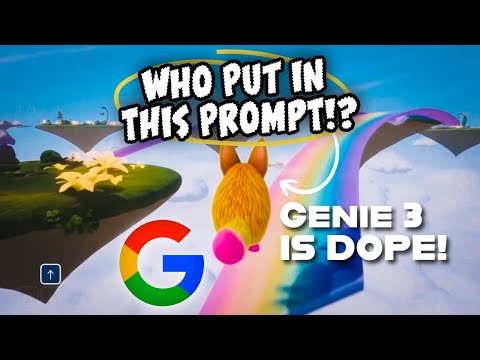
World Models are the New Game Engines: Genie 3 generates interactive, real-time worlds from text, bypassing the need for explicit coding of physics or 3D assets. Its consistency is an emergent property, not a programmed feature.
The Key to Unlocking Real-World AI: The primary goal is to create a scalable, safe simulation platform for training robotic agents. By prompting rare events, Genie 3 can prepare AI for the unpredictability of the real world, aiming for a breakthrough in robotics.
Creativity Remains Human-Driven: While powerful, Genie 3 is a tool that amplifies human creativity, not a replacement for it. The quality and novelty of the generated world depend heavily on the specificity and skill of the human prompter.
The transition from "Store of Value" to "Medium of Utility." As networks mature, the market will value throughput and censorship resistance over simple supply caps.
Allocate capital toward ecosystems with the highest developer activity and transaction density. Focus on chains building hardware-level censorship resistance rather than those just tweaking economic parameters.
The next three years will prove that the most useful tool wins the money war. If Solana achieves its roadmap, its asset becomes the default unit of account for the digital economy.