The decoupling of parameter count from active compute via sparsity means intelligence is becoming a software optimization problem as much as a hardware one.
Audit your agentic workflows for turn efficiency rather than just cost per token.
In a world of infinite tokens, the winner is the one who can verify the truth the fastest.
The Macro Pivot: The transition from LLMs as chat interfaces to LLMs as logic engines. As models move from text prediction to logic execution, the value moves from the model itself to the verification systems surrounding it.
The Tactical Edge: Audit the stack. Prioritize the integration of agentic coding tools like Jules to shorten the feedback loop between ideation and deployment.
The Bottom Line: Code is the only medium where AI can self-correct and scale without human intervention. The next 12 months will be defined by who can turn raw model power into reliable, self-healing code.
The Macro Transition: We are moving from "fire-and-forget" prompts to durable execution environments where state is as important as the model itself.
The Tactical Edge: Wrap your existing tool calls in the `useStep` function to gain instant retry logic and execution history.
The Bottom Line: Reliability is the primary moat in the agent market. Builders who adopt durable workflows will move to production while others are still debugging local scripts.
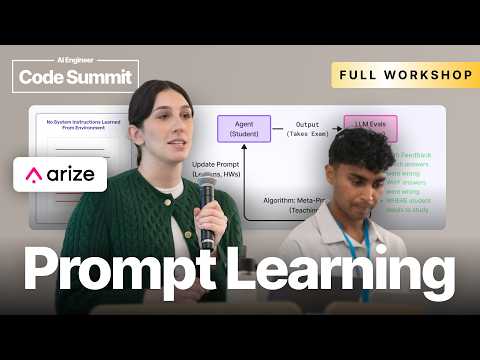
The move from manual prompt engineering to automated prompt learning. As models become commodities, the proprietary loop that refines them becomes the moat.
Implement a Train-Test Split for your prompts. Use a subset of failure data to generate new rules and validate them against a separate holdout set to ensure the logic holds.
Reliability is the only metric that matters for agent adoption. If you are not using a feedback loop to update your system instructions, you are building on sand.
The move from industrial management to creative inspiration. As AI automates routine tasks, the only remaining value is high-variance human creativity.
Apply the Keeper Test today. Ask your leads which team members they would fight for and provide generous exits for the rest to reset your talent bar.
Scaling doesn't require more rules. It requires better people. If you can maintain talent density, you can run fast while your competitors choke on their own handbooks.
Geopolitical fracturing is replacing the single-hedge-fund-world. Capital is migrating from speculative "paper" assets to hard-capped commodities and privacy-preserving tech.
Short the "zombie" alts. Create a basket of low-utility, high-FDV tokens from the previous cycle and pair them against long positions in Bitcoin and Monero.
The market is punishing momentum-chasing and rewarding structural alignment. If you aren't positioned for a multipolar, high-inflation environment, you are exit liquidity for the sovereigns.
The Macro Shift: Regulatory moats are being built around stablecoins to protect bank deposits. This forces a migration toward "consortium" models like Stripe’s Tempo.
The Tactical Edge: Audit market maker agreements to ensure protection against exchange API failures. Reliability is now a competitive advantage.
2026 looks like a liquidity-driven recovery. The "easy road" is over, but the infrastructure for the next cycle is finally being built by adults.
The Macro Trend: Vertical Integration. Protocols are moving from single-utility tools to full-stack financial ecosystems that own both the liquidity and the application layer.
The Tactical Edge: Monitor HIP-3 auctions. Watch how new exchanges utilize Kinetic's infrastructure to bootstrap liquidity without issuing predatory new tokens.
The Bottom Line: Kinetic is building the infrastructure for a post-Binance world where users own the venues they trade on. This matters for your roadmap because user-owned liquidity is the next major phase of DeFi growth.