Build a Product, Not Just a Portfolio. The dominant VC firms of the future will offer concrete services to founders, not just capital. Reputation and unwavering founder support are the ultimate competitive advantages.
Size Funds to the Market Opportunity. The software market is exponentially larger than it was two decades ago. Sticking to legacy fund sizes means missing out on a dramatically expanded opportunity set.
Fight for American Innovation. The biggest existential threat to technology isn't market cycles but a hostile regulatory environment. VCs must actively engage in policy to prevent the US from forfeiting leadership in foundational technologies like AI and crypto.
Execution is a Commodity; Ideation is the Moat. The value is rapidly shifting from those who can execute a plan to those who can generate the novel plan in the first place.
Your Org Chart is Now a Repo. Forward-thinking teams are treating their entire operational knowledge base as a single, AI-readable context, turning their company's history and philosophy into a prompt.
Beware the Conflict Resolution Engine. A centralized AI risks becoming an echo chamber that smooths over disagreements. Actively engineer processes (like human-led PR reviews) to preserve essential conflict and challenge groupthink.
Zero-Sum is a Losing Bet. The market isn't a monolith. Value is fragmenting across specialized applications in code, image, and vertical workflows. The "winner-take-all" thesis is dead.
Moats are Made, Not Inherent. AI’s magic solves the "bootstrap problem" of user acquisition, but long-term defensibility requires building traditional software moats like brand, workflow integration, and network effects.
Be on the Field, but Pick Your Spot. This is not a market to sit out, but indiscriminate investing is a death sentence. Back exceptional, proven teams, understand that conflicts can lock you out of the best deals, and never confuse market heat with genuine momentum.
AI is the deflationary force for stagnant sectors. While software ate the world, it skipped housing and healthcare. AI is finally tackling the operational drag that has caused costs to balloon for decades.
To solve the housing crisis, make it profitable. The path to more housing supply runs through better returns. By making property operations radically more efficient, AI attracts the capital required to build.
The future of work is human + AI. Automation won't eliminate jobs; it will transform them. As AI handles the administrative grind, human roles will shift to higher-value work like community engagement and complex problem-solving.
DTO Means Business: Dynamic TAO has forced a Darwinian shift. Subnets must now achieve product-market fit and generate real revenue to survive, transforming from research projects into self-sustaining businesses.
IOTA’s Grand Ambition: IOTA (SN9) isn't just another model trainer; its architecture aims to train trillion-parameter models on decentralized, consumer-grade hardware, directly challenging the dominance of centralized AI labs.
Time to Garden: The protocol's long-term health hinges on active governance. A strong sentiment is emerging to prune low-effort or malicious subnets to focus emissions on projects capable of creating real, lasting value.
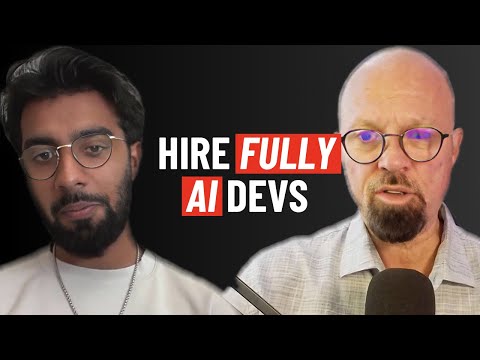
AI Is Moving from Copilot to Pilot. Ridges is betting that the future isn't AI assisting humans, but AI replacing them for specific tasks. Their goal is to make hiring a software engineer as simple as subscribing to a service.
Decentralized Economics Are a Moat. By leveraging Bittensor's incentive layer, Ridges outsources a $15M/year R&D budget to a global pool of competing developers, achieving a cost structure and innovation velocity that centralized players cannot match.
The Breakout Subnet Is Coming. Ridges showcases how a Bittensor subnet can solve real-world business problems—privacy, cost, and quality degradation—to build a product that is not just cheaper, but fundamentally better than its centralized counterparts.
From Performance to Profit: The AI industry is pivoting from a war of benchmarks to a game of unit economics. Features like GPT-5’s router signal that cost management and monetization are now as important as model capabilities.
Hardware is a Supply Chain Game: Nvidia’s true moat is its end-to-end control of the supply chain. Competitors aren't just fighting a chip architecture; they're fighting a logistical behemoth that consistently out-executes on everything from memory procurement to time-to-market.
The Grid is the Limit: The biggest check on AI’s expansion is the physical world. The speed at which new power infrastructure and data centers can be built will dictate the pace of AI deployment in the US, creating a major advantage for those who can build faster.
Performance is Proven, Not Promised. Gradients isn't just making claims; it’s delivering benchmark-crushing results, consistently outperforming centralized incumbents and producing state-of-the-art models.
Open Source Unlocks the Enterprise. The shift to verifiable, open-source training scripts is a direct solution to customer data privacy concerns, turning a critical vulnerability into a competitive advantage.
The AutoML Flywheel is Spinning. The network's competitive, tournament-style mechanism creates a self-optimizing system that continuously aggregates the best training techniques, ensuring it remains at the cutting edge.
**World Models Are a New Modality.** Genie 3 is not just better video; it's an interactive environment generator. This divergence from passive, cinematic models like Veo signals a new frontier focused on agency and simulation, creating a distinct discipline within generative AI.
**Simulation Is the Key to Embodied AI.** The biggest hurdle for robotics is the lack of realistic training environments. Genie 3 tackles this "sim-to-real" gap head-on, providing a scalable way to train agents on infinite experiences before they ever touch physical hardware.
**Emergent Properties Will Drive the Future.** Key features like spatial memory and nuanced physics weren't explicitly coded but emerged from scaling. The next breakthroughs in world models will come from discovering these unexpected capabilities, not just refining existing ones.
Policy Stalled: The prospects for comprehensive crypto market structure law are deteriorating, with political finger-pointing hindering progress. This means continued uncertainty for builders and investors, forcing operations into a legal gray area with unpredictable outcomes.
Custody Failures: The US government's handling of seized crypto assets, like the alleged $40 million theft from a Bitfinex hack wallet by a contractor's son, reveals alarming security gaps. This highlights that even state actors struggle with basic digital asset security, raising questions about their ability to regulate the space effectively.
Misplaced Focus: Trump's $5 billion lawsuit against JP Morgan for account closures is not true debanking, which impacts ordinary individuals and crypto businesses. This lawsuit distracts from the systemic issue of banks cutting off access to financial services for legitimate businesses without transparency or recourse.
The Macro Shift: AI's recursive self-improvement is compressing innovation cycles and dissolving engineering moats, creating an urgent demand for crypto infrastructure that can adapt to unforeseen technological advancements.
The Tactical Edge: Prioritize protocols and platforms that demonstrate a proactive approach to long-term technical risks, such as quantum computing, over those with rigid, unadaptable architectures.
The Bottom Line: The convergence of AI and crypto will redefine security and value. Ethereum's strategic investment in quantum resistance positions it to capture a significant narrative and technical advantage, while Bitcoin's inertia could become a critical liability over the next 6-12 months.
Monitor institutional capital flows into BitTensor subnets, particularly the DNA Fund's $300M DAT. Significant subnet acquisitions will likely precede sharp upward movements in TAO's price, offering a leading indicator for investors.
BitTensor is architecting a decentralized AI economy where market incentives and Darwinian selection drive innovation, effectively crowdsourcing the world's best AI talent to solve complex problems.
BitTensor is in its "sausage factory" phase, building the infrastructure for a $10,000+ TAO valuation. The current market irrationality and interface challenges are temporary.
The AI compute market is moving from opaque, centralized providers to verifiable, decentralized networks. Nodeexo's model forces real pricing and competition by embedding cryptographic trust directly into the infrastructure layer.
Evaluate Bittensor subnets not just for speculative yield, but for their ability to convert subnet tokens into real-world utility and verified infrastructure. Prioritize those building tangible, trust-minimized services.
Nodeexo's approach to verifiable GPU compute establishes a new standard for trust in decentralized AI infrastructure. This creates a compelling investment thesis for those identifying real utility and transparent value in the Bittensor ecosystem over the next 6-12 months.
The Macro Shift: Geopolitical tensions and economic uncertainty are driving a global re-allocation of capital, with Eastern wealth increasingly favoring hard assets and localized crypto rails. This challenges Western-centric market analysis and demands a broader, more nuanced view of global finance.
The Tactical Edge: Cultivate deep domain expertise and critical thinking, using AI as an amplification tool, not a replacement for learning. Focus on areas where human judgment, taste, and the ability to translate AI insights into real-world value remain irreplaceable.
The Bottom Line: The next 6-12 months will see continued divergence in global capital flows and accelerating AI integration. Investors must track opaque Eastern market signals, while builders should prioritize AI applications that augment human capability rather than simply automate, ensuring their skills remain relevant in an increasingly AI-driven world.
The Macro Shift: Monetary Escapism: As fiat debases and geopolitical tensions rise, capital is rotating from traditional tech to hard-capped assets and AI infrastructure.
The Tactical Edge: Reallocate Capital: Prioritize real assets and cyclical commodities (gold, silver, oil, copper) while selectively shorting overvalued software companies facing AI disruption and increasing capital expenditures.
The Bottom Line: The market is re-pricing value based on true scarcity and capital intensity. Position for a volatile environment where traditional narratives fail, and tangible assets or essential AI infrastructure dictate returns.