The Macro Shift: Context management is the new compute. As models get smarter, the winning architecture will be the one that most efficiently partitions and feeds relevant data to sub-agents.
The Tactical Edge: Prioritize reviewability. When building or using agents, focus on tools that provide clear diffs and tours of changes rather than just raw code generation.
The Bottom Line: The developer's role is evolving from a writer to an orchestrator. Success in the next 12 months depends on mastering the skill of agentic review rather than manual syntax.
The Macro Shift: Engineering is moving from a headcount-driven Opex model to an infrastructure-driven autonomy model where validation is the primary capital asset.
The Tactical Edge: Audit your codebase against the eight pillars of automated validation. Start by asking agents to generate tests for existing logic to close the coverage gap.
The Bottom Line: Massive velocity gains are not found in the next model update. They are found in the rigorous internal standards that allow agents to operate without human hand-holding.
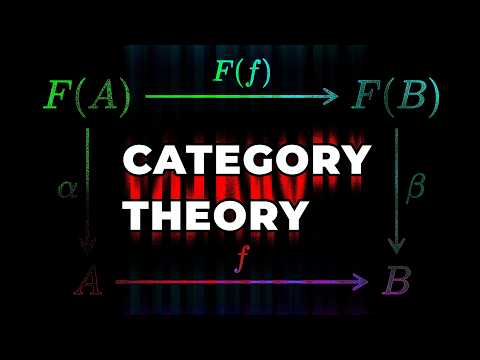
[Algorithmic Convergence]. The gap between symbolic logic and neural networks is closing through category theory. Expect architectures that are "correct by construction" rather than just "likely correct."
[Audit Architecture]. Evaluate new models based on their "algorithmic alignment" rather than just parameter count. Prioritize implementations that bake in non-invertible logic.
The next year will see a shift from scaling data to scaling structural priors. If you aren't thinking about how your model's architecture mirrors the problem's topology, you are just an alchemist in a world about to discover chemistry.
Strategic Implication: The future of software development isn't about *if* we use AI, but *how* we integrate human understanding and architectural discipline to prevent an "infinite software crisis.
Builder/Investor Note: Builders must prioritize deep system understanding and explicit planning over raw generation speed. Investors should favor companies that implement robust human-in-the-loop processes for AI-assisted development.
The "So What?": Over the next 6-12 months, the ability to "see the seams" and manage complexity will differentiate thriving engineering teams from those drowning in unmaintainable, AI-generated code.
Strategic Implication: The market for AI transformation services is expanding rapidly, driven by enterprises seeking to integrate AI for tangible business outcomes.
Builder/Investor Note: Focus on AI solutions with clear, practical applications for mid-market and enterprise clients. Technical talent capable of bridging research with deployment holds significant value.
The "So What?": The next 6-12 months will see increased demand for AI engineers who can implement and scale AI solutions, moving beyond proof-of-concept to widespread adoption.
Compensation Innovation: The traditional compensation playbook for engineers is outdated. New models that directly reward AI-augmented output will attract top talent and drive efficiency.
Builder/Investor Note: Founders should re-evaluate their incentive structures. Investors should seek companies experimenting with these models, as they may achieve outsized productivity.
The "So What?": The productivity gap between AI-augmented and non-AI-augmented engineers will widen. Companies that adapt their incentives will capture disproportionate value in the next 6-12 months.
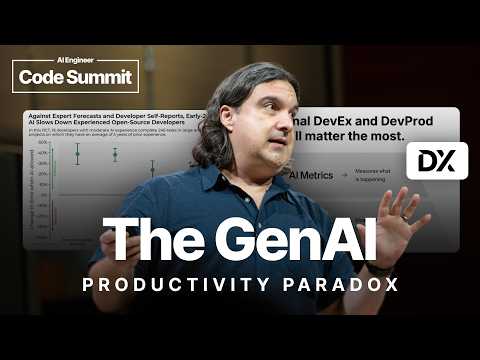
Strategic Shift: Successful AI integration means identifying and solving *your* organization's specific SDLC bottlenecks, not just boosting code completion.
Builder/Investor Note: Prioritize psychological safety and invest in AI skill development. For builders, this means dedicated learning time; for investors, look for companies that do this well.
The "So What?": The next 6-12 months will separate organizations that merely *adopt* AI from those that *master* its strategic application and measurement, driving real competitive advantage.
Strategic Implication: AI integration is a company-wide transformation, not a feature. Organizations must re-architect processes, tools, and culture to compete.
Builder/Investor Note: Prioritize internal tooling that democratizes AI experimentation. Look for companies establishing "model behavior" as a distinct, cross-functional discipline.
The "So What?": The next 6-12 months will reward builders who bake AI security and user control into product design from day one, recognizing that technical mitigations alone are insufficient.
The Macro Shift: AI compute is commodifying, shifting from centralized, overcapitalized data centers to globally distributed, incentive-aligned networks. This decentralization drives down costs, increases resilience, and enables unprecedented privacy.
The Tactical Edge: Builders should explore Chutes' TE-enabled agent hosting and "Sign in with Chutes" OAuth system for private, cost-effective AI applications. Investors should recognize the long-term value of protocols aligning incentives for distributed compute.
The Bottom Line: Chutes is building the foundational, trustless intelligence layer for the decentralized web. Its focus on privacy, efficiency, and community-driven agent development positions it as a critical piece of the Bittensor ecosystem and a potential disruptor to traditional AI giants.
The Macro Shift: Global markets are resetting crowded growth trades, with AI's disruptive force and shifting monetary policy impacting everything from tech stocks to crypto. This period is exposing underlying correlations and forcing a re-evaluation of long-held strategies.
The Tactical Edge: Maintain psychological discipline and consider dollar-cost averaging into assets with strong fundamentals. Pay close attention to Ethereum's evolving technical roadmap, as specialized L2s and L1 scaling become central.
The Bottom Line: This market downturn, while painful, is a crucible for conviction. For resilient investors and builders, it presents a rare opportunity to accumulate assets and build infrastructure that will define the next cycle.
The "crypto casino" is giving way to "neo finance," where AI and traditional finance converge on blockchain rails. This means a fundamental re-evaluation of what constitutes "value" in crypto, moving from speculative tokens to real-world asset tokenization and critical infrastructure.
Focus on infrastructure plays and real-world asset (RWA) tokenization platforms. Investigate projects that streamline institutional workflows or enable high-yield stablecoin products for retail, as these areas show sustainable growth independent of speculative market cycles.
The next 6-12 months will see a continued bifurcation: the old speculative crypto market will consolidate, while the "neo finance" sector, powered by stablecoins, tokenized assets, and seamless cross-chain tech, will solidify its foundations. Position yourself to build or invest in solutions that bridge traditional finance with blockchain utility, rather than chasing ephemeral token pumps.
The rise of powerful AI agents (like OpenClaw) creates an urgent need for secure, private compute. This isn't just about data protection; it's about enabling a truly decentralized, user-owned AI future, mirroring the internet's evolution from walled gardens to an open web. Centralized LLMs, even without ads, still collect and use sensitive user data, making confidential compute (TEEs) and local-first models essential for trust and control.
Implement AI agents within confidential virtual machines (TEEs) and establish separate, quarantined accounts for them. This protects your core digital identity and assets from potential leaks or prompt injection attacks, allowing you to experiment with agent capabilities without exposing critical data. Consider open-source models for 90% cost savings and improved privacy.
The next 6-12 months will see AI agents move from novelty to necessity. Builders and investors must prioritize privacy-preserving infrastructure and user-owned AI paradigms to capture this value securely. Ignoring these foundational security layers risks catastrophic data breaches and undermines the trust required for widespread agent adoption, making decentralized, confidential solutions a competitive differentiator.
The current market environment is shifting from a growth-at-all-costs mentality to one where accountability and perceived fairness are paramount. This means market participants are increasingly scrutinizing not just financial performance, but also the ethical conduct of leaders and projects.
Prioritize projects with transparent governance and clear, defensible value propositions, especially regarding founder incentives and liquidity. Scrutinize narratives that offer monocausal explanations for complex market events, as they often mask deeper, systemic issues or emotional responses.
The crypto industry is maturing into a period of intense public scrutiny, where past associations and founder ethics will increasingly influence market sentiment and investor confidence. Over the next 6-12 months, expect continued moralizing and a demand for greater transparency, making a strong ethical stance as important as a strong balance sheet.
The current crypto downturn reflects a broader risk-off macro environment, where Bitcoin's sharp price movements, while painful, create unique technical vacuums that could lead to equally swift, opportunistic rebounds for those tracking specific momentum changes.
Monitor for a "weight of the evidence" signal, combining oversold readings (like the weekly stochastic retest) with a clear reversal in shorter-term momentum indicators (daily MACD, Demark exhaustion) to identify high-probability entry points for counter-trend trades.
While long-term crypto investors can ride out the current cyclical downturn, short-term traders must prioritize precise technical signals. The market is primed for dramatic bounces due to thin liquidity on the downside, making early entry crucial for capturing the largest gains when momentum finally reverses.