The Macro Shift: Scaling laws are hitting a diminishing return on raw data but a massive acceleration in reasoning. The shift from statistical matching to reasoning agents happens when models can recursively check their own logic.
The Tactical Edge: Build for the agentic future by prioritizing high-context data pipelines. Models perform better when you provide massive context rather than relying on zero-shot inference.
The Bottom Line: We are 24 months away from AI that makes unassisted human thought look like navigating London without a map. Prepare for a world where the most valuable skill is directing machine agency rather than performing manual logic.
The transition from model-centric to loop-centric development. Performance is now a function of the feedback cycle rather than just the weights of the frontier model.
Implement an LLM-as-a-judge step that outputs a "Reason for Failure" field. Feed this string directly into a meta-prompt to update your agent's system instructions automatically.
Static prompts are technical debt. Teams that build automated systems to iterate on their agent's instructions will outpace those waiting for the next model training run.
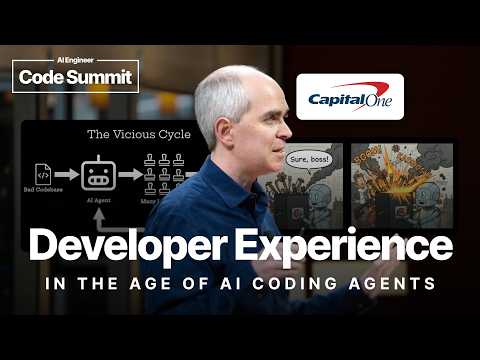
The Macro Shift: The transition from writing to reviewing as the primary engineering activity. As agents generate more code, the human role moves from creator to editor.
The Tactical Edge: Build CLIs for every internal tool to give agents a native text interface. This increases accuracy and speed compared to visual automation.
The Bottom Line: Developer experience is the infrastructure for AI. Investing in clean code and fast feedback loops is the only way to ensure AI productivity gains do not decay over the next 12 months.
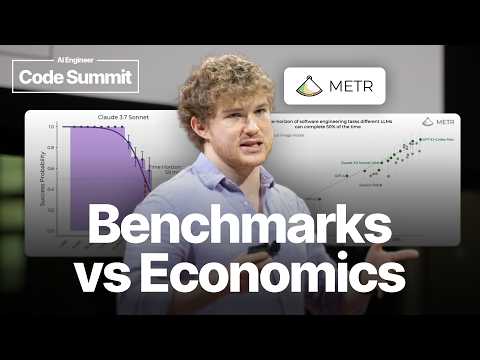
The Capability-Productivity Gap. We are entering a period where model intelligence outpaces our ability to integrate it into high stakes production.
Audit your stack. Identify tasks where "good enough" generation is a win versus high context tasks where AI is currently a net negative.
Do not mistake a climbing benchmark for a finished product. For the next year, the biggest wins are not in smarter models but in better verification loops.
The transition from simple Large Language Models to Reasoning Models marks the end of the stochastic parrot era.
Build agentic workflows that utilize high-context windows for recursive problem solving.
We are moving toward a world where intelligence is a commodity. Your value will shift from knowing things to directing outcomes over the next 12 months.
The Macro Pivot: Agentic Abstraction. As the cost of logic hits zero, the value of a developer moves from how to build to what to build.
The Tactical Edge: Adopt Orchestrators. Replace your standard editor with agent-first platforms today to learn the art of directing sub-agents before the 2026 deadline.
The Bottom Line: The next 12 months will reward those who stop writing code and start building the systems that write it for them.
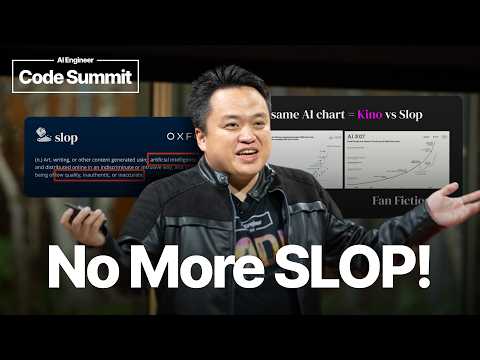
The Macro Movement: The Token Deflation. As compute becomes a commodity, the value of the "Human-in-the-Loop" moves from production to architectural oversight.
The Tactical Edge: Implement Code Maps. Use AI to index and understand your entire repository to ensure every generated line aligns with existing logic.
The Bottom Line: The next year belongs to the "Taste-Driven Developer." If you optimize for volume, you produce slop; if you optimize for accountability, you build a moat.
The Macro Shift: Software development is moving from human-led logic to agent-led verification.
The Tactical Edge: Use sub-agents to isolate testing from creation to prevent context pollution.
The Bottom Line: The technical barrier is evaporating. In the next 12 months, the winning platforms will be those that require the fewest technical decisions from the user.
The Macro Shift: AI compute is commodifying, shifting from centralized, overcapitalized data centers to globally distributed, incentive-aligned networks. This decentralization drives down costs, increases resilience, and enables unprecedented privacy.
The Tactical Edge: Builders should explore Chutes' TE-enabled agent hosting and "Sign in with Chutes" OAuth system for private, cost-effective AI applications. Investors should recognize the long-term value of protocols aligning incentives for distributed compute.
The Bottom Line: Chutes is building the foundational, trustless intelligence layer for the decentralized web. Its focus on privacy, efficiency, and community-driven agent development positions it as a critical piece of the Bittensor ecosystem and a potential disruptor to traditional AI giants.
The Macro Shift: Global markets are resetting crowded growth trades, with AI's disruptive force and shifting monetary policy impacting everything from tech stocks to crypto. This period is exposing underlying correlations and forcing a re-evaluation of long-held strategies.
The Tactical Edge: Maintain psychological discipline and consider dollar-cost averaging into assets with strong fundamentals. Pay close attention to Ethereum's evolving technical roadmap, as specialized L2s and L1 scaling become central.
The Bottom Line: This market downturn, while painful, is a crucible for conviction. For resilient investors and builders, it presents a rare opportunity to accumulate assets and build infrastructure that will define the next cycle.
The "crypto casino" is giving way to "neo finance," where AI and traditional finance converge on blockchain rails. This means a fundamental re-evaluation of what constitutes "value" in crypto, moving from speculative tokens to real-world asset tokenization and critical infrastructure.
Focus on infrastructure plays and real-world asset (RWA) tokenization platforms. Investigate projects that streamline institutional workflows or enable high-yield stablecoin products for retail, as these areas show sustainable growth independent of speculative market cycles.
The next 6-12 months will see a continued bifurcation: the old speculative crypto market will consolidate, while the "neo finance" sector, powered by stablecoins, tokenized assets, and seamless cross-chain tech, will solidify its foundations. Position yourself to build or invest in solutions that bridge traditional finance with blockchain utility, rather than chasing ephemeral token pumps.
The rise of powerful AI agents (like OpenClaw) creates an urgent need for secure, private compute. This isn't just about data protection; it's about enabling a truly decentralized, user-owned AI future, mirroring the internet's evolution from walled gardens to an open web. Centralized LLMs, even without ads, still collect and use sensitive user data, making confidential compute (TEEs) and local-first models essential for trust and control.
Implement AI agents within confidential virtual machines (TEEs) and establish separate, quarantined accounts for them. This protects your core digital identity and assets from potential leaks or prompt injection attacks, allowing you to experiment with agent capabilities without exposing critical data. Consider open-source models for 90% cost savings and improved privacy.
The next 6-12 months will see AI agents move from novelty to necessity. Builders and investors must prioritize privacy-preserving infrastructure and user-owned AI paradigms to capture this value securely. Ignoring these foundational security layers risks catastrophic data breaches and undermines the trust required for widespread agent adoption, making decentralized, confidential solutions a competitive differentiator.
The current market environment is shifting from a growth-at-all-costs mentality to one where accountability and perceived fairness are paramount. This means market participants are increasingly scrutinizing not just financial performance, but also the ethical conduct of leaders and projects.
Prioritize projects with transparent governance and clear, defensible value propositions, especially regarding founder incentives and liquidity. Scrutinize narratives that offer monocausal explanations for complex market events, as they often mask deeper, systemic issues or emotional responses.
The crypto industry is maturing into a period of intense public scrutiny, where past associations and founder ethics will increasingly influence market sentiment and investor confidence. Over the next 6-12 months, expect continued moralizing and a demand for greater transparency, making a strong ethical stance as important as a strong balance sheet.
The current crypto downturn reflects a broader risk-off macro environment, where Bitcoin's sharp price movements, while painful, create unique technical vacuums that could lead to equally swift, opportunistic rebounds for those tracking specific momentum changes.
Monitor for a "weight of the evidence" signal, combining oversold readings (like the weekly stochastic retest) with a clear reversal in shorter-term momentum indicators (daily MACD, Demark exhaustion) to identify high-probability entry points for counter-trend trades.
While long-term crypto investors can ride out the current cyclical downturn, short-term traders must prioritize precise technical signals. The market is primed for dramatic bounces due to thin liquidity on the downside, making early entry crucial for capturing the largest gains when momentum finally reverses.