Build a Product, Not Just a Portfolio. The dominant VC firms of the future will offer concrete services to founders, not just capital. Reputation and unwavering founder support are the ultimate competitive advantages.
Size Funds to the Market Opportunity. The software market is exponentially larger than it was two decades ago. Sticking to legacy fund sizes means missing out on a dramatically expanded opportunity set.
Fight for American Innovation. The biggest existential threat to technology isn't market cycles but a hostile regulatory environment. VCs must actively engage in policy to prevent the US from forfeiting leadership in foundational technologies like AI and crypto.
Execution is a Commodity; Ideation is the Moat. The value is rapidly shifting from those who can execute a plan to those who can generate the novel plan in the first place.
Your Org Chart is Now a Repo. Forward-thinking teams are treating their entire operational knowledge base as a single, AI-readable context, turning their company's history and philosophy into a prompt.
Beware the Conflict Resolution Engine. A centralized AI risks becoming an echo chamber that smooths over disagreements. Actively engineer processes (like human-led PR reviews) to preserve essential conflict and challenge groupthink.
Zero-Sum is a Losing Bet. The market isn't a monolith. Value is fragmenting across specialized applications in code, image, and vertical workflows. The "winner-take-all" thesis is dead.
Moats are Made, Not Inherent. AI’s magic solves the "bootstrap problem" of user acquisition, but long-term defensibility requires building traditional software moats like brand, workflow integration, and network effects.
Be on the Field, but Pick Your Spot. This is not a market to sit out, but indiscriminate investing is a death sentence. Back exceptional, proven teams, understand that conflicts can lock you out of the best deals, and never confuse market heat with genuine momentum.
AI is the deflationary force for stagnant sectors. While software ate the world, it skipped housing and healthcare. AI is finally tackling the operational drag that has caused costs to balloon for decades.
To solve the housing crisis, make it profitable. The path to more housing supply runs through better returns. By making property operations radically more efficient, AI attracts the capital required to build.
The future of work is human + AI. Automation won't eliminate jobs; it will transform them. As AI handles the administrative grind, human roles will shift to higher-value work like community engagement and complex problem-solving.
DTO Means Business: Dynamic TAO has forced a Darwinian shift. Subnets must now achieve product-market fit and generate real revenue to survive, transforming from research projects into self-sustaining businesses.
IOTA’s Grand Ambition: IOTA (SN9) isn't just another model trainer; its architecture aims to train trillion-parameter models on decentralized, consumer-grade hardware, directly challenging the dominance of centralized AI labs.
Time to Garden: The protocol's long-term health hinges on active governance. A strong sentiment is emerging to prune low-effort or malicious subnets to focus emissions on projects capable of creating real, lasting value.
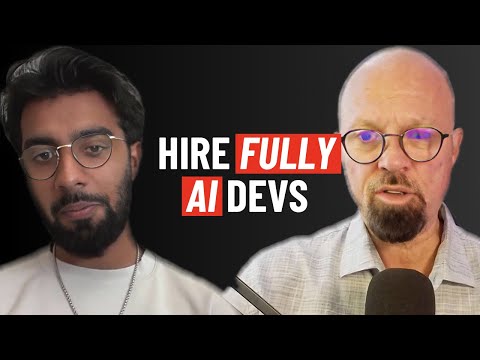
AI Is Moving from Copilot to Pilot. Ridges is betting that the future isn't AI assisting humans, but AI replacing them for specific tasks. Their goal is to make hiring a software engineer as simple as subscribing to a service.
Decentralized Economics Are a Moat. By leveraging Bittensor's incentive layer, Ridges outsources a $15M/year R&D budget to a global pool of competing developers, achieving a cost structure and innovation velocity that centralized players cannot match.
The Breakout Subnet Is Coming. Ridges showcases how a Bittensor subnet can solve real-world business problems—privacy, cost, and quality degradation—to build a product that is not just cheaper, but fundamentally better than its centralized counterparts.
From Performance to Profit: The AI industry is pivoting from a war of benchmarks to a game of unit economics. Features like GPT-5’s router signal that cost management and monetization are now as important as model capabilities.
Hardware is a Supply Chain Game: Nvidia’s true moat is its end-to-end control of the supply chain. Competitors aren't just fighting a chip architecture; they're fighting a logistical behemoth that consistently out-executes on everything from memory procurement to time-to-market.
The Grid is the Limit: The biggest check on AI’s expansion is the physical world. The speed at which new power infrastructure and data centers can be built will dictate the pace of AI deployment in the US, creating a major advantage for those who can build faster.
Performance is Proven, Not Promised. Gradients isn't just making claims; it’s delivering benchmark-crushing results, consistently outperforming centralized incumbents and producing state-of-the-art models.
Open Source Unlocks the Enterprise. The shift to verifiable, open-source training scripts is a direct solution to customer data privacy concerns, turning a critical vulnerability into a competitive advantage.
The AutoML Flywheel is Spinning. The network's competitive, tournament-style mechanism creates a self-optimizing system that continuously aggregates the best training techniques, ensuring it remains at the cutting edge.
**World Models Are a New Modality.** Genie 3 is not just better video; it's an interactive environment generator. This divergence from passive, cinematic models like Veo signals a new frontier focused on agency and simulation, creating a distinct discipline within generative AI.
**Simulation Is the Key to Embodied AI.** The biggest hurdle for robotics is the lack of realistic training environments. Genie 3 tackles this "sim-to-real" gap head-on, providing a scalable way to train agents on infinite experiences before they ever touch physical hardware.
**Emergent Properties Will Drive the Future.** Key features like spatial memory and nuanced physics weren't explicitly coded but emerged from scaling. The next breakthroughs in world models will come from discovering these unexpected capabilities, not just refining existing ones.
**Stablecoin Issuers are Cash Cows:** Companies like Circle (IPO soon) benefit massively from yield capture on reserves; regulation might even lock this in.
**DeFi Degens vs. TradFi Suits:** Expect ongoing clashes as institutional capital demands simpler structures, challenging crypto's complex governance/token models.
**Meme Coins Aren't Dying:** Despite drawdowns, platforms like Pump.fun show meme creation/trading has strong, persistent demand and revenue generation.
Crypto Has Lost Its Way: The industry's obsession with hype and speculation diverts resources and attention from building genuine, society-improving utility based on Web3 ideals.
Tech Matters, But Adoption is Slow: Superior technology (scalability, economic independence, coherence like JAM aims for) is crucial, but overcoming market inertia, hype-driven funding, and user stickiness takes significant time.
Web3 Urgently Needed for AI Era: Trust-minimized Web3 systems, especially robust Proof of Personhood, are critical defenses against the centralizing, trust-based nature of AI to maintain individual sovereignty and reliable information.
Content Becomes an Asset: Zora allows creators to transform any media into a tradable coin, capturing economic value directly tied to its perceived worth and audience engagement.
Engagement = Trading Volume: The primary metric for crypto-native engagement on Zora is trading volume, which directly translates into creator rewards in ETH and the content's specific token.
Own What You Love: Zora enables fans to directly own a piece of the content they value, creating a powerful alignment between creator success and audience investment.
Capitulation Near, But Timing Tricky: Close hedges now; consider tactical longs (calls) soon, but be ready to sell the bounce as it's likely a bear market rally.
Policy is the Pivot: Market relief likely requires Trump blinking on tariffs or significant fiscal stimulus announcements; don't wait for the Fed to save the day.
Watch Relative Strength: Bitcoin and Homebuilders show surprising resilience, offering potential clues or opportunities amidst the chaos. Commodities look oversold but need confirmation.
Stablecoins Reign: Forget moonshots; stablecoins are crypto's clearest win, providing real-world utility and attracting both corporate giants (Tether, Circle) and even government attention.
Macro Still Matters (Kind Of): While extreme tariff news rocked traditional markets, crypto's reaction was comparatively muted – expect continued volatility, but perhaps less direct correlation than stocks anticipate.
Watch Stablecoin Ecosystem Plays: While Tether and Circle dominate headlines, the narrative strength around stablecoins could create opportunities for related on-chain protocols (like Ethena, Maker) post-macro cooldown.
Decentralized Social, Realized: Farcaster offers a tangible example of an "at-scale" decentralized social network built on crypto rails (initially Ethereum).
Unlocking Social Data: The core innovation is the open, permissionless protocol, giving developers API access to build diverse applications on a shared social dataset.
Beyond Cloning: While the first app looks familiar (Twitter-like), the underlying protocol enables vastly different social applications, from niche integrations to entirely new platform paradigms.