Architecture is the new frontier. The move to a "Mixture of Models" is the real story of GPT-5. It’s the blueprint for future multi-agent systems, where coordination, not just raw power, is the key differentiator.
The application layer is the battleground. As foundational models become a commodity, the fight for market dominance will move up the stack. Expect AI giants to build integrated, all-in-one agents, threatening to absorb the niche currently occupied by smaller startups.
Ecosystems are becoming walled gardens. The uneasy truce between Big Tech platforms is fragile. Prepare for strategic "deplatforming" as companies like Google leverage their control over data and integrations (Gmail, Drive) to sideline competitors and favor their native AI.
**Sustainable Economics Trump Naive Subsidies.** Taoash’s pivot proves that simply wrapping a commodity in TAO isn't enough. Successful subnets require robust, self-sustaining economic loops that align incentives by returning primary value (BTC) directly to producers.
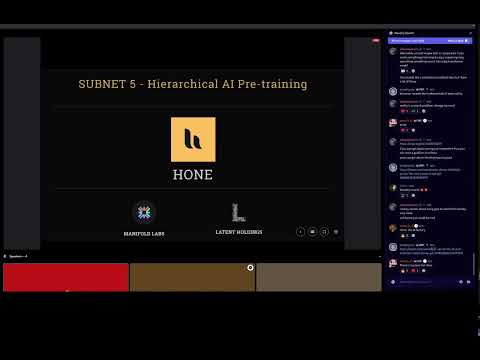
**The New Frontier is Niche & Nimble.** Subnet 5 (Hone) is betting against sheer scale. By targeting a specific, difficult benchmark (ARC-AGI-2) with smaller, more efficient models, it aims to deliver a step-function AI breakthrough without the astronomical cost of frontier labs.
**Invest in Measurable Missions.** Both subnets have quantifiable goals. Taoash targets a competitive net pool fee and a NiceHash-style marketplace. Hone is focused on winning the ARC-AGI-2 prize. This shift from vague roadmaps to falsifiable objectives is a defining feature of the network's next phase.
**Sustainable Economics Win:** TaoHash's initial model failed because it tried to use an inefficient token subsidy to capture a hyper-efficient market (Bitcoin mining). The successful pivot was to act like a standard pool and use its token as a *value-add* subsidy, not a revenue replacement.
**Architecture Over Brute Force:** Subnet 5 is a bet that the next leap in AI will come from architectural innovation, not just throwing more parameters at the problem. By focusing on hierarchical models, it aims to build smaller, smarter systems that can out-reason massive LLMs on complex tasks.
**Benchmarks Ground Innovation:** A clear, difficult, and measurable goal like solving ARC-AGI-2 focuses the network's energy. It transforms a vague mission ("build AGI") into a concrete engineering problem, allowing for rapid, cost-effective iteration and a clear definition of success.
From Prompts to Projects. The focus is shifting from single-shot answers to long-running, asynchronous tasks. The willingness of users to wait for high-quality output unlocks complex use cases, turning AI from a chatbot into a digital chief of staff.
Data is the New Oil, Again. With learning algorithms becoming hyper-efficient, the primary bottleneck is no longer compute or architecture, but the creation of high-quality, task-specific data and realistic reinforcement learning environments.
Taste is the Ultimate Differentiator. As AI becomes a commodity, the ability to define a problem with simplicity and elegance—"good taste"—is the most valuable, non-commoditizable skill in AI development.
Galaxy is an AI Data Center Play. The market misunderstands GLXY as a crypto bank. The real thesis is its emergent data center business, which positions it as a key infrastructure provider for the AI revolution.
Ethena & Hyperliquid are Revenue Machines with Clear Catalysts. Ethena is set to benefit directly from Fed rate cuts, while Hyperliquid's upcoming HIP-3 upgrade will unlock permissionless markets for any asset, creating a powerful growth flywheel.
Digital Asset Treasuries (DATs) are the New Institutional Bid. Forget the old "institutions are coming" meme. They're here, spinning up public vehicles to gain exposure to high-growth assets like ENA and HYP that aren't easily accessible through ETFs.
**Market Trumps Team.** The most critical factor for success is timing. Don't fight the mega-trend; ensure AI is a tailwind for whatever you build. A great team in a bad market will lose to a good team in a great market.
**Attack the Beachhead.** To disrupt an incumbent or create a new category, you must be 10x better or do something previously impossible. Start with a hyper-specific "ideal practitioner profile," saturate that niche, and only then expand.
**Innovate or Die.** Cashing out a tech business without aggressive innovation is a self-fulfilling prophecy of failure. The formula is simple: get 1.27% better every day. The power of compounding in product development is unstoppable.
**DTAO is a Feature, Not a Bug.** The system's sell pressure is an intentional guardrail against manipulation. It’s designed to reward long-term, high-conviction investors over a year-long cycle, not short-term traders.
**Stop Complaining, Start Staking.** Miner burns are an economic choice. The protocol won’t intervene; the only cryptographic solution is for opponents to accumulate stake and participate in governance by running validators.
**The Stack is the Strategy.** BitTensor is building a modular AI network. Subnets like Aphīne demonstrate the end-game: integrating specialized layers like inference and fine-tuning to deliver top-tier AI products on a fully decentralized back-end.
A Pick-and-Shovel Play on Two Megatrends. GLXY provides exposure to both the institutionalization of crypto and the insatiable demand for AI data center capacity, all in a single stock.
The Data Center is the Crown Jewel. The CoreWeave contract provides a solid revenue baseline, but the real upside is the 1.7 GW expansion pipeline, which could transform Galaxy into a top-tier AI infrastructure player.
An Undervalued and Misunderstood Story. The stock's complexity creates a valuation disconnect. As the Helios data center begins generating cash flow in 2026, the narrative will become clearer, potentially forcing a significant market re-rating.
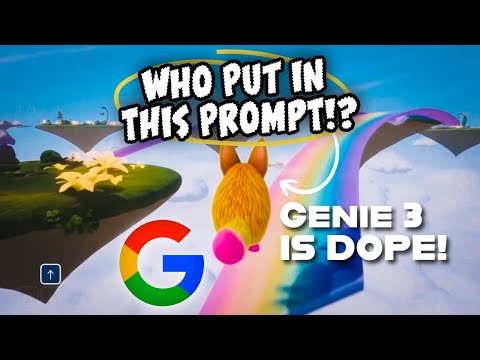
World Models are the New Game Engines: Genie 3 generates interactive, real-time worlds from text, bypassing the need for explicit coding of physics or 3D assets. Its consistency is an emergent property, not a programmed feature.
The Key to Unlocking Real-World AI: The primary goal is to create a scalable, safe simulation platform for training robotic agents. By prompting rare events, Genie 3 can prepare AI for the unpredictability of the real world, aiming for a breakthrough in robotics.
Creativity Remains Human-Driven: While powerful, Genie 3 is a tool that amplifies human creativity, not a replacement for it. The quality and novelty of the generated world depend heavily on the specificity and skill of the human prompter.
Stablecoin Shake-Up Looms: Circle's potential sale to Coinbase or Ripple could either fortify Tether's dominance or usher in a new, more controlled USDC, fundamentally altering the competitive landscape.
Decentralization vs. Control: The Sui network freeze post-hack forces a hard look at crypto's soul—is absolute decentralization viable, or will pragmatic interventions become the norm?
Institutional Inflows Demand Real Value: Beyond Bitcoin, the survival and growth of stablecoins and altcoins hinge on delivering tangible utility and robust security, not just speculative narratives.
Stablecoin Clarity Fuels Growth: The likely passage of the "Genius Act" in the US will legitimize stablecoins, potentially unlocking trillions in value and significantly benefiting platforms like Ethereum, the current stablecoin hub.
Macro Uncertainty Boosts Bitcoin: Waning confidence in traditional assets like US bonds, driven by deficit concerns, is reinforcing Bitcoin's narrative as "digital gold" and a viable alternative store of value.
L1 Scaling Unlocks Potential: Ethereum's ZK breakthroughs and Solana's consensus upgrades promise dramatically increased throughput and reduced latency, critical for supporting mainstream applications and the next wave of DeFi innovation.
**Bitcoin's Lindy Metric:** Bitcoin's "event-based" exposure relative to gold (currently ~10%) is a novel valuation framework, projected to grow ~5.5% annually.
**Value vs. Hype:** While memecoins and speculative plays surge, assets like Hyperliquid demonstrating tangible cash flow are setting new standards for token utility.
**Sustainable Alpha:** Long-term strategic patience and ethical conduct offer more sustainable success than short-term, "degenerate" trading tactics, with a future focus on real PE ratios for tokens promising fairer markets.
Performance First: Pipe's core bet is that significantly lower latency (single-digit milliseconds) via hyper-local nodes will provide a compelling performance advantage over incumbent CDNs.
Work, Not Just Presence: The "proof of work" model, rewarding actual bandwidth egress (verified by ZKTCP) rather than mere uptime, aligns incentives directly with network value creation.
Pragmatic Decentralization: Pipe leverages Solana for its current strengths but aims for product-market fit with Web2 clients first, seeing crypto as an enabling layer for a better, faster, and potentially cheaper CDN service, especially for underserved markets and emerging AI applications.
Internet Capital Markets Are Ascendant: New platforms are enabling rapid, token-based fundraising for early-stage ideas, blurring lines between meme coins and innovative startup capital.
Mobile is Crypto's Next Major Arena: The demand for sophisticated, user-friendly mobile trading and DeFi applications presents a massive, largely untapped opportunity for developers and investors.
Ethereum's Economic Model Faces Scrutiny: The discourse intensifies over whether Ethereum's L2-centric scaling roadmap, without a stronger L1 revenue focus, can sustain its valuation and market position long-term.
True Privacy is Priceless (and Achievable): Session demonstrates that "can't be evil" isn't just a slogan; it's an architectural choice that eliminates data honeypots.
Tokens Can Power Real Infrastructure: The Session token is vital for its DePIN, incentivizing a robust, decentralized network crucial for private communication.
Organic Growth Signals Real Demand: Achieving 1M+ MAUs without token-based growth hacks validates a strong product-market fit for privacy-centric applications.