Strategic Implication: The next decade will be defined by who builds the core infrastructure for intelligence. This is where the most significant value and influence will accrue.
Builder/Investor Note: Direct capital and talent towards foundational AI components—chips, models, and interoperable systems. Avoid the temptation to only build at the application layer.
The So What?: The window for shaping the future of intelligence is now. Engage in the deepest, most complex challenges to secure a footprint in this new era.
Strategic Implication: The global AI race is a zero-sum game for foundational models. Europe's best strategy is a "smart second mover" approach, focusing on the implementation layer by ensuring interoperability and data portability.
Builder/Investor Note: Invest in AI that achieves true autonomy and enhances expert productivity. Be wary of markets stifled by over-regulation, which can impede AI adoption and growth.
The "So What?": Europe faces a critical juncture. Without embracing AI-driven growth, its demographic and debt problems will worsen, leading to higher interest rates without the corresponding economic expansion.
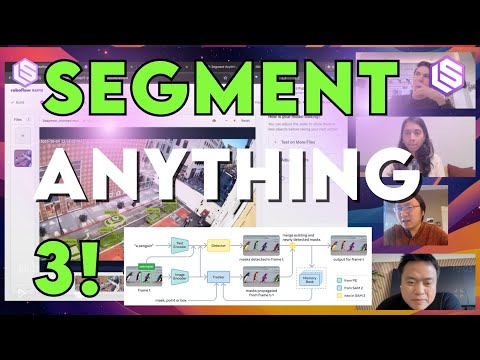
Vision AI Democratization: SAM 3 lowers the barrier for sophisticated vision tasks, making advanced segmentation and tracking accessible for a wider range of applications.
Builder/Investor Note: Focus on domain-specific adaptations and tooling that enhance human-AI interaction for ambiguous visual concepts. The "last mile" of user intent is a key differentiator.
The "So What?": SAM 3 accelerates the development of multimodal AI, particularly in robotics and video analysis, by providing a robust, scalable visual foundation for the next generation of intelligent systems.
Strategic Shift: The next frontier in robotics is less about pure algorithmic breakthroughs and more about building robust, scalable data infrastructure and full-stack product systems that can handle the messy physical world.
Builder/Investor Note: Prioritize companies solving the "boring" but critical data and systems problems. Look for practical, "scrappy" companies deploying robots in specific industrial niches, rather than just those with flashy, general-purpose demos.
The "So What?": The gap between impressive demos and deployable products will narrow over the next 6-12 months as data pipelines mature and product-focused companies gain traction. Expect to see more robust, self-correcting robots performing longer, more complex tasks in controlled environments.
Ecosystem Dominance: NVIDIA's strategy extends beyond hardware; they are building an end-to-end ecosystem of software, open-source models, and direct support, making them indispensable for national AI initiatives.
Builder Opportunity: Leverage NVIDIA's open-source Blueprints for agentic AI and Nemotron models for high-performance, customizable solutions. Prioritize local context in model training and data.
Strategic Imperative: Sovereign AI is a growing global trend. Nations and companies that can build and control AI tailored to their specific cultural, linguistic, and regulatory environments will gain a significant advantage in the coming years.
The democratization of RL fine-tuning will accelerate the development and deployment of more reliable and sophisticated AI agents across industries.
Builders should explore open-source LLMs combined with RL fine-tuning as a cost-effective strategy to achieve specific performance benchmarks, especially where latency and cost are critical.
Platforms abstracting infrastructure complexity and providing integrated tooling for the entire AI development lifecycle are crucial for the next phase of AI agent deployment.
Pre-Training is the New Frontier: The next leap in AI capabilities, particularly for agentic systems, will come from fundamental advancements in pre-training, not just post-training tweaks.
Builders & Investors: Focus on teams rethinking loss objectives, curating high-quality reasoning data, and developing dynamic benchmarks for agentic capabilities. Be wary of "agentic" claims that lack foundational pre-training innovation.
The "So What?": Over the next 6-12 months, expect a push for new benchmarks and data strategies that explicitly train models for multi-step planning, long-form reasoning, and error recovery, moving beyond simple next-token prediction.
Strategic Implication: AI fundamentally changes the economics of software development. Organizations must re-evaluate what constitutes "high-quality" engineering and adapt their processes.
Builder/Investor Note: Prioritize platforms that provide guardrails and guidance for AI tool usage, focusing on deterministic verification and robust testing. Uncontrolled AI deployment risks technical debt.
The "So What?": The next 6-12 months will see a bifurcation: companies that strategically integrate AI into their engineering culture and platforms will gain significant efficiency, while those that don't will struggle with quality and adoption.
Workflow Automation is the New Frontier: The real value of AI in developer tools comes from orchestrating entire workflows, not just individual point solutions.
Embed for Adoption: Tools must integrate seamlessly into existing workflows and IDEs (like Cursor) to achieve high usage.
Support as a Code-Shipping Powerhouse: Empowering non-traditional roles with AI-driven code generation leverages their unique, real-time context, creating significant operational leverage.
Rotation Imminent: Data suggests Bitcoin's strength is setting the stage for capital to flow into altcoins, particularly Ether, which is seen as "hated" and due for a rebound against Bitcoin.
Macro is Bullish (For Now): Continued fiscal spending and an anticipated stablecoin bill are significant tailwinds, though summer may bring some turbulence.
Strategic Allocation is Key: Focus on assets with strong fundamentals or high attention. Consider beta plays like "blue-chip" meme coins (Pepe for ETH, Bonk for SOL) for higher-risk, higher-reward exposure, but plan exits for speculative positions.
Dynamic Tao is High-Risk: Approach investments with extreme caution; the market is volatile, and significant capital loss is a tangible risk.
Embrace Unpredictable Innovation: Bittensor's core value lies in its capacity to generate unforeseen, groundbreaking solutions from a global, permissionless, and competitive talent pool.
Substrate Chain Decentralization is Critical: The successful decentralization of Bittensor's foundational layer is a paramount upcoming milestone for its long-term viability, security, and censorship resistance.
Global Takeover: Bitcoin treasury strategies are rapidly globalizing, creating new Bitcoin-proxy investment vehicles in numerous capital markets.
Investor Vigilance: While "Bitcoin plus" returns are alluring, investors must critically assess MNAV multiples and beware of highly leveraged companies lacking strong, transparent leadership.
Reverse Tokenization is Real: Crypto assets are increasingly entering traditional finance via these public companies, fundamentally changing institutional access and perception.
**L1s are Money, Not Stocks:** Stop trying to fit square pegs (L1s) into round holes (DCF models for companies). Their value accrues like money, through network effects and demand for their monetary properties.
**RSOV is Your New Lens:** Use RSOV to gauge the "stickiness" of capital in an L1 ecosystem. A growing RSOV suggests a strengthening monetary base and potentially a rising valuation floor.
**ETH's RSOV Story:** ETH, when viewed through the RSOV lens, appears undervalued relative to assets like Bitcoin, especially considering catalysts like EIP-4844 ("proto-danksharding") and the growth of its L2 ecosystem, which drives ETH's use as a store of value.
Aggressive Execution: The Ethereum Foundation is adopting a "winning" mindset, prioritizing product delivery, engineering excellence, and rapid scaling (e.g., 3x annual gas limit increases).
Deepening Capital Markets: Ethereum is solidifying its position as the primary settlement layer for RWAs and the burgeoning on-chain finance sector, attracting significant institutional interest.
Innovation Frontier: Expect new waves of innovation in NFTs (tied to RWAs and AI) and enhanced L2 interoperability, driven by advancements like real-time ZK proofs.