Strategic Implication: The next decade will be defined by who builds the core infrastructure for intelligence. This is where the most significant value and influence will accrue.
Builder/Investor Note: Direct capital and talent towards foundational AI components—chips, models, and interoperable systems. Avoid the temptation to only build at the application layer.
The So What?: The window for shaping the future of intelligence is now. Engage in the deepest, most complex challenges to secure a footprint in this new era.
Strategic Implication: The global AI race is a zero-sum game for foundational models. Europe's best strategy is a "smart second mover" approach, focusing on the implementation layer by ensuring interoperability and data portability.
Builder/Investor Note: Invest in AI that achieves true autonomy and enhances expert productivity. Be wary of markets stifled by over-regulation, which can impede AI adoption and growth.
The "So What?": Europe faces a critical juncture. Without embracing AI-driven growth, its demographic and debt problems will worsen, leading to higher interest rates without the corresponding economic expansion.
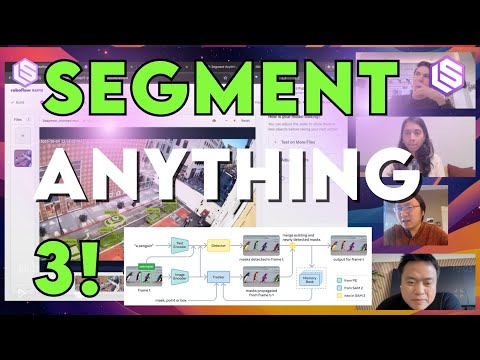
Vision AI Democratization: SAM 3 lowers the barrier for sophisticated vision tasks, making advanced segmentation and tracking accessible for a wider range of applications.
Builder/Investor Note: Focus on domain-specific adaptations and tooling that enhance human-AI interaction for ambiguous visual concepts. The "last mile" of user intent is a key differentiator.
The "So What?": SAM 3 accelerates the development of multimodal AI, particularly in robotics and video analysis, by providing a robust, scalable visual foundation for the next generation of intelligent systems.
Strategic Shift: The next frontier in robotics is less about pure algorithmic breakthroughs and more about building robust, scalable data infrastructure and full-stack product systems that can handle the messy physical world.
Builder/Investor Note: Prioritize companies solving the "boring" but critical data and systems problems. Look for practical, "scrappy" companies deploying robots in specific industrial niches, rather than just those with flashy, general-purpose demos.
The "So What?": The gap between impressive demos and deployable products will narrow over the next 6-12 months as data pipelines mature and product-focused companies gain traction. Expect to see more robust, self-correcting robots performing longer, more complex tasks in controlled environments.
Ecosystem Dominance: NVIDIA's strategy extends beyond hardware; they are building an end-to-end ecosystem of software, open-source models, and direct support, making them indispensable for national AI initiatives.
Builder Opportunity: Leverage NVIDIA's open-source Blueprints for agentic AI and Nemotron models for high-performance, customizable solutions. Prioritize local context in model training and data.
Strategic Imperative: Sovereign AI is a growing global trend. Nations and companies that can build and control AI tailored to their specific cultural, linguistic, and regulatory environments will gain a significant advantage in the coming years.
The democratization of RL fine-tuning will accelerate the development and deployment of more reliable and sophisticated AI agents across industries.
Builders should explore open-source LLMs combined with RL fine-tuning as a cost-effective strategy to achieve specific performance benchmarks, especially where latency and cost are critical.
Platforms abstracting infrastructure complexity and providing integrated tooling for the entire AI development lifecycle are crucial for the next phase of AI agent deployment.
Pre-Training is the New Frontier: The next leap in AI capabilities, particularly for agentic systems, will come from fundamental advancements in pre-training, not just post-training tweaks.
Builders & Investors: Focus on teams rethinking loss objectives, curating high-quality reasoning data, and developing dynamic benchmarks for agentic capabilities. Be wary of "agentic" claims that lack foundational pre-training innovation.
The "So What?": Over the next 6-12 months, expect a push for new benchmarks and data strategies that explicitly train models for multi-step planning, long-form reasoning, and error recovery, moving beyond simple next-token prediction.
Strategic Implication: AI fundamentally changes the economics of software development. Organizations must re-evaluate what constitutes "high-quality" engineering and adapt their processes.
Builder/Investor Note: Prioritize platforms that provide guardrails and guidance for AI tool usage, focusing on deterministic verification and robust testing. Uncontrolled AI deployment risks technical debt.
The "So What?": The next 6-12 months will see a bifurcation: companies that strategically integrate AI into their engineering culture and platforms will gain significant efficiency, while those that don't will struggle with quality and adoption.
Workflow Automation is the New Frontier: The real value of AI in developer tools comes from orchestrating entire workflows, not just individual point solutions.
Embed for Adoption: Tools must integrate seamlessly into existing workflows and IDEs (like Cursor) to achieve high usage.
Support as a Code-Shipping Powerhouse: Empowering non-traditional roles with AI-driven code generation leverages their unique, real-time context, creating significant operational leverage.
Build Real, Not Just Rallies: Prioritize long-term, sustainable businesses with tangible revenue models over chasing fleeting crypto trends.
Utility Tokens Trump Speculation: Design tokens to solve core project problems or incentivize user behavior, not merely for market hype.
Solana's Next Wave: Infrastructure for Reality: Leverage crypto as a backend for innovative solutions to real-world problems, targeting broader, non-crypto native audiences.
Trust is Quantifiable: AI investors can build dynamic trust scores by systematically paper-trading community signals, effectively rewarding proven alpha generators.
Beyond Wallet Snooping: "Social copy wallet" systems can unearth expert insights without needing direct access to individual wallet addresses, thus broadening the discoverable talent pool.
Community as a Vetted Oracle: The collective intelligence of crypto communities, when filtered through a performance-based trust layer, can power sophisticated AI investment decisions.
ETH: Trade the Chart, Doubt the Core. Ethereum’s technicals may offer a trading setup, but deep-seated skepticism about its fundamental delivery persists.
Worldcoin Warning: The massive FDV and emission schedule for Worldcoin scream "sell pressure," making it a risky long-term hold despite any hype.
Invest with Edge: Focus on revenue-generating altcoins and areas you understand; it's okay to miss out on trades where you lack a clear advantage.
Fund Smarter, Not Harder: Tau's SNS tokens let Bittensor subnets raise capital by tokenizing a slice of future emissions, not their core alpha tokens, sidestepping immediate sell pressure.
DTA Means Business: The Dynamic TAO model is a crucible, compelling Bittensor subnets to graduate from emission-chasers to product-driven, revenue-focused ventures.
Unlocking Subnet Investing: SNS tokens, via LayerZero, promise to simplify access to subnet investments, potentially onboarding a wave of new capital and users to the Bittensor ecosystem from other chains.
Bitcoin's Bullish Trajectory: Bitcoin is on a path to potentially reach $150k-$200k, supported by a low-hype, strong-setup environment and a more sophisticated investor base.
Strategic Altcoin Hunting: Focus on revenue-generating altcoins with solid fundamentals (check DeFiLlama) and consider measured exposure to the burgeoning AI crypto sector.
Prioritize Self-Custody: Given exchange vulnerabilities, holding your assets offline in cold storage is more critical than ever.
L1 is HQ: Ethereum's "pivot" reasserts the L1's central role, supported by L2s that offer crucial business model diversity and customization for the world coming on-chain.
Value Accrual via Security & Confidence: ETH's valuation is increasingly tied to the total economic value it secures and the market's confidence in its future, not just direct fee revenue.
Business Development is Crucial: To compete and grow, Ethereum requires a significantly more robust and proactive go-to-market strategy to attract users, institutions, and developers.