The AI infrastructure boom is transitioning from speculative buildouts to financially engineered, risk-managed investments, driven by the commodification of compute and memory.
Explore futures and residual value products to de-risk your AI compute procurement or data center investments, securing predictable costs and monetizing hardware lifecycles.
Quantifying future compute demand and hardware value is no longer a luxury, it's a necessity. Over the next 6-12 months, those who integrate financial hedging into their AI strategy will gain a significant competitive advantage in capital allocation and operational efficiency.
Implement compute futures and residual value products to cap future costs or floor future revenue, significantly reducing exposure to spot market volatility and hardware obsolescence.
Ornn's residual value product allows data centers to sell GPUs years in advance, translating to lower financing costs for massive hardware investments.
Ornn's index tracks dynamic marketplace GPU pricing, empowering smaller buyers to avoid overpaying.
Data center operators and large compute buyers should explore Ornn's futures and residual value products to lock in costs, secure future revenue, and access more favorable financing terms.
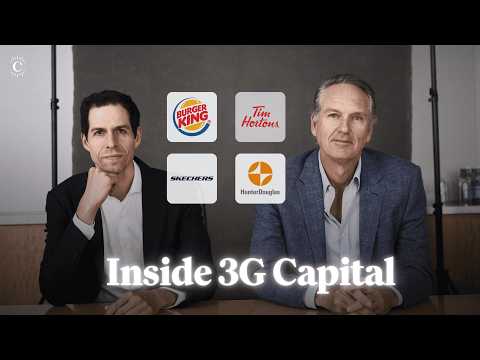
The Macro Shift: As market complexity and technological disruption accelerate, traditional diversified investing faces increasing headwinds. 3G Capital's micro-level focus on deeply understanding and operating a single, well-moated business, combined with a long-term, owner-operator mindset, provides a robust counter-strategy to extract value where others see only risk.
The Tactical Edge: Cultivate an "owner's mindset" in your team, decentralizing "how" decisions while centralizing "what" goals. Prioritize hiring and promoting individuals who demonstrate exceptional drive and potential, even if they lack traditional tenure, and align their incentives directly with long-term business success.
The Bottom Line: In the next 6-12 months, focus on identifying businesses with strong, direct customer relationships and defensible physical assets. These "boring" businesses, when infused with an owner-operator culture and strategic tech adoption, offer a compelling path to outsized, enduring value, regardless of broader market volatility.
Integrate compute futures and residual value products into your financial planning. This will allow you to hedge against price volatility, secure better financing, and optimize hardware refresh cycles.
The AI compute market is transitioning from an opaque, ad-hoc system to a financially engineered commodity market. This shift will introduce unprecedented transparency and risk management tools, fundamentally altering investment and operational strategies for AI infrastructure.
The ability to quantify future compute demand and hardware value is no longer a luxury; it is a necessity. Over the next 6-12 months, those who adopt these financial instruments will gain a significant competitive advantage, building more resilient and profitable AI operations.
The Macro Shift: As digital disintermediation accelerates, businesses with strong direct-to-consumer relationships and physical moats become increasingly valuable. This counters the "software eats the world" narrative by highlighting the enduring power of tangible assets and customer loyalty.
The Tactical Edge: Cultivate an owner-operator mindset throughout your organization, aligning incentives deeply with long-term value creation. Prioritize hiring and empowering young talent, giving them significant responsibility early, and providing mentorship to maximize their success.
The Bottom Line: In a market where valuations are stretched and capital is abundant, 3G's disciplined, long-term approach to identifying and operating truly great businesses offers a powerful counter-narrative. Focus on enduring business quality and people-driven execution will be the ultimate differentiator for compounding capital over the next decade.
Singular Focus: 3G's model is one investment per fund, backed by significant house capital. This forces extreme patience and a rigorous downside analysis, ensuring capital preservation is paramount before seeking outsized returns.
Operator-Led: 3G partners are seasoned operators, having run large businesses themselves. This hands-on experience allows them to identify and implement operational improvements that pure financial investors might miss, directly impacting value creation.
Disruption Defense: In a tech-driven world, 3G prioritizes businesses that own the customer relationship and are less susceptible to disintermediation. This focus on "atoms" businesses with strong brands and physical components provides a moat against digital upheaval.
The Macro Shift: As digital disruption accelerates, the market increasingly undervalues "boring" businesses with strong physical moats and direct customer relationships. 3G Capital demonstrates that these enduring assets, when paired with intense operational rigor and long-term capital, can generate outsized returns.
The Tactical Edge: Identify businesses where the brand is significantly "bigger than the business" – meaning widespread recognition exists but operational inefficiencies or poor franchising have suppressed its true value. Then, apply an owner-operator model to fix core issues and expand globally.
The Bottom Line: In a world pursuing the next big tech wave, the real alpha might lie in patiently acquiring and meticulously operating established, non-disruptable businesses. Your roadmap should include a focused study of industries with strong customer ties and a focus on building an ownership-driven culture, rather than just seeking growth at all costs.
3G Capital commits to a single investment per fund, deploying significant internal capital alongside partners. This intense focus acknowledges the rarity of truly exceptional businesses and leaders, driving rigorous due diligence and a deep commitment to each asset.
3G instills an ownership culture where leaders act as shareholders, aligning incentives directly with the business's long-term success. This contrasts with traditional management structures, driving decisions that prioritize the company's best interests.
3G prioritizes businesses that own the direct relationship with their end customers, like Burger King or Hunter Douglas. This direct connection reduces disintermediation risk, making the business more resilient to technological shifts or retail power plays.
Appetite is Insatiable: Investor demand for any crypto-related exposure is immense, capable of pumping stocks like Circle's despite questionable financials.
Fundamentals Still (Should) Matter: Circle's low margins, high costs, and interest rate sensitivity paint a precarious picture, a "terrible company" according to one host, even if its stock moons.
Hype Cycle Peaks & Troughs: The current frenzy across crypto-linked stocks (Circle, potential Ripple IPO, Coinbase, MSTR) signals significant hype, which historically precedes market corrections.
Flipcash is betting that a hyper-fast, intuitive "digital cash" experience, leveraging Solana's speed and a novel L2, can carve out a unique niche in the crowded payments landscape.
The shift to USDC and a clever onboarding mechanism (pay for account, get instant credit) aims to overcome common crypto adoption hurdles related to volatility and empty wallets.
Solana's Speed is a Moat: Flipcash's core "instant cash" UX is explicitly tied to Solana's performance, highlighting the chain's capability for consumer-facing applications demanding high speed.
Political Winds Shift Crypto Sails: The Trump-Musk fallout underscores the urgency for clear crypto legislation, as policy can be derailed by high-level discord.
Stablecoin Showdown Looms: Circle's hot IPO masks a fiercely competitive future where big banks could disrupt incumbents by leveraging distribution and offering yield.
Q4 Top Signal? The flurry of crypto IPOs (Circle, potentially Gemini, Kraken) and soaring Bitcoin treasury adoption might signal a market peak approaching in Q4 2025 or Q1 2026.
Bitcoin is king: Expect Bitcoin to outperform traditional assets significantly; avoid fumbling this generational chance through common investor errors.
Evolve your strategy: The game has shifted from infrastructure hype and rapid trading to identifying and holding quality applications and tokens like Hyperliquid or Syrup with longer horizons.
Appetite meets fundamentals: While hype can drive initial pumps (e.g., Circle IPO), sustainable value lies in strong business models (Tether's organic growth) and clear token utility.
**IPO Appetite is Real (for Some):** Public markets are hungry for crypto, but primarily for clear narratives like stablecoins (see: Circle); broader adoption requires substantial revenue.
**VCs Get Flexible:** The smart money is adapting, ready to pounce on equity or tokens, depending on where the value (and exit) lies.
**On-Chain IPOs - The Next Speculative Playground?:** Imagine a world where early-stage crypto companies list on-chain, offering a more productive outlet for speculative capital than today's memecoin casino.
Regulatory Renaissance: The SEC's stance has softened, creating a more favorable U.S. environment for crypto; Ether's non-security status (for the scope of the past investigation) is a major win.
Ether as a Productive Treasury Asset: ESBET's strategy of acquiring and actively yielding Ether could set a new standard for corporate treasuries, showcasing Ether's utility beyond just holding.
The "Trust Commodity" Narrative: Expect a strong push to frame Ether's value around its ability to provide programmable trust and facilitate economic activity, with Lubin championing this.